Pranda Michaela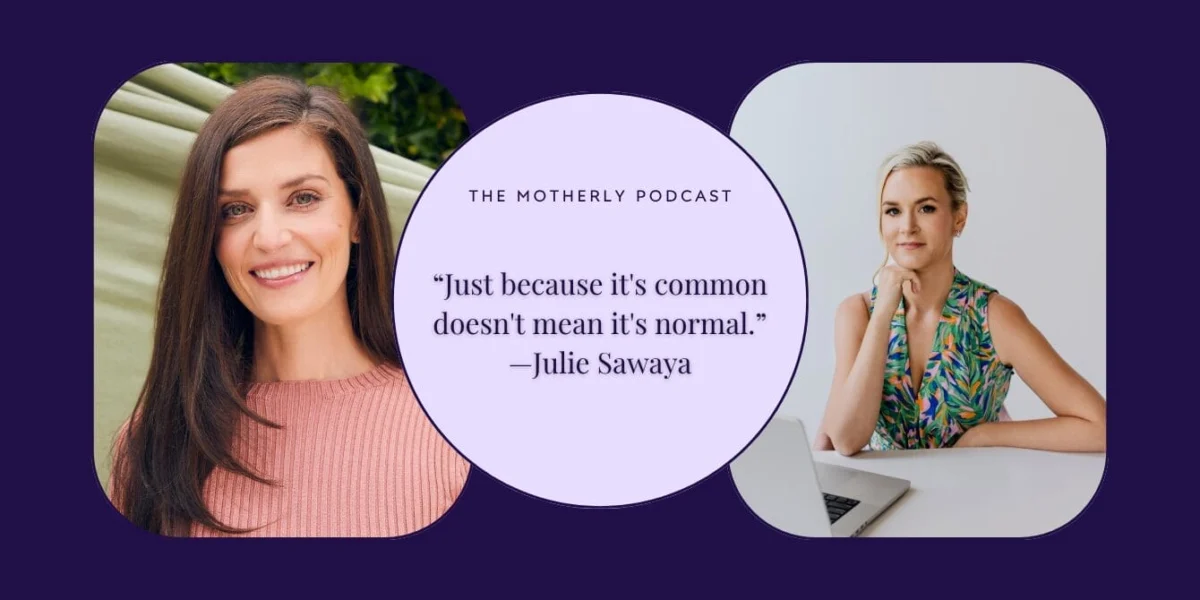
Julie Sawaya, a trained nutritionist and Stanford MBA graduate, approached her pregnancy with a wealth of knowledge and a commitment to optimal health. She meticulously sourced food from farmers’ markets and was deeply intentional about her dietary choices. Yet, a routine at-home nutrient test during her business school years delivered a shocking revelation: nearly every nutrient measured was in the "red zone," indicating deficiency. This profound discovery, shared by her co-founder and fellow nutritionist Ryan Woodbury, became the catalyst for Needed, a company dedicated to revolutionizing perinatal nutrition. Their premise is stark and alarming: despite 97% of pregnant women taking a prenatal vitamin, a staggering 95% remain nutritionally depleted. The core issue, Sawaya and her team identified, isn’t a lack of effort but a fundamental flaw in the design of standard prenatal vitamins, many of which are based on outdated guidelines from 1941 and research largely conducted on men.
This groundbreaking insight into the widespread nutritional deficiencies affecting expectant mothers was recently explored in an episode of The Motherly Podcast. In conversation with host Liz Tenety, Sawaya delved into the complexities of optimal nutrition during pregnancy and postpartum, the normalization of maternal depletion in the United States, and the arduous yet rewarding journey of building a company while raising a family.
The Genesis of Needed: A Personal Revelation
The "aha moment" that spurred the creation of Needed occurred in 2016. Sawaya and Woodbury, then neighbors in Stanford’s business school program, decided to take at-home nutrient tests, confident their diligent, health-conscious lifestyles would yield positive results. Instead, both were found to be significantly nutritionally depleted. Sawaya recalls, "In my case, almost every single nutrient was in the red zone." This personal experience mirrored a broader, silent epidemic they began to investigate: upwards of 95% of women exhibit nutritional depletion across various life stages, a deficiency that persists even during pregnancy, despite near-universal prenatal vitamin use.
The Flawed Foundation of Prenatal Nutrition
Sawaya attributes the pervasive issue to the outdated standards governing prenatal vitamins. "What it takes to nourish a woman is orders of magnitude different from what’s in a standard prenatal vitamin," she explains. The Recommended Daily Allowances (RDAs) for nutrients, many of which form the basis of current prenatal formulations, were established in 1941 under conditions of wartime scarcity. These guidelines primarily aim to prevent deficiency diseases, not to optimize health and well-being. Furthermore, Sawaya highlights a critical research gap: "83% of the research studies that underpin the pregnancy and breastfeeding RDAs don’t include pregnant and breastfeeding women. Most of the research is done on men, and then it’s estimated what women need from that. So it’s a bare minimum paradigm, not an optimal one." This "bare minimum" approach fails to account for the vastly increased nutritional demands of pregnancy, conception, and postpartum recovery.
The Underemphasis on Nutrition in Maternal Healthcare
The underemphasis on nutrition within the U.S. maternal healthcare system is another significant factor contributing to widespread depletion. Sawaya points out that most physicians receive less than four hours of nutritional training throughout their entire medical education. "They typically aren’t referring out to registered dietitians. Most women just don’t have access to someone who can go deep on nutritional recommendations." This lack of specialized nutritional guidance is compounded by the brevity of typical obstetrician appointments. With average appointment times around 12 minutes, nutrition often becomes a secondary concern unless a specific diagnosis, such as gestational diabetes, arises. Sawaya recounts her own experience: "In my first pregnancy, the question was, are you taking a prenatal? I said yes. And that was it—no follow-up about which one, what’s in it, what else I’m eating. Just check the box." This superficial approach leads many women to believe that all prenatal vitamins are equivalent, a notion actively debunked by Sawaya’s research.
The Profound Impact of Nutrient Depletion
The consequences of nutritional depletion extend far beyond the immediate pregnancy period, impacting the health and well-being of both mother and child, and by extension, society. "Nutrition is proven to change outcomes," Sawaya emphasizes. Pregnancy-related conditions such as gestational diabetes, hypertension, and preterm birth have well-established links to maternal nutrition. Beyond birth, research indicates that adequate choline intake during gestation can yield cognitive benefits for children for up to five years post-birth.
However, Sawaya expresses particular passion for the impact on maternal well-being. During pregnancy, the body prioritizes the fetus’s needs, meaning that the difference between optimal and minimal nutrition is most acutely felt by the mother. Essential nutrients like omega-3 fatty acids and folate are literally drawn from the mother’s brain to support fetal development. "Pregnancy, fertility, postpartum is the most nutritionally demanding time of a woman’s life," Sawaya states. The period between weaning and perimenopause, the second most demanding phase, offers little respite. This cycle of consistent high demand without adequate replenishment leads to chronic depletion.
Needed’s Differentiated Approach to Perinatal Nutrition
Needed distinguishes itself by prioritizing optimal nutrition over convenience or cost. The company’s extensive research and development process, spanning three and a half years, focused on what constitutes ideal nourishment, rather than simply fitting nutrients into a standard pill count or a profitable price point. Many products on the market are "white-labeled," meaning a manufacturer stocks a standard formulation that a brand can then rebrand with minimal modification.
Needed’s flagship product, the eight-capsule "Prenatal Multivitamin Pro," is designed to be practitioner-grade, optimizing 26 essential vitamins and minerals. This formulation delivers twelve times the nutritional value of the average leading prenatal vitamins. Their three-capsule prenatal offers eight times the nutrition. Crucially, Needed adopts a nuanced approach, recognizing that "more is not always better." For instance, they dose folate lower than many competitors, understanding the importance of precise and balanced formulations. Their entire product line, from egg quality support to cycle and perimenopause supplements, is designed to work synergistically and safely.
Challenging the Normalization of Maternal Depletion
Sawaya believes the normalization of women’s depletion stems from deeply ingrained societal expectations. "It has been normalized to feel exhausted, to self-sacrifice for the family, to make everything work at work, and to not feel great." This is exacerbated by immense societal pressure on women to "bounce back" rapidly, often with limited or no paid parental leave in the U.S. "It’s going to take a major cultural shift."
While products like Needed’s are vital, Sawaya stresses they are not a panacea. "What it takes is first making women aware of the signs of depletion—normalizing that this is a thing that’s happening and there is a different way." The ultimate goal, she articulates, is a future where such specialized nutritional support is no longer necessary. However, until that future is realized, ensuring women are adequately nourished allows them to "show up so much more fully in all the ways that matter—at home, at work—if we’re not starting from a place of nutritional deficiency."
Personal Strategies for Combating Depletion
Sawaya’s own experience as a mother of three (and four pregnancies) while building Needed underscores the challenges of combating depletion. "I keep my vitamins literally on my desk because if I don’t, I’ll forget to take them," she admits. Her children now serve as helpful reminders. She emphasizes the importance of intentionality, noting, "I know I feel better—my stress response is different." Beyond supplements, Sawaya prioritizes daily outdoor time or movement, avoids late-night "doom-scrolling," and fiercely protects her weekend time with her children. She acknowledges the difficulty of being both a founder and a working mother, recognizing that motherhood as a primary role is also incredibly demanding.
A Vision for a More Supportive Society for Mothers
If Sawaya could wield a magic wand to improve support for mothers in the U.S., her wish would be to fundamentally re-center the importance of mothers in society. "Centering the importance of mothers in our society and heroing women for the role they play every single day," she states. "Moms are the foundation of our society, and in an environment with declining birth rates, we need to figure out how we fundamentally shift what we prioritize as a country and emphasize mothers and children as the most important thing there is."
Motherhood as a Superpower
In alignment with Motherly’s belief that motherhood unlocks superpowers, Sawaya identifies her ability to create a sense of belonging and support within group settings as her own. "Being a mom of three, I’m often parenting not individually but in a group, finding a way to be there for everyone individually and for the group overall." This resonates deeply with her work at Needed, where she fosters a similar team environment. Counterintuitively, Sawaya found that motherhood has enhanced her professional capabilities. "I really thought becoming a mother would change my ability to work in a negative way. If anything, it’s done the opposite. It’s allowed me to be so much more efficient, clear in my priorities, clear in my communications. I wish I had known that in my twenties—to not be afraid of it, to embrace it."
This interview has been edited and condensed for clarity. The full conversation can be accessed on The Motherly Podcast.