Angie Faith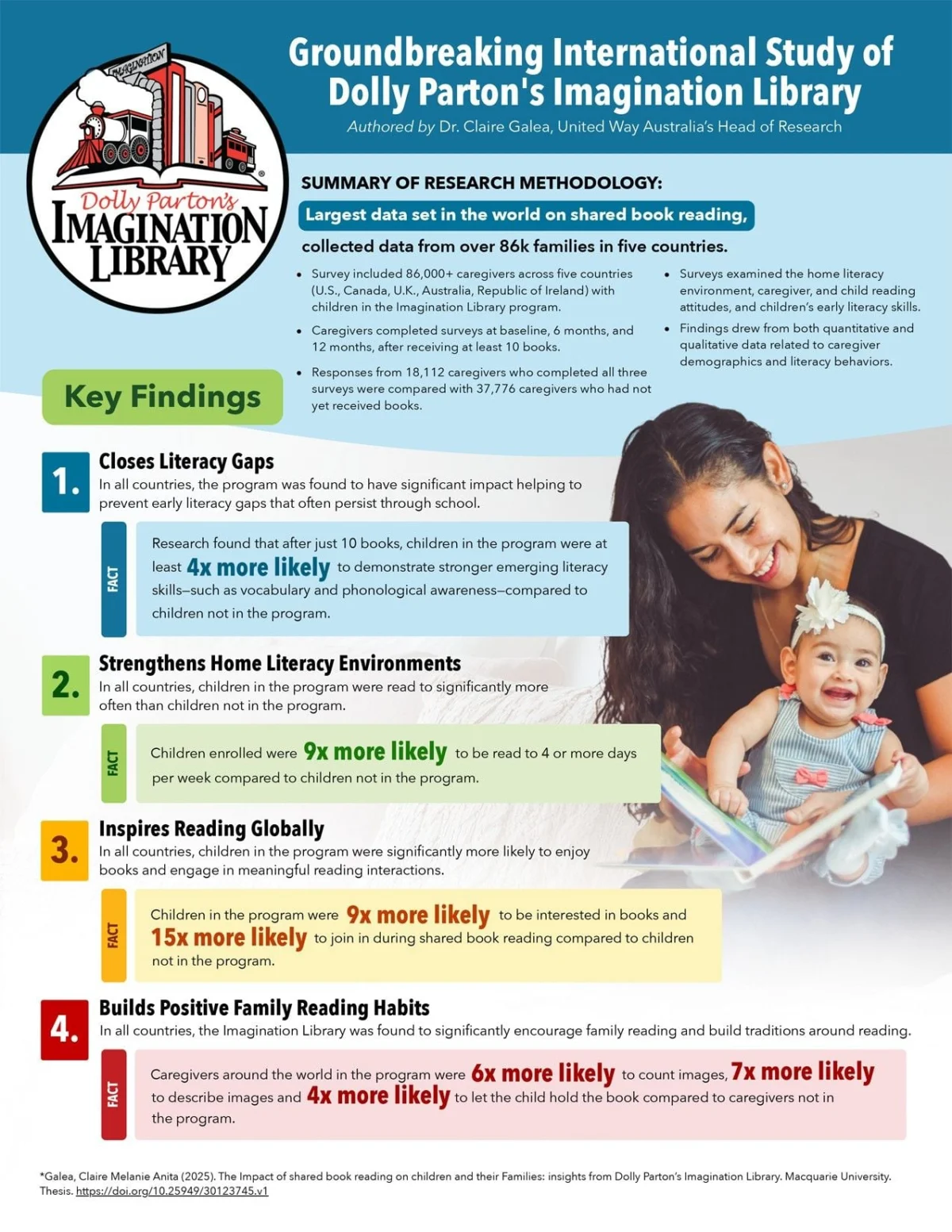
In recent years, a concerning trend of legislative actions targeting public libraries and educational initiatives has emerged across the United States. Among the programs now under scrutiny at the state level is Dolly Parton’s Imagination Library, a well-researched and cost-effective initiative designed to foster early childhood literacy. Despite its proven benefits and minimal financial impact relative to state budgets, attempts to revoke or significantly reduce funding for the Imagination Library raise questions about the motivations behind these legislative maneuvers, suggesting a focus on ideological opposition rather than genuine fiscal responsibility.
The Imagination Library is a nationwide program that provides free monthly books to children from birth through age five. This early access to a personal library has been scientifically linked to significant improvements in academic success and literacy development. Extensive research, including studies published in journals like ScienceDirect and supported by organizations such as the Imagination Library itself, consistently demonstrates that a robust home library is one of the strongest predictors of a child’s future educational achievements. This correlation is particularly pronounced for children from disadvantaged socioeconomic backgrounds, for whom the program can serve as a crucial bridge to educational equity.
A Legacy of Early Literacy
Launched in 1995 in Sevier County, Tennessee, Dolly Parton’s hometown, the Imagination Library quickly garnered attention for its profound impact on young children. Its success led to its national replication beginning in 2000, and the program has since expanded its reach to several other countries. As of 2023, the Imagination Library had distributed over 200 million books globally, with approximately one in six U.S. children under the age of five currently enrolled.
The operational model of the Imagination Library relies on a partnership between the national organization and local affiliates. While the national program leverages its scale to secure books at wholesale prices, local partners are responsible for fundraising and community outreach. These affiliates, often county-level United Way chapters or other community organizations, provide the necessary funding to cover the per-book costs and administrative expenses within their specific regions. This decentralized approach ensures that the program is tailored to local needs and community engagement. For instance, in many communities, the United Way acts as the primary facilitator, covering book costs and actively promoting the program to parents. The personal impact of this program is evident in stories like that of a child who, upon gaining access to the Imagination Library at age three, began receiving a diverse selection of high-quality books monthly, supplementing her family’s ability to purchase books and their access to public library resources. The shared experience of reading the same books also creates unique social and educational touchpoints for young children as they begin their schooling, fostering a sense of commonality and shared learning. The program’s curated book list, starting with classics like "The Little Engine That Could" and culminating with titles like "Look Out Kindergarten, Here I Come!", is designed to build foundational literacy skills and encourage a love of reading, while also intentionally featuring a wide array of diverse voices, perspectives, and experiences.
State Funding and the Equity Argument
In some instances, state governments play a crucial role in supporting the Imagination Library by allocating funds that are then matched with local contributions. This state-level investment is particularly vital for ensuring that children in the poorest and most rural communities have the same access to early literacy resources as their more affluent and urban counterparts. By pooling taxpayer money, states can create a more equitable playing field, offering a foundational advantage to all children, regardless of their geographic or economic circumstances. This approach aligns with broader principles of public goods funding, where state investment aims to provide essential services and opportunities universally.
Legislative Opposition and Shifting Funding Models
Despite the demonstrable benefits and cost-effectiveness of the Imagination Library, the program has become a target for legislative opposition in several states. Critics often frame the initiative as an unnecessary expense, overlooking the substantial evidence linking early literacy to long-term academic success and societal well-being. The program’s success in fostering a common understanding and exposing children to diverse narratives appears to be an additional point of contention for some lawmakers, fueling efforts to curtail its influence.
Indiana: From State Budget to Private Fundraising
In February 2025, Indiana legislators proposed removing the Imagination Library’s $4 million allocation from the state budget, which was part of a larger $51 billion fiscal plan. This proposal came at a time when the state itself had acknowledged the program’s role in improving child literacy rates. The public outcry following this announcement prompted Indiana’s governor to pledge that the program would continue. However, instead of reinstating state funding, the governor’s wife took on the responsibility of organizing fundraising events and soliciting private donations. For the 2025-2026 fiscal year, the Imagination Library achieved its goal of reaching all 92 counties in Indiana. Nevertheless, the fundraising targets initially set by the governor’s wife were not fully met, and state funding was not restored through the governor’s office. This reliance on private donations and the absence of a guaranteed state funding match have created significant uncertainty regarding the program’s long-term viability in Indiana, leaving its future precarious and subject to immediate discontinuation.

Kentucky: A Battle for Funding Restoration
The fight to protect the Imagination Library intensified in 2026. Kentucky officials initially proposed reducing the state’s financial contribution to the program as part of broader budget austerity measures. In 2021, Kentucky had established a state budget match that dollar-for-dollar supported local sponsors. This year, the proposed state contribution was reduced to one-third of the local match, meaning local partners would bear two-thirds of the book costs, with the state contributing only one-third. This change threatened to shut down nearly 80% of the county programs, impacting over 138,000 children who receive books through the initiative. Fortunately, due to significant advocacy from concerned citizens and organizations highlighting the detrimental impact of such cuts, Kentucky lawmakers ultimately restored the full dollar-for-dollar funding match to the program’s budget, averting widespread program closures after a protracted legislative debate.
Washington State: Elimination of State Contribution
In stark contrast to Kentucky’s outcome, Washington State has eliminated its state contribution to Imagination Library programs in the upcoming budget cycle. This decision follows a period of uncertainty, as the state had narrowly restored funding at the last minute in the previous year. The elimination of state funding directly contradicts the legislative commitment made in 2022 when lawmakers established and pledged support for the early literacy program through specific legislation.
California: Programmatic Missteps
Recent reports from April 2026 have also shed light on the mismanagement of California’s efforts to fund the Imagination Library within the state, indicating challenges in implementing the program effectively.
States in Holding Patterns: Alabama and Pennsylvania
Two additional states, Alabama and Pennsylvania, are currently facing delays in establishing or expanding their Imagination Library programs. In Alabama, initial legislative enthusiasm for the initiative has stalled, with a state bill to develop the program currently on the Senate calendar but not yet scheduled for debate. Similarly, Pennsylvania’s House of Representatives passed a bill to support and fund the Imagination Library in December, but the legislation has not yet been added to the Senate calendar for consideration.
Broader Implications and the Fight for Access
The ongoing challenges faced by the Imagination Library reflect a broader trend of opposition to educational initiatives and access to literature that has been observed since 2021. This resistance appears to stem from a fundamental disagreement about the value of early education and the provision of basic resources that foster curiosity, literacy, and an appreciation for the written word. The narrative of "caring about children" is often undermined by actions that seem to disproportionately affect vulnerable populations.
The consistent research highlighting the importance of early literacy and access to literature, particularly for disadvantaged children, underscores a disconnect between evidence-based policy and governmental priorities. Instead of investing in programs that build foundational skills and promote civic engagement, resources are often directed towards initiatives that appear to serve narrow political agendas. The sentiment expressed by some political figures, suggesting a preference for less educated constituents who are more likely to vote for them, further illuminates a potential strategic disinterest in fostering a broadly educated populace.
It is highly probable that the Imagination Library will continue to be a focal point for legislative debate in upcoming budget cycles, not only in states where battles are already underway but also in additional jurisdictions. The fight to preserve access to books, cultivate literacy, and champion education is multifaceted. Those dedicated to ensuring young people have these opportunities must remain vigilant, monitoring developments not only in traditional educational settings like libraries and schools but also in research-backed programs like Dolly Parton’s Imagination Library.
This ongoing struggle is representative of broader efforts to defend fundamental rights and access on numerous fronts. The collective action of citizens, community members, and even strangers working together to safeguard these essential resources highlights the profound importance of each individual fight. While these efforts may represent small allocations within vast state and federal budgets, they are critical for preserving human dignity and ensuring equitable opportunities for individuals in America and beyond. The continued targeting of such a foundational program raises serious questions about national priorities and the commitment to nurturing an informed and literate future generation.