
 Indra Kusuma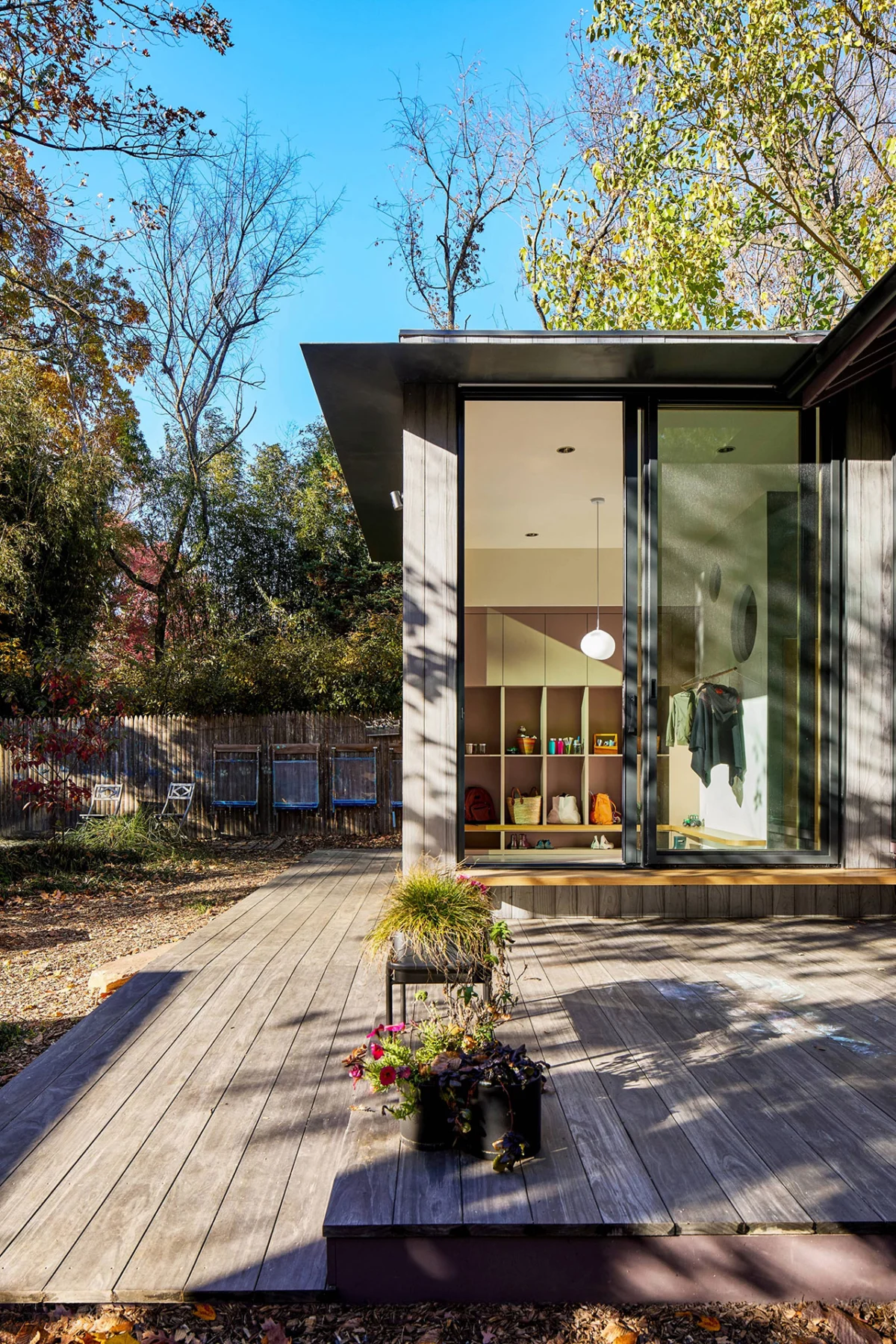
The intricate art of architectural renovation lies in a delicate dance between honoring the past and envisioning the future. It demands a profound understanding of a structure’s original intent, its historical resonance within a community, and the evolving needs of its current inhabitants. This balancing act is particularly pronounced when dealing with older buildings that possess a meaningful legacy, transforming them from mere edifices into living testaments of continuity and progress. Such was the challenge and triumph embodied in the recent revitalization of a cherished educational facility in Takoma Park, Maryland, undertaken by the locally renowned firm, WAK TOK architects.

For over eight decades, this bungalow-style building, originally constructed in the 1920s, has stood as an unwavering fixture in the fabric of the Takoma Park neighborhood. Its long history has woven it deeply into the community’s collective memory, serving generations of young learners and bearing witness to the passage of time. When WAK TOK architects were tasked with reimagining this former dwelling, the paramount objective was not merely to modernize but to preserve its inherent residential charm and historical integrity. Wakako Tokunaga, the visionary founder of WAK TOK architects, articulated this guiding principle succinctly: “When we were asked to modernize the schoolhouse, a beloved bungalow originally built in the 1920s, we felt it was essential to honor that legacy.” This statement underscores a philosophy that prioritizes historical respect alongside contemporary innovation, a hallmark of responsible architectural practice in historically rich areas.
A Legacy of Learning: The School’s Historical Footprint
The school’s origins trace back to the 1920s, a period marked by distinct architectural styles and community development in Takoma Park. Often referred to as "The Azalea City," Takoma Park, Maryland, is known for its tree-lined streets, diverse community, and a strong commitment to environmentalism and historical preservation. Buildings from the 1920s, especially bungalows, represent a significant chapter in the city’s architectural narrative, reflecting a time of burgeoning suburban growth and a desire for comfortable, family-oriented living. The original bungalow, with its characteristic low-pitched roof, wide eaves, and often a cozy porch, would have embodied a sense of domesticity and warmth—qualities that the community had come to associate with the school over its long tenure.
For more than 80 years, the facility has served as an educational hub, deeply embedding itself in the lives of local families. Its enduring presence has made it a landmark, a place where countless children took their first steps into formal learning. This extensive history meant that any intervention would be scrutinized not just for its functional improvements but also for its sensitivity to the building’s established identity. Renovation projects involving such historically significant structures often navigate a complex landscape of local zoning regulations, historic district guidelines, and, perhaps most importantly, community sentiment. The challenge for WAK TOK architects was to introduce 21st-century educational infrastructure and environmental principles without erasing the charm and familiarity that defined the school for generations.
WAK TOK Architects’ Vision: Blending Past, Present, and Nature
The firm’s approach was rooted in a holistic understanding of the project’s multifaceted demands. Rather than viewing the renovation as a stark modernization, WAK TOK architects envisioned a transformation that would seamlessly integrate the building’s historical essence with a progressive, nature-centric educational philosophy. The school’s identity as an outdoor nursery school provided a unique context, where the surrounding landscape inherently serves as a primary learning environment. This pedagogical focus directly informed the architectural scheme: to reinforce the intrinsic relationship between each child and the natural world, effectively "letting the outside in."
Wakako Tokunaga’s design philosophy is characterized by a deep respect for context and a forward-thinking approach to sustainable living and learning. For this project, her team sought to expand the physical and emotional boundaries of the learning space, making nature an undeniable and constant presence. This meant moving beyond traditional classroom walls to create an environment where the transition between indoor and outdoor exploration is fluid and natural, fostering a sense of wonder and connection to the environment.
Architectural Innovations for Immersive Learning
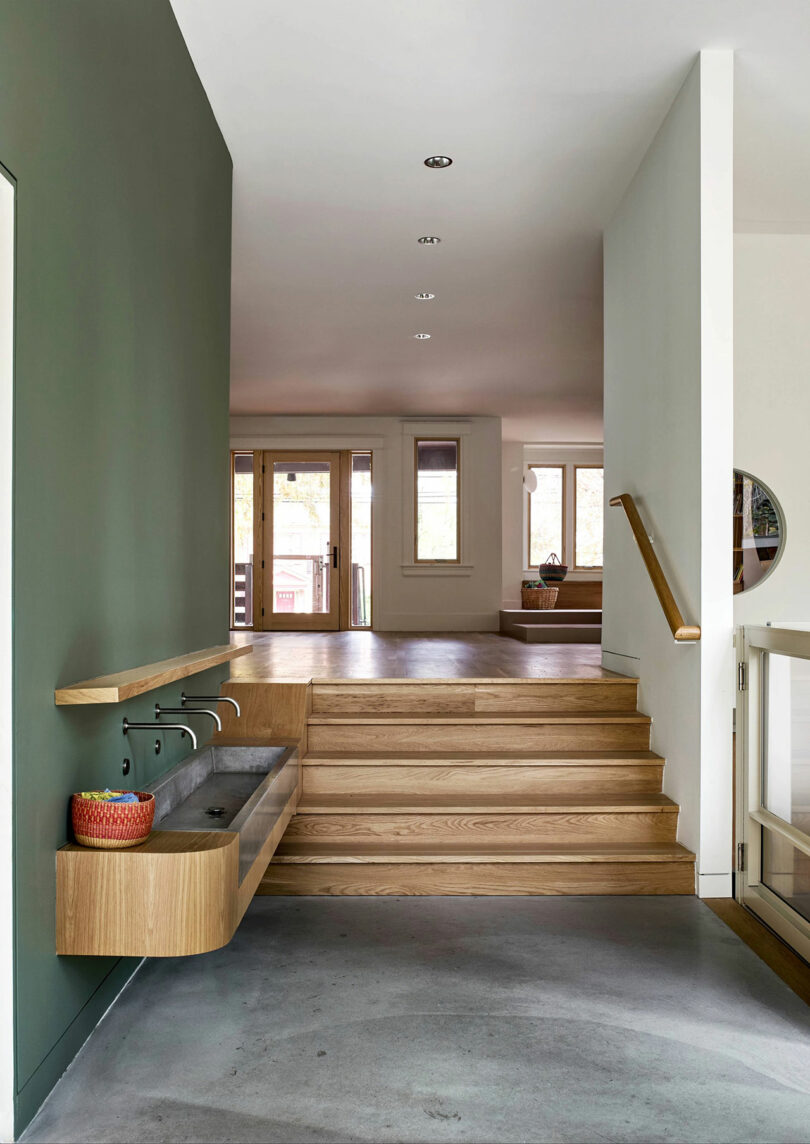
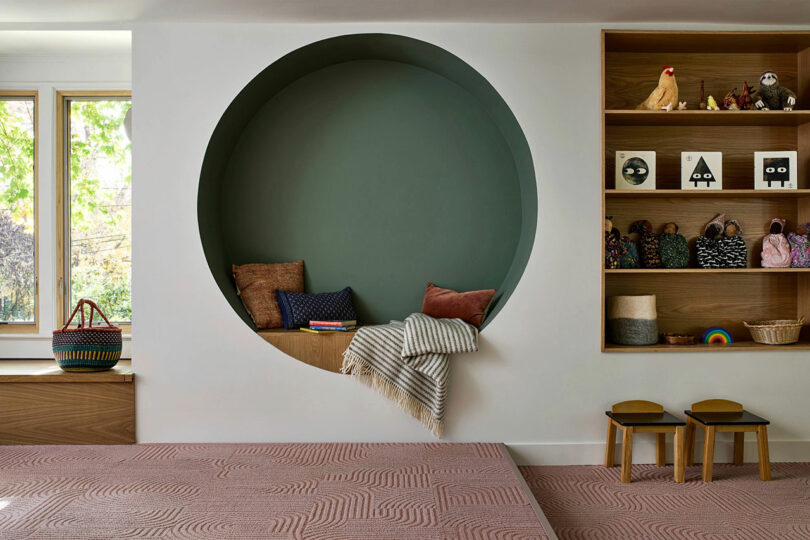
The renovation introduced several critical architectural interventions designed to achieve this harmonious blend of old and new, indoor and outdoor. One of the most significant changes involved reimagining the building’s internal volume and light distribution. A portion of the first floor was strategically removed, a bold structural decision that dramatically transformed a previously neglected basement area. This intervention created a sun-filled, double-height room, effectively integrating the lower level into the main educational flow and flooding it with natural light. This architectural move not only optimized usable space but also fundamentally altered the spatial dynamics, creating a more open, airy, and inviting atmosphere that directly combats the often dark and confined nature of traditional basements.
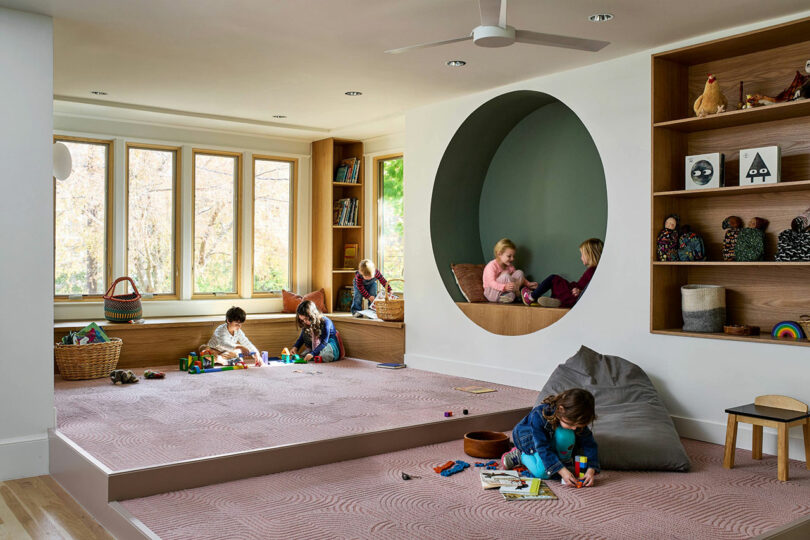
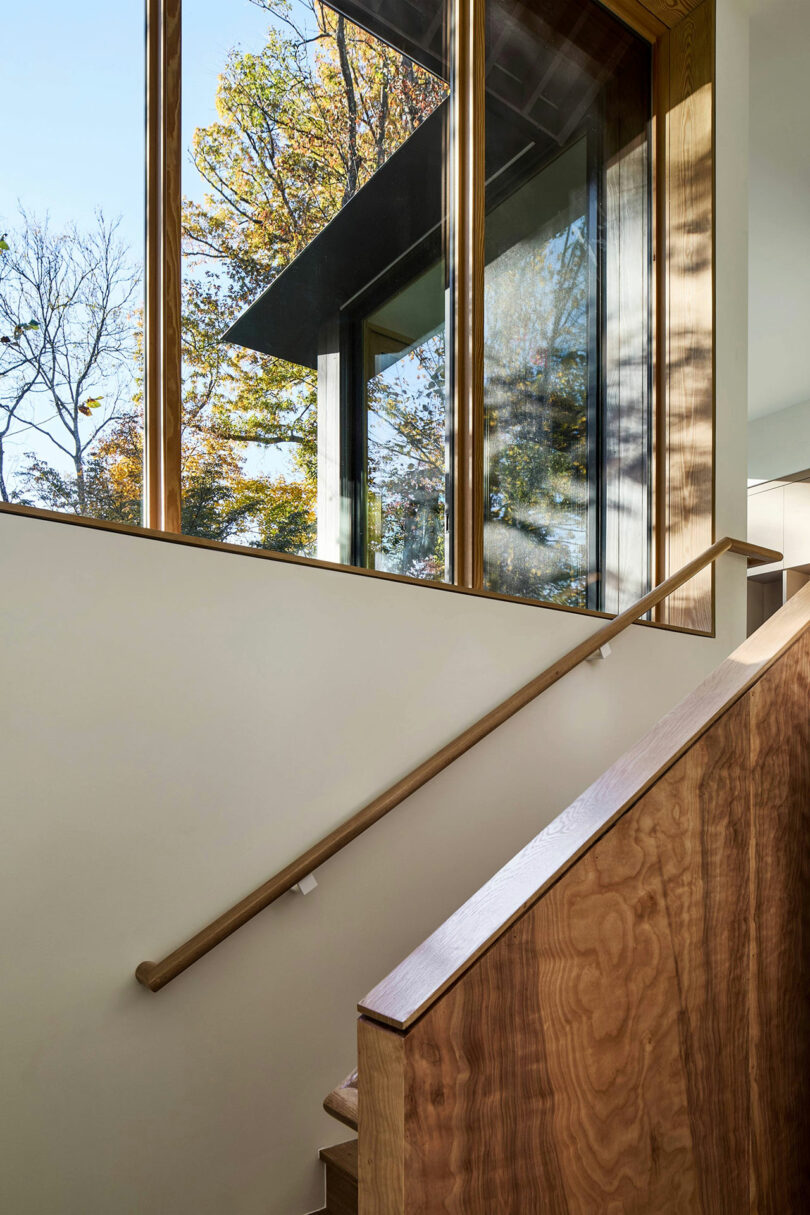
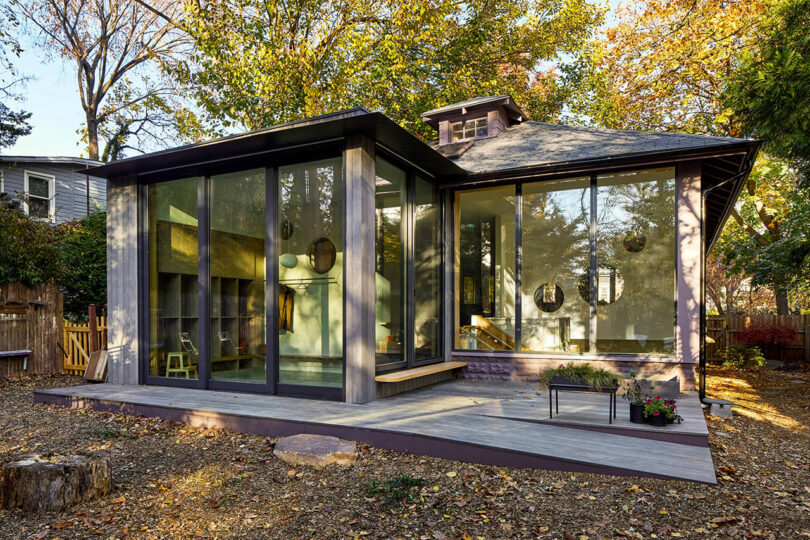
The concept of seamless integration between interior and exterior spaces was further championed through the strategic use of glazing. Classrooms were endowed with expansive views, thanks to large windows and glass walls that frame the surrounding natural environment. This design choice provides students with an immersive experience, allowing them to observe and connect with the changing seasons and daily natural phenomena directly from their learning spaces. Such visual access to nature has been extensively linked to improved cognitive function, reduced stress levels, and enhanced well-being in educational settings.
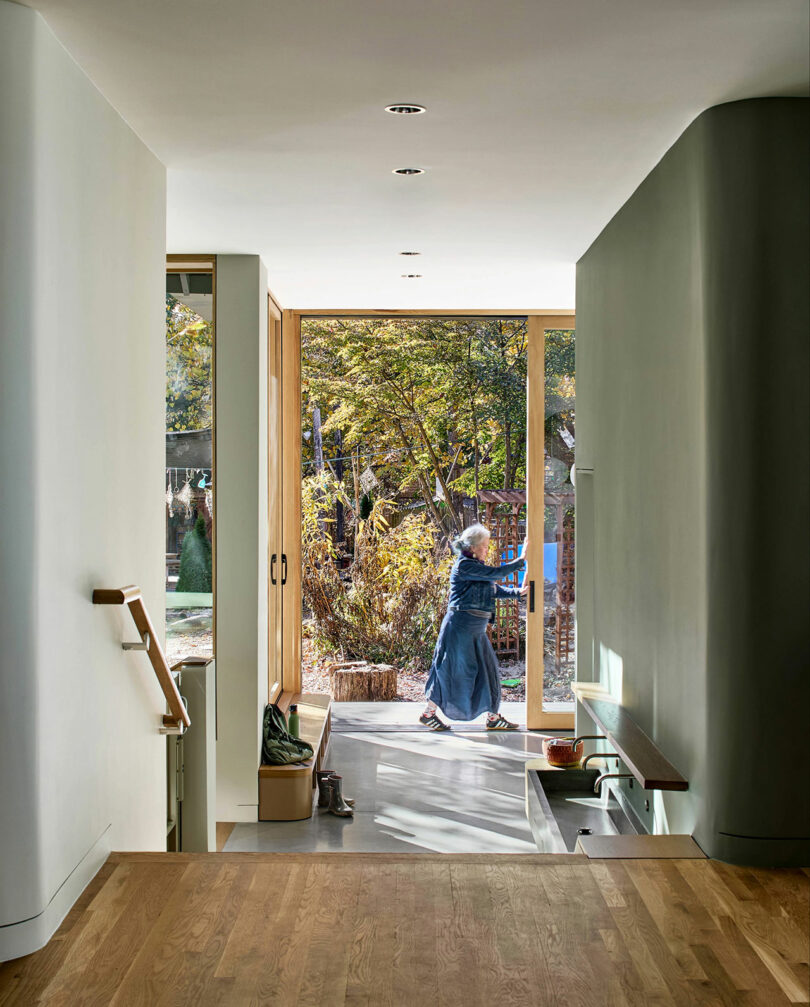
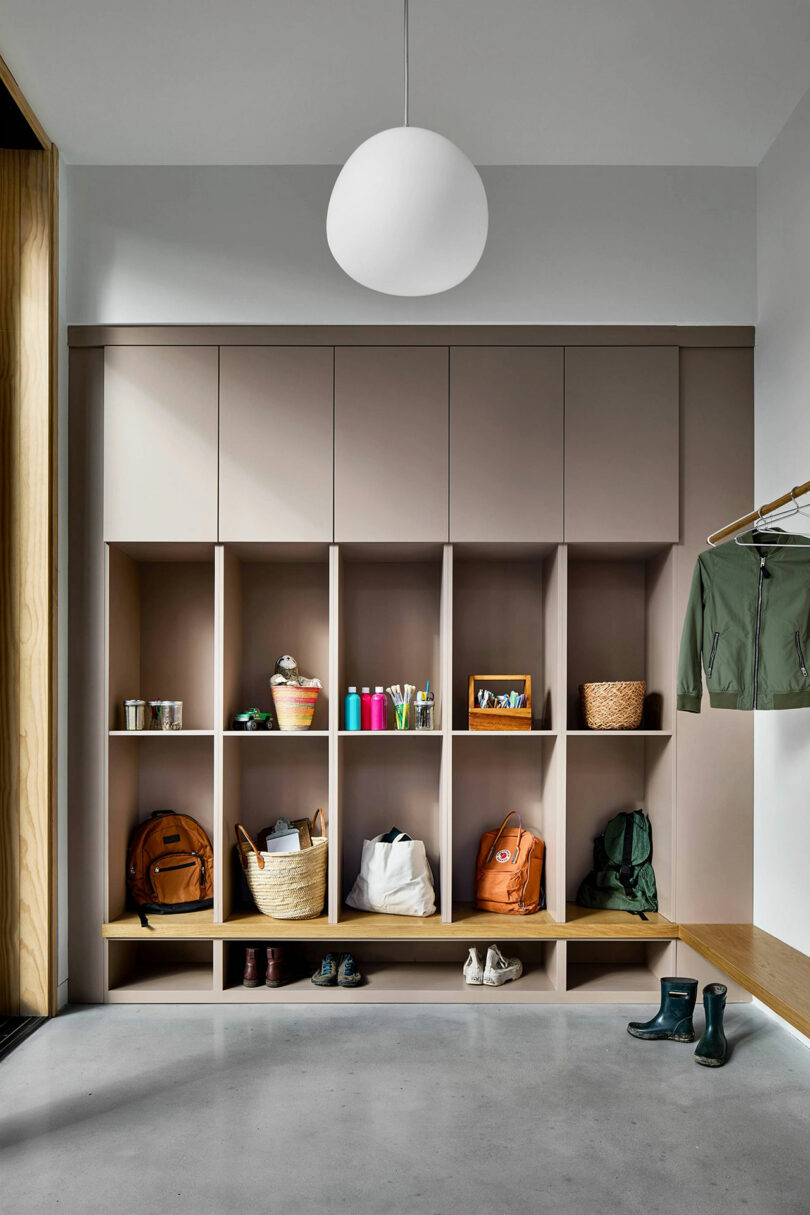
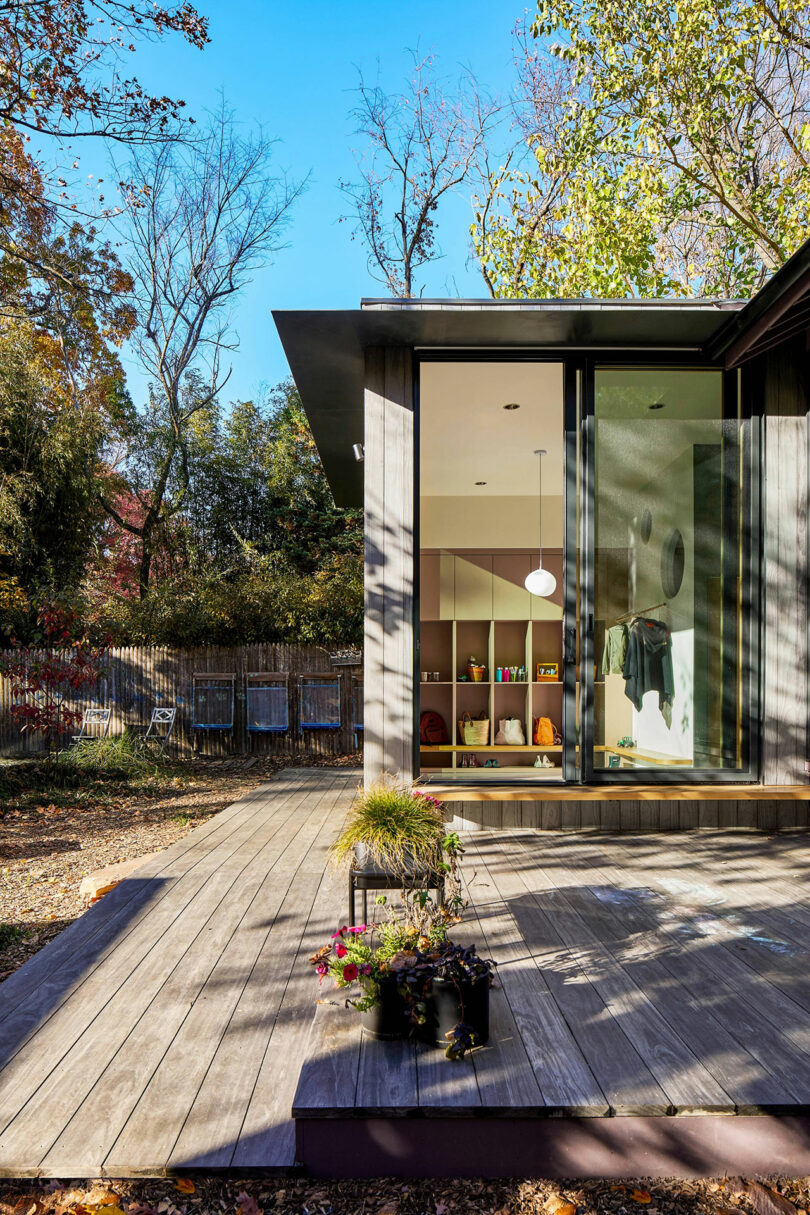
A central element in facilitating the indoor-outdoor transition is the newly designed mudroom. This space acts as the primary point of entry and exit, strategically positioned to manage the ebb and flow of children moving between alfresco exploration and indoor activities. A large glass wall in the mudroom can be opened, effectively dissolving the boundary between inside and out. This design feature is not merely aesthetic; it serves a crucial functional purpose for an outdoor nursery school, providing a practical zone where children can transition comfortably, shedding muddy boots and wet coats. Thoughtfully designed, child-sized benches and cubbies within the mudroom empower young learners with a sense of independence, encouraging them to manage their belongings and prepare for their next adventure, whether inside or out.
Sustainability and Child-Centric Materiality
The selection of materials and systems for the renovation was guided by a strong commitment to health, sustainability, and durability—principles particularly vital in an educational environment catering to young children. WAK TOK architects meticulously chose all-natural, non-toxic elements throughout the facility. This decision reflects a growing awareness in architectural design regarding indoor air quality and the long-term health impacts of building materials, especially for sensitive populations like children. Eliminating volatile organic compounds (VOCs) and other harmful chemicals creates a safer, healthier environment conducive to learning and play.
An oak finish was extensively utilized, adding an organic and warm tactile quality to every zone within the school. Oak, a natural material, contributes to a biophilic design approach, connecting occupants with natural elements and textures. This choice enhances the aesthetic appeal while reinforcing the overall theme of harmony with nature. For high-traffic areas and spaces prone to moisture, such as the mudroom and activity zones, buffed concrete floors and sinks were installed. Concrete, when properly sealed and finished, offers exceptional durability, ease of maintenance, and resistance to wear and tear—qualities indispensable in a busy school environment where muddy boots and spills are commonplace. Its robust nature ensures longevity, reducing the need for frequent replacements and contributing to the project’s sustainability profile.
Further integrating sustainable practices, raised platforms used for rest and play were finished with carpeting made from recycled and bio-based materials. This choice not only provides a soft, comfortable surface for children but also showcases a commitment to circular economy principles, diverting waste from landfills and utilizing renewable resources. Beyond material choices, the building’s operational efficiency was significantly enhanced through improved insulation and the installation of a high-efficiency HVAC system. These upgrades are projected to substantially reduce overall energy consumption, leading to lower operating costs and a reduced carbon footprint. Crucially, improved insulation and a modern HVAC system also contribute to a more stable and comfortable indoor climate, directly impacting occupant well-being by providing consistent temperatures and better air circulation.
Pedagogical Integration and Community Impact
The architectural renovation by WAK TOK architects is not merely an aesthetic or structural upgrade; it is a profound reimagining of an educational ecosystem. The thoughtful placement of steps, windows, and transitional spaces is meticulously designed to foster engagement that aligns seamlessly with the school’s curriculum, which places a significant emphasis on ecological awareness. By blurring the lines between the built environment and the natural world, the design inherently supports hands-on, experiential learning. Children are encouraged to observe, interact with, and understand their environment as an integral part of their daily routine. This approach moves beyond theoretical learning, providing a constant, tangible connection to ecological principles.
The renovated school exemplifies a modern pedagogical philosophy where instruction is not confined to four walls. Learning becomes an effortless, ongoing process, unfolding wherever a child’s curiosity leads them—whether exploring a classroom nook, observing autumn leaves through a vast window, or transitioning from an outdoor play area to the mudroom. This fluidity supports a more dynamic and child-led learning experience, fostering creativity, problem-solving skills, and a deeper appreciation for nature.
For the community of Takoma Park, the revitalization of this "beloved bungalow" signifies a successful model of adaptive reuse that respects local heritage while embracing contemporary needs. The preservation of the building’s residential charm ensures that its familiar presence continues to resonate, maintaining a visual and emotional link to the neighborhood’s past. Wakako Tokunaga’s concluding sentiment encapsulates the project’s overarching success: “The school has always felt like an extension of the home, both physically and emotionally. Our goal was to preserve the warmth, sense of wonder, and connection to nature.” This statement reflects a deep understanding of the school’s role not just as an institution, but as a nurturing, community-centric space that fosters growth and discovery.
Broader Implications and Future Trends
The WAK TOK architects’ project in Takoma Park serves as a compelling case study for several broader implications in contemporary architecture and education. It highlights the growing importance of biophilic design—an architectural approach that seeks to connect building occupants more closely to nature—in educational settings. Research consistently shows that environments rich in natural light, views of nature, and natural materials can significantly improve concentration, reduce absenteeism, and enhance overall academic performance and well-being in students. This project powerfully demonstrates how these principles can be applied even to existing, historic structures.
Furthermore, the renovation underscores the critical value of sustainable practices in school construction and renovation. By prioritizing non-toxic materials, improved insulation, and energy-efficient systems, the project sets a high standard for environmental stewardship in educational infrastructure. This approach not only benefits the immediate occupants by creating a healthier learning environment but also contributes to broader environmental goals by reducing resource consumption and ecological footprint.
Finally, this project offers valuable insights into the evolving understanding of children’s learning environments. The shift towards flexible, nature-integrated spaces reflects a recognition that early childhood education thrives when children are given opportunities for exploration, movement, and direct engagement with the natural world. By blending historical preservation with cutting-edge sustainable and child-centric design, WAK TOK architects have not only modernized a historic school but have also created a vibrant, inspiring, and environmentally conscious space that will continue to nurture young minds for decades to come, setting a precedent for similar projects nationwide. The success of this endeavor demonstrates that honoring a building’s past can be a catalyst for creating a more innovative and sustainable future.







