 rifanmuazin
The burgeoning landscape of the creator economy, valued at an estimated $250 billion globally and projected to reach $480 billion by 2027, presents both immense opportunity and significant challenges for individuals seeking to establish a digital presence. While conventional wisdom often emphasizes "consistency" and "daily engagement" as cornerstones of success, these directives frequently overlook the diverse cognitive landscapes of creators. A recent case highlights an individual, diagnosed with ADHD in 2019 and Level 1 Autism in 2020, who navigated these common pitfalls by eschewing generic advice and instead architecting a bespoke system tailored to their neurodivergent brain. This innovative approach offers a blueprint not only for others within the neurodivergent community but also for anyone struggling with content creation paralysis.
The Challenge: Neurodiversity in the Demanding Creator Economy
For many, the path from "starting a social media account" to "becoming a successful creator" is not a linear, self-evident progression. This is particularly true for neurodivergent individuals, who often experience executive dysfunction – difficulties with planning, organizing, task initiation, and maintaining focus – which are hallmark characteristics of ADHD. Similarly, individuals with autism often thrive on routine and predictability, yet the dynamic and often unpredictable nature of social media content trends and audience engagement can be inherently destabilizing. Research from organizations like the National Institute of Mental Health indicates that ADHD affects approximately 4.4% of adults, while the Centers for Disease Control and Prevention estimate autism spectrum disorder prevalence at 1 in 36 children, underscoring a significant portion of the population that may face unique hurdles in traditionally structured or unstructured environments.
The creator economy, with its emphasis on self-direction, constant ideation, and rapid execution, can inadvertently amplify these challenges. Traditional advice, such as "show up every day," often assumes an innate ability to translate abstract goals into concrete, manageable daily actions. For brains that struggle with this inherent step-by-step breakdown, such advice can lead to overwhelming feelings of inadequacy and burnout, even before a single piece of content is published. This individual’s initial experience mirrored this sentiment, nearly abandoning their creative aspirations due to the disconnect between standard advice and their neurological reality.
A Personal Journey to Systematized Success
Driven by a long-held desire to become a social media creator, the individual embarked on their journey six months prior. The initial phase was marked by frustration as conventional content creation strategies proved incompatible with their cognitive processing. Recognizing that their ADHD and autistic traits necessitated a fundamentally different approach, they ceased attempting to conform to mainstream methodologies. Instead, they initiated a process of self-observation and iterative system building, focusing on creating a workflow that accommodated their unique neurological wiring rather than fighting against it. This personal chronology of trial and error ultimately yielded a robust framework designed for sustained consistency.
Core Principles of the Neurodivergent-Friendly System
The system developed by the creator is characterized by several key principles, each designed to mitigate common neurodivergent challenges and foster sustainable creative output.
1. Lowering the Starting Bar and Managing Perfectionism:
One of the most significant initial hurdles was the pervasive pressure to achieve "perfection" and widespread "consistency" across multiple platforms from day one. Conventional advice often implicitly encourages an ambitious, all-encompassing launch. For an individual prone to perfectionism, a common trait exacerbated by ADHD’s all-or-nothing thinking, this translated into an unattainable standard that led to paralysis and burnout. The breakthrough came with two strategic decisions:

- Platform Focus: Committing to a single platform, TikTok, with a minimal posting frequency of one video per week. The expansion to additional platforms, such as LinkedIn, only occurred once the initial platform’s routine felt effortless.
- Releasing Perfection: Acknowledging that "perfect is the enemy of good." This involved consciously lowering internal quality benchmarks to prioritize completion and consistency over an idealized, often elusive, standard. This shift allowed for content to be published rather than perpetually refined or scrapped.
This approach aligns with principles of habit formation, which suggest that starting with incredibly small, achievable actions increases the likelihood of long-term adherence. Experts in behavioral psychology often advise "micro-habits" to overcome inertia and build momentum, a strategy perfectly embodied here.
2. Strategic Idea Capture and Development:
A hyperactive brain, characteristic of ADHD, is a wellspring of ideas, but these insights often emerge at inconvenient times and are easily lost without immediate capture. The creator likened this experience to a "train barreling through," where each car represents a fleeting thought. To combat this inherent forgetfulness and the transient nature of creative sparks, a multi-stage idea capture system was implemented:
- Initial Capture: Utilizing readily available tools like the iPhone Notes app for quick textual jots.
- Voice Memos for Rapid Processing: Recognizing the speed of their thought process, voice memos became a critical tool. This allowed for immediate, uninhibited articulation of ideas.
- Transcription and Organization: Employing AI-powered transcription services like Otter.ai to convert spoken thoughts into organized text, ensuring no nuance was lost and ideas were readily accessible for later development.
This systematic approach to idea management transforms transient thoughts into actionable content concepts, directly addressing the working memory challenges often associated with ADHD.
3. The Power of Content Batching:
The demand for daily content creation and the constant "context switching" it entails proved highly draining for the creator. The need to "get in the zone" for creative work clashed with the daily distractions of life and the inherent difficulty in task switching experienced by many neurodivergent individuals. Inspired by strategies like those shared by Kirsti, the creator adopted a batching methodology:
- Dedicated Creation Blocks: Allocating specific, longer time blocks (e.g., one morning per week) for intensive content production. Initially, this involved creating five to six pieces of content in one sitting.
- Phased Expansion: Gradually increasing batching sessions as the routine solidified, adding a second morning for three to four additional pieces.
- Separation of Tasks: Distinguishing between content creation (batching) and content distribution/engagement (scheduling posts, community interaction).
This method drastically reduces the cognitive load associated with daily creation, allowing for deeper focus during designated periods and preserving mental energy for other tasks. Productivity research consistently demonstrates the efficiency gains from batching similar tasks, minimizing the "startup cost" of switching between different types of mental work.
4. Flexible Frameworks: Themed Content Calendars:
The co-occurrence of ADHD and autism presented a unique challenge: the autistic brain’s desire for structure versus the ADHD brain’s tendency to deviate from rigid plans. The solution was a "flexible framework" – a simple content calendar utilizing themed days rather than specific content assignments.
- Thematic Consistency: Assigning broad themes to specific days (e.g., "carousel days," "gaming tips and tricks," "cat video day," "CapCut memes" for TikTok).
- Reduced Decision Fatigue: This eliminates the daily struggle of deciding what kind of content to create, narrowing the creative scope to what within that format will be produced.
This ingenious compromise provides the necessary structure for the autistic brain while offering sufficient flexibility to accommodate the ADHD brain’s need for novelty and aversion to strict adherence. It transforms a daunting blank slate into a series of manageable, themed prompts.
5. Leveraging Templates for Efficiency:
Starting from scratch for every piece of content was identified as a major source of overwhelm and paralysis. To overcome this, the creator implemented a system of templates:
- Platform-Specific Templates: Developing templates for common content types, such as gaming videos in CapCut.
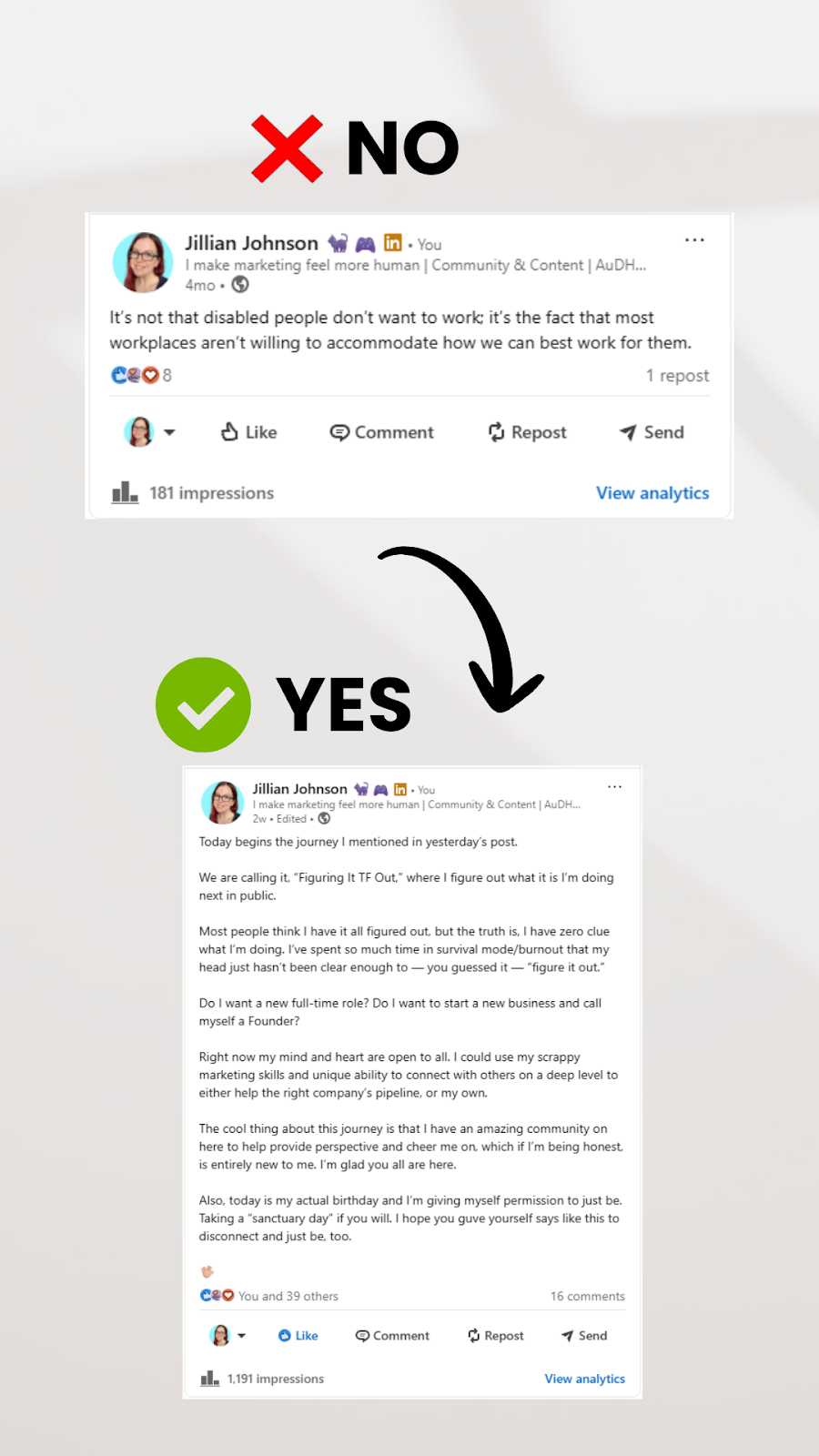
- Structural Frameworks: For platforms like LinkedIn, a consistent "Hook, Story, Lesson, CTA" framework was established. This provides a clear, repeatable structure, ensuring all essential components are included without having to invent them anew each time.
Templates significantly reduce cognitive load by providing a pre-defined starting point, transforming a complex creative task into a fill-in-the-blanks exercise. This strategy is widely advocated in professional writing and design to enhance efficiency and maintain brand consistency.
6. Automation as an Executive Function Aid:
Forgetfulness, a common symptom of ADHD, proved to be a significant barrier to consistent posting. Despite creating high-quality content, the act of remembering to publish it could be delayed for days or even weeks. The solution was to remove the reliance on fallible human memory:
- Scheduling Tools: Utilizing platforms like Buffer to schedule content immediately after batch creation sessions.
- "Set It and Forget It" Principle: Ensuring that posting occurs automatically, irrespective of the creator’s current mental state or recall abilities.
Automation serves as an invaluable external executive function, ensuring that the final, critical step of content distribution is consistently executed. This minimizes the risk of creative effort going unseen due to a lapse in memory or attention. Data from a 2013 study published in Neuropsychology Review on ADHD and memory underscores the prevalence of such challenges, making automation a practical and essential mitigation strategy.
Resilience and Adaptation: Navigating Setbacks
Acknowledging that even the most robust systems are subject to human variability, especially for neurodivergent individuals, the creator also built in a mechanism for managing inevitable setbacks. Missing posts or even entire weeks is not viewed as a failure but as a predictable part of the process. The core principle for recovery is straightforward:
- No Catch-Up Pressure: Avoiding the temptation to compensate for missed posts by overproducing in subsequent periods.
- Seamless Re-engagement: Simply resuming the system from where it left off (one post, one platform, one day).
This forgiving approach prevents a missed step from spiraling into complete abandonment, fostering a long-term, sustainable relationship with content creation. It recognizes that a system’s true strength lies not just in its efficiency but in its resilience and adaptability during "worst brain days."
Broader Implications and Expert Perspectives
This creator’s journey and the system they have meticulously built offer profound implications beyond the neurodivergent community. Many neurotypical individuals also struggle with consistency, perfectionism, and the demands of the creator economy. The principles of lowered starting bars, idea capture, batching, flexible calendars, templating, and automation are universally applicable strategies for enhancing productivity and reducing burnout.
Experts in organizational psychology and neurodiversity advocacy consistently highlight the importance of personalized strategies. Dr. Russell Barkley, a leading researcher on ADHD, has often emphasized the need for externalizing executive functions through environmental modifications and tools. The system described here is a prime example of such externalization, transforming internal cognitive struggles into external, manageable processes. Similarly, social media strategists increasingly advise against the "hustle culture" mentality, advocating for sustainable practices that prioritize creator well-being, echoing the core tenets of this neurodivergent-friendly approach.
The growth of the creator economy means that more individuals are venturing into self-directed work. As this trend continues, understanding and implementing inclusive, neurodiversity-affirming practices will become paramount. This model demonstrates that success is not contingent upon conforming to a singular, neurotypical ideal of productivity but rather on innovating systems that honor individual cognitive strengths and challenges.
The Future of Inclusive Content Creation
The system developed by this creator stands as a testament to the power of self-awareness and personalized problem-solving. It offers a compelling counter-narrative to the often-unrealistic expectations of the digital creative sphere. By openly sharing their methodology, this individual contributes significantly to a growing dialogue about neurodiversity in the workplace and creative industries. Their experience underscores that with the right tools and a deep understanding of one’s own brain, sustainable consistency in the demanding world of social media creation is not just possible, but achievable in a way that prioritizes mental well-being over conventional, often ill-fitting, advice. The message is clear: start small, build iteratively, and design a system that works for your brain, not against it.