Indra Kusuma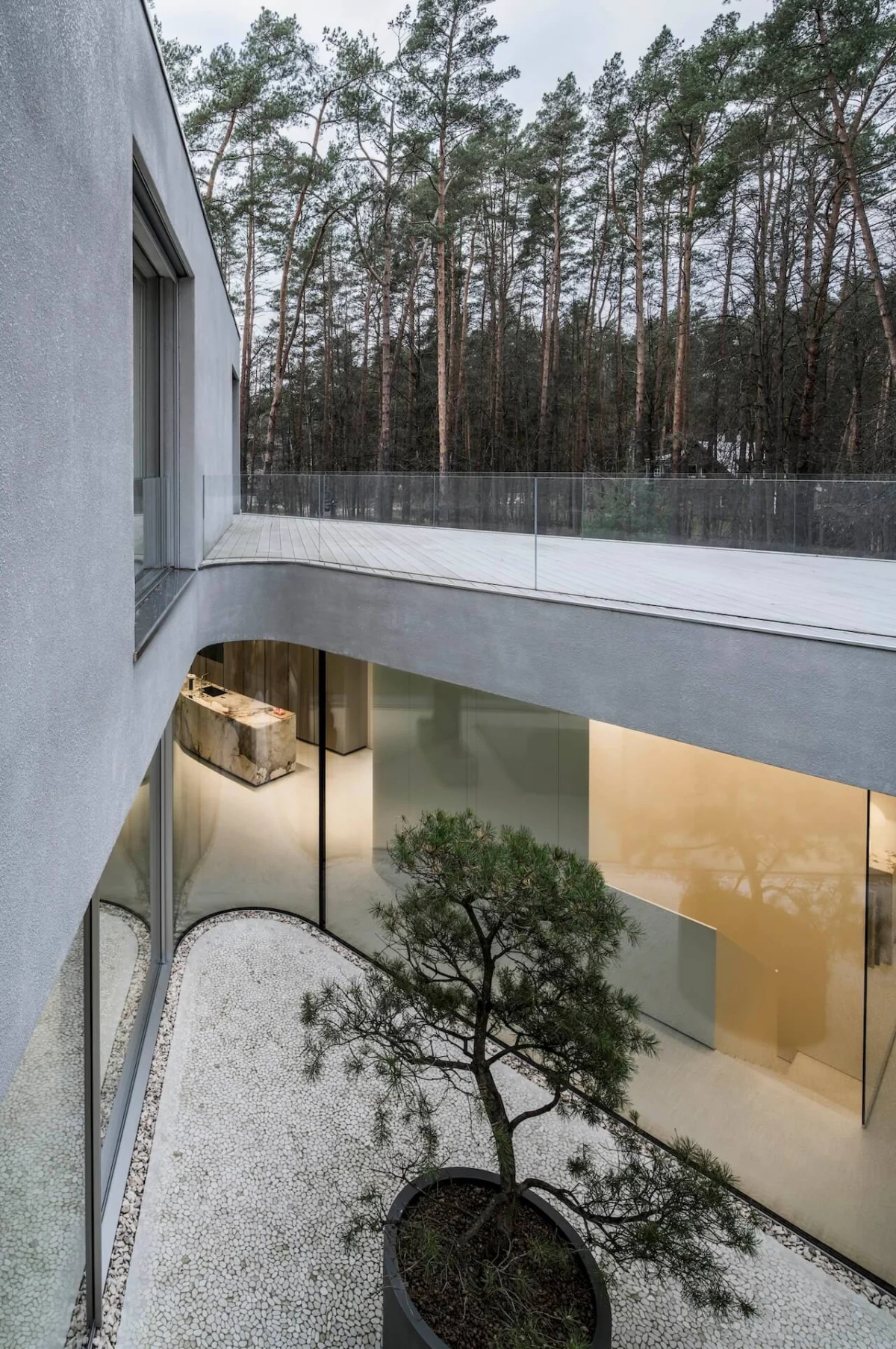
When the renowned Polish architectural studio KWK Promes was first invited to submit a concept for a private residence in Vilnius, Lithuania, the parameters presented what many architects might consider an ideal commission. A discerning private client had initiated a design competition, seeking a visionary firm to conceptualize a modern home on a generously sized suburban plot. This initial brief set the stage for a project that would ultimately transcend its initial scope, evolving into a compelling testament to architectural resilience and adaptive design in the face of significant, unexpected challenges.
The Genesis of a Vision: An Architect’s Dream Commission
The project commenced with an ambitious vision for a family home nestled in a distinctive area of Vilnius. KWK Promes, based in Katowice, Poland, and led by the internationally acclaimed architect Robert Konieczny, brought a reputation for bold, innovative designs in both residential and cultural architecture. Their portfolio includes critically acclaimed works like the "Safe House" in Poland, known for its dynamic kinetic elements, and the adaptive reuse of the historic slaughterhouse for the Plato Art Gallery in Ostrava, showcasing their mastery of context-sensitive yet forward-thinking design. It was this proven track record of pushing architectural boundaries and responding intelligently to diverse contexts that made them a natural choice for the Vilnius competition.
The chosen site was part of a suburban landscape characterized by a loose, traditional development pattern, where houses and summer cottages had historically coexisted with ample green spaces. The firm noted the historical context: "This is an area characterized by loose, traditional development, with houses and summer cottages nestled among trees and expansive recreational grounds. On the plot included in the competition, as well as in its surroundings, there were once wooden houses from the interwar period, which have not survived to the present day." This historical tapestry of rustic dwellings amidst a verdant setting offered a rich backdrop for a contemporary interpretation. The initial brief allowed for a substantial footprint, providing KWK Promes with considerable freedom to explore spatial relationships and integration with the natural environment. Their preliminary concept was elegant in its simplicity and ingenious in its spatial optimization: raising a portion of the house one level to effectively double the usable patio space, thereby drawing natural daylight deep into the interior volumes. The communal living areas were envisioned for the ground floor, while private bedrooms occupied the upper level, a straightforward yet highly functional arrangement.
Vilnius and its Architectural Context
Vilnius, the capital of Lithuania, is a city renowned for its Baroque Old Town, a UNESCO World Heritage site, yet it also embraces modern architectural expressions. The suburban areas, where the Trim House project is located, often present a fascinating blend of historical remnants, Soviet-era structures, and burgeoning contemporary developments. The specific plot, with its memory of interwar wooden houses and its current state of natural abundance, offered a unique opportunity to create a dwelling that could respect its heritage while boldly looking to the future. A private client opting for a design competition underscored a desire for architectural excellence and a bespoke solution, signaling an openness to innovative ideas that might challenge conventional suburban housing norms. This commitment to an architectural competition also highlighted the client’s trust in a process designed to elicit the most creative and fitting response for their specific needs and site.
The Unforeseen Challenge: A Political Shift and Drastic Site Reduction
The project, initially proceeding with the promise of expansive possibilities, faced an abrupt and significant hurdle in 2017. Just as KWK Promes was poised to begin construction, a profound political shift occurred in Lithuania. The Lithuanian Farmers and Greens Union, having come to power, implemented new urban planning regulations that drastically reduced the allowable building footprint on plots like the one designated for the Trim House. This policy change, likely driven by broader environmental conservation efforts, a desire to curb urban sprawl, or to preserve green spaces within developing areas, effectively halved the permissible building area by 50 percent.
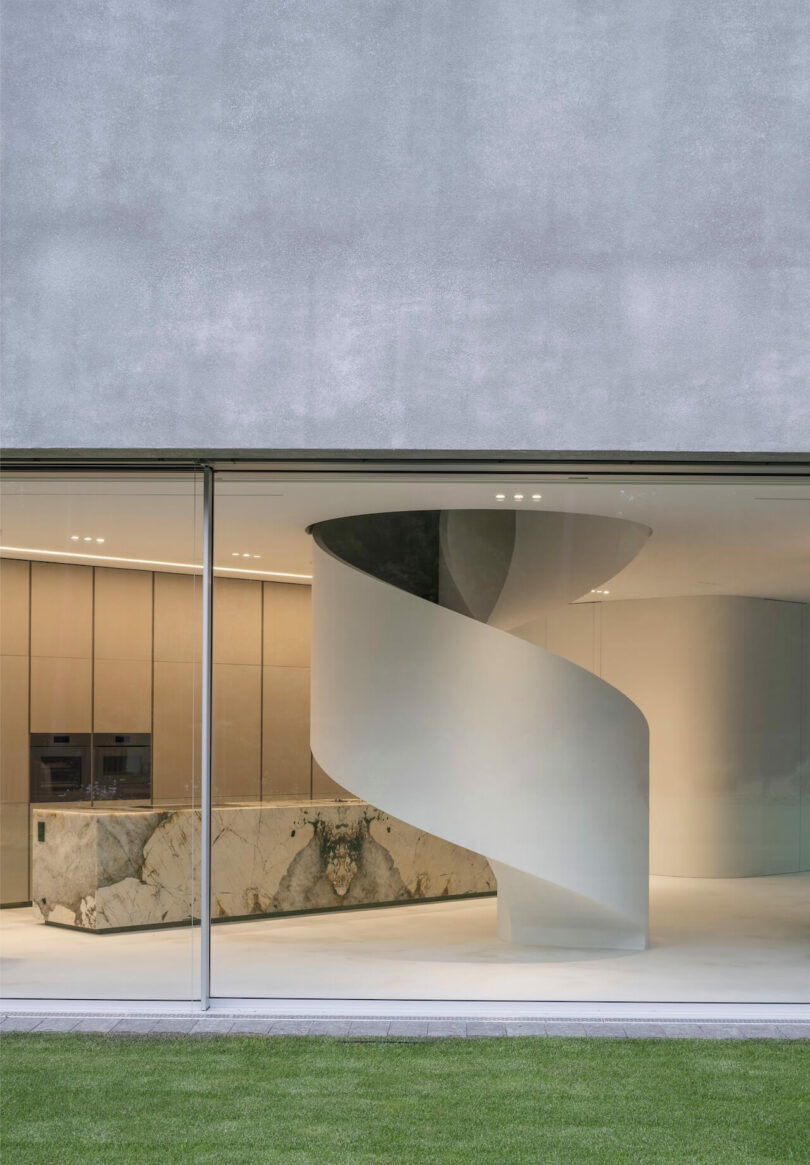
This sudden regulatory imposition presented a severe dilemma for both the client and the architects. The client’s immediate instinct was to abandon the site and seek a new, larger plot where the original design could be realized without compromise. This reaction was understandable, given the investment of time and resources into the initial competition and design phase. However, KWK Promes, demonstrating their characteristic ingenuity and commitment, chose a different path. Rather than conceding defeat or recommending a retreat, they convinced the owner to remain committed to the original site. This pivotal decision hinged on their belief that architectural innovation could not only overcome this formidable obstacle but could, in fact, be enhanced by it.
Architectural Resilience: The Birth of the Triangular Floor Plan
The challenge was monumental: to reinterpret a design originally conceived for a generous footprint onto a plot half its size, all while reducing the home’s total surface area by a substantial 40 percent. This required a fundamental re-evaluation of every aspect of the initial concept. Robert Konieczny and his team at KWK Promes embraced these newfound constraints not as limitations, but as catalysts for a more focused and perhaps even more distinctive design. The firm articulated their solution concisely: "As a result, a triangular floor plan emerged."
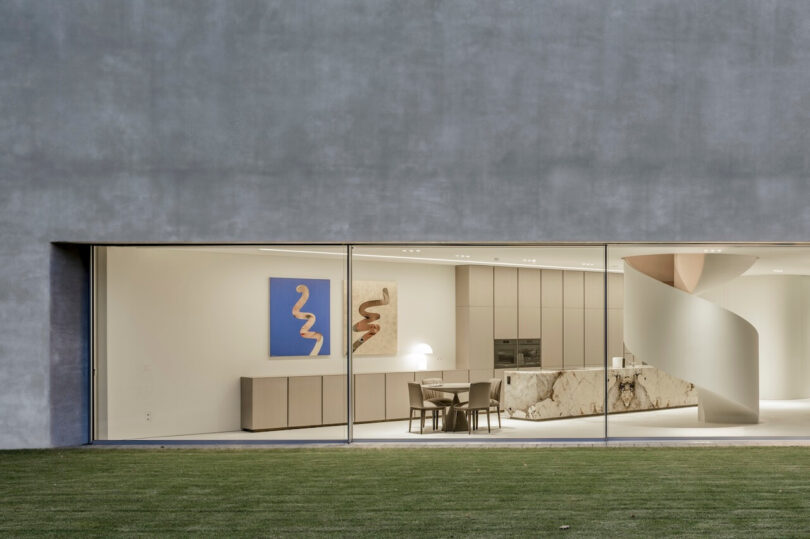
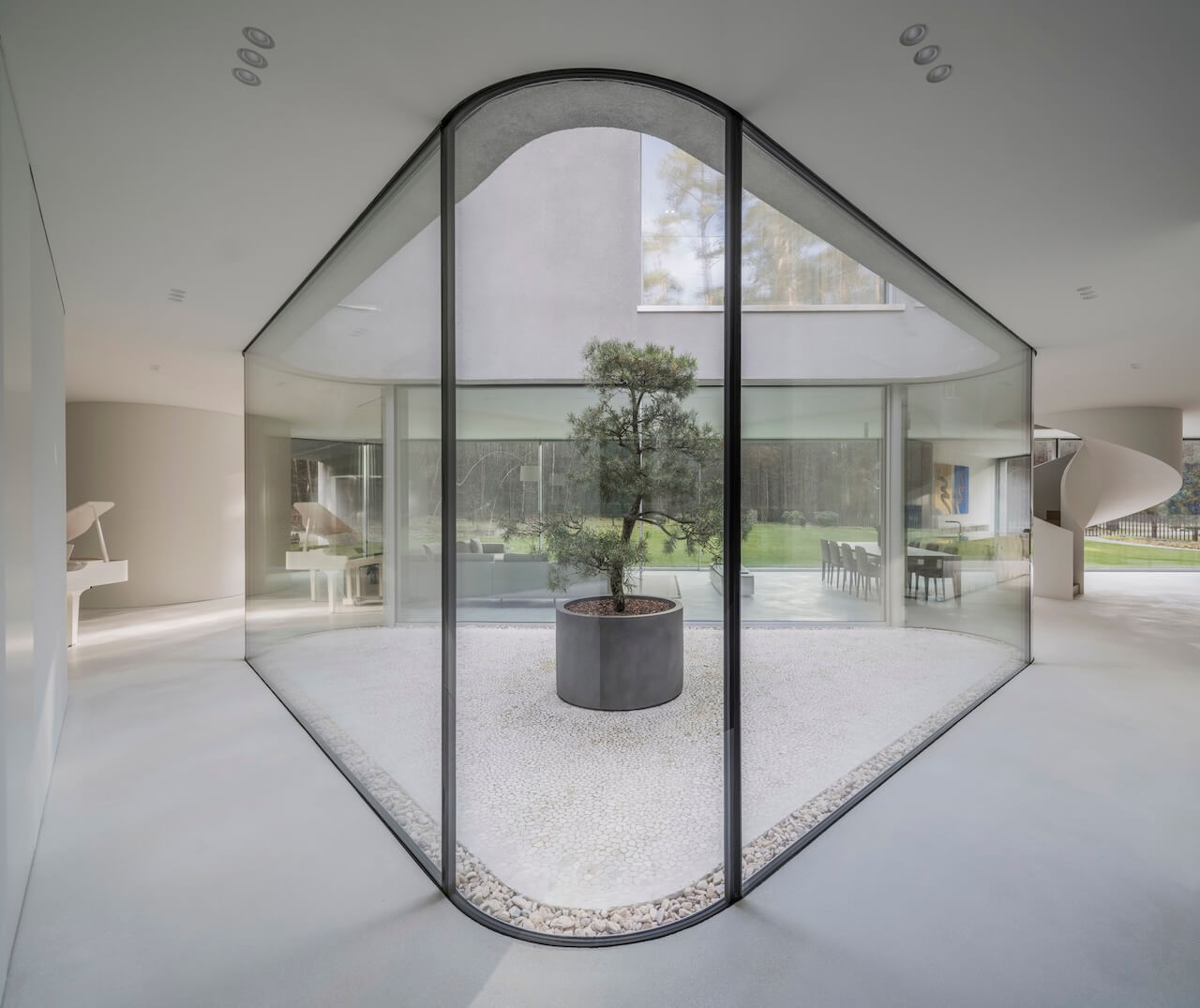
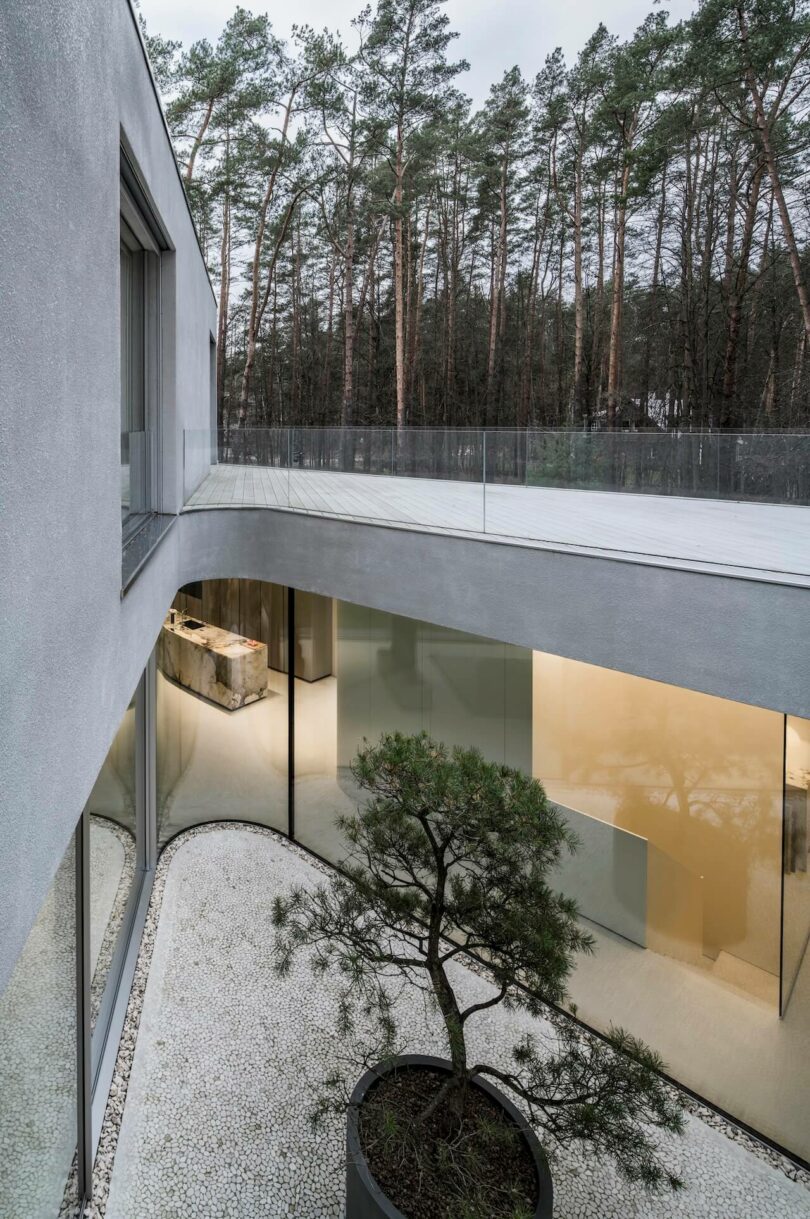
This transformation was not merely a reduction in scale but a complete re-imagining of the spatial organization. The architects effectively "sliced the home in half," a dramatic move that allowed the remaining structure to occupy the drastically reduced allowable footprint while still maximizing light and spatial fluidity. The diagrammatic evolution of the house clearly illustrates this process, showcasing how the final, angular form was derived from the initial, more expansive concept. This radical adaptation led to a house that, despite its reduced overall size of 3,230 square feet, feels anything but constrained. Instead, the tighter geometries and sharp angles created dynamic, idiosyncratic conditions, giving the Trim House a unique character and a powerful sense of presence that might not have been achieved with a larger, more conventional footprint. The initial concept of doubling the patio space was cleverly reinterpreted: instead of an external double patio, the house now elegantly wraps its two levels around a central interior courtyard. This courtyard becomes a private oasis, a serene outdoor room that allows daylight and fresh air to penetrate deep into the heart of the home, effectively fulfilling the original design intention in a more compact and internalized manner.
The Trim House Unveiled: A Study in Form and Function
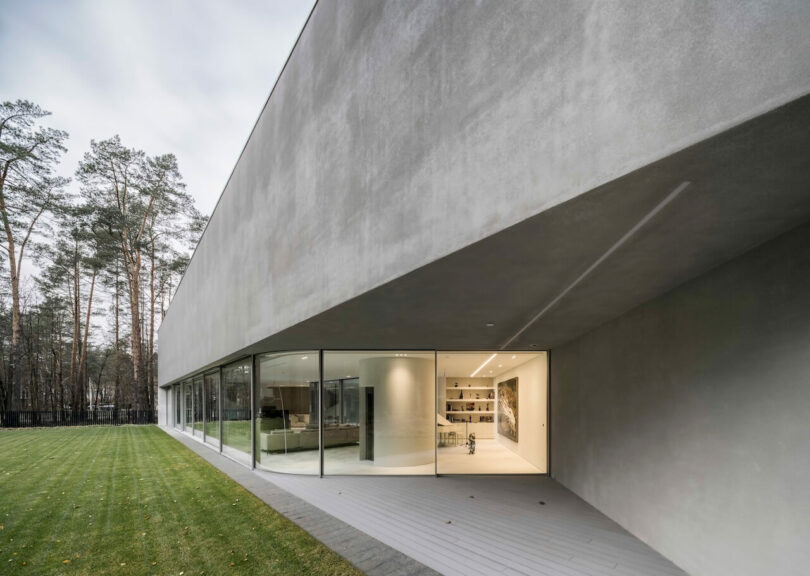
Completed in 2025, the Trim House stands as a powerful demonstration of how innovative thinking can transform adversity into architectural triumph. The building itself is a striking composition of concrete and glass, materials chosen for their minimalist aesthetic, durability, and ability to convey a sense of modern precision. The exterior is defined by its sharp angles, with one particularly dramatic elevation featuring a "flat-iron" point that boldly defines its corner. This angularity is softened and complemented by the curved curtain wall of the atrial volume, creating a compelling dialogue between rectilinear and curvilinear forms. The robust concrete provides a grounding presence, while the extensive use of glass ensures a profound connection to the surrounding landscape, blurring the lines between interior and exterior and allowing natural light to flood the living spaces. The choice of concrete also speaks to KWK Promes’ predilection for honest, expressive materials that convey strength and purity of form.
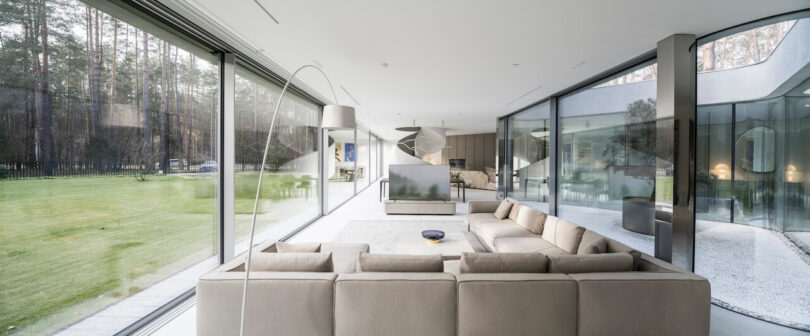
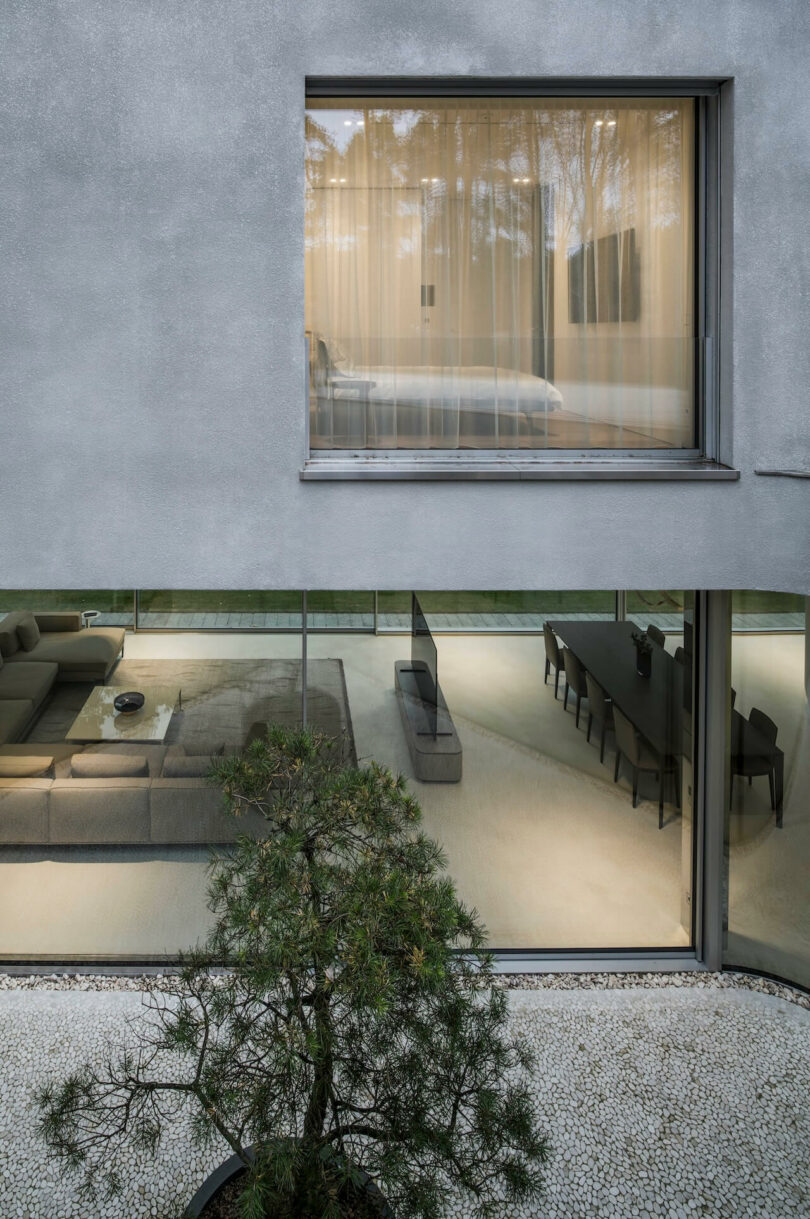
The carefully manicured lawn and the surrounding pine trees frame the house, highlighting its sculptural qualities. The exterior landscaping, featuring a simple paved walkway and strategically placed shrubs, accentuates the building’s clean lines and contemporary aesthetic. An exterior courtyard, visible through the large windows, includes a single potted tree set on white gravel, providing a focal point and a touch of organic softness to the otherwise rigorously modern design. The visual interplay of the angular concrete masses, the expansive transparent surfaces, and the natural greenery creates a harmonious balance, demonstrating how a contemporary structure can both stand out and integrate with its environment.
Interior Harmony: Crafting Spaces within Constraints
The interior design, executed by Yes. Design Architecture, continues the minimalist ethos established by KWK Promes, while introducing elements of subtle luxury and sculptural artistry. The central feature of the interior is a breathtaking sculptural spiral staircase. This elegant, curving form acts as a focal point, drawing the eye upwards and connecting the ground-level communal spaces with the private bedrooms above. Its fluid lines provide a counterpoint to the exterior’s sharp angles, adding a sense of movement and grace to the otherwise minimalist aesthetic.
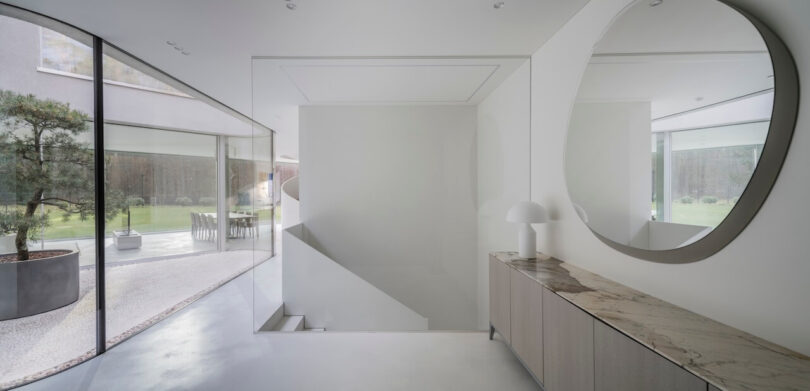
The furnishings throughout the home are understated and thoughtfully selected, emphasizing comfort and functionality without clutter. Neutral finishes dominate the palette – whites, greys, and light woods – creating a serene and expansive atmosphere. Abundant natural light, facilitated by the extensive floor-to-ceiling windows, permeates every space, enhancing the feeling of openness and connection to the outdoors. The large glass walls offer panoramic views of the lush lawn and the surrounding forested area, effectively bringing the natural environment indoors.
A notable exception to the minimalist aesthetic is the kitchen island, which features ostentatiously veined marble. This bold material choice adds a touch of sophisticated drama and luxury, providing a striking visual anchor within the open-plan living and dining area. The marble’s natural patterns introduce an organic texture and a sense of timeless elegance, contrasting beautifully with the sleek, modern cabinetry and concrete elements. The combination of minimalist decor, the dramatic staircase, and the luxurious marble island reflects a design philosophy that values both understated elegance and carefully curated moments of visual impact.
Implications and Legacy: A Model for Adaptive Architecture
The Trim House project by KWK Promes is more than just a private residence; it is a significant case study in adaptive architecture and a testament to the power of design to overcome significant challenges. It underscores several crucial implications for the broader architectural and urban planning discourse:
- Resilience in Design: The project demonstrates that stringent constraints, rather than stifling creativity, can often be the impetus for groundbreaking innovation. KWK Promes’ ability to not only salvage the project but to enhance its architectural merit despite a 50% reduction in site allowance and a 40% reduction in program area sets a powerful precedent.
- Client-Architect Collaboration: The successful outcome highlights the critical importance of a trusting and collaborative relationship between client and architect. The client’s willingness to reconsider their initial instinct to relocate and to trust KWK Promes’ vision for adaptation was instrumental.
- Sustainable Urban Development: The forced reduction in building footprint, while initially challenging, aligns with contemporary concerns for sustainable urban development, denser living, and the preservation of green spaces. The Trim House illustrates that smaller footprints can lead to highly functional, aesthetically pleasing, and spatially rich environments.
- Reinterpreting Traditional Forms: The project’s triangular floor plan and its inward-facing courtyard are modern interpretations of historical architectural strategies for optimizing space and light, such as those found in traditional courtyard houses. This blending of contemporary form with time-honored principles creates a residence that is both cutting-edge and deeply rooted in architectural wisdom.
- The Power of Narrative: The story of the Trim House, from initial dream to unforeseen setback and ultimate triumph, resonates deeply. It humanizes the architectural process, showing that design is often a journey of problem-solving, persuasion, and profound creativity.
In conclusion, the Trim House in Vilnius, completed in 2025, stands as a profound architectural achievement. It not only provides a sophisticated and comfortable home for its inhabitants but also offers invaluable lessons to the architectural community. It is a powerful narrative of how KWK Promes, under the leadership of Robert Konieczny, transformed what could have been a project-ending obstacle into an opportunity for architectural brilliance. The project definitively proves that innovative thinking can indeed overcome the steepest challenges, and perhaps most importantly, that in the realm of visionary architecture, smaller can sometimes be unequivocally better, leading to more focused, dynamic, and ultimately, more impactful designs.
For further exploration of this project and other groundbreaking works by the firm, interested parties are encouraged to visit kwkpromes.pl.
Photos by Jakub Certowicz and Juliusz Sokołowski.