
 Ali Ikhwan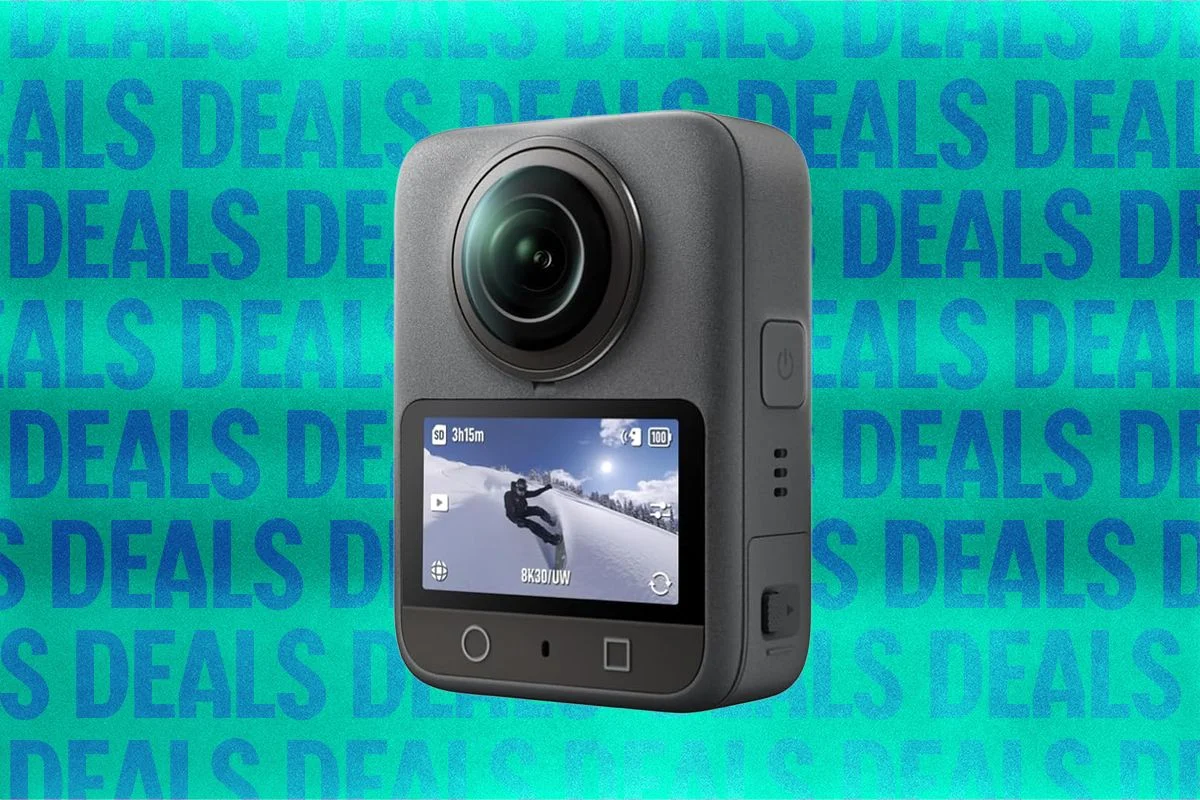
The global action camera market is witnessing a significant shift in pricing strategy and consumer accessibility as the DJI Osmo 360, a flagship 360-degree imaging device, has reached a new low price point of $390 on major retail platforms such as Amazon. This adjustment represents a substantial $209 discount from its standard retail price of $599, signaling a move by DJI to capture a larger share of the burgeoning creator economy. The promotional bundle currently includes the primary camera unit, an extra battery for extended field use, and a specialized 1.2-meter selfie stick designed to be digitally erased from the final footage. This price correction occurs at a pivotal moment when 360-degree video technology is transitioning from a niche hobbyist tool to a standard requirement for professional sports broadcasting, real estate documentation, and high-end social media content creation.
Unprecedented Value in the 360-Degree Camera Segment
The current market valuation of the DJI Osmo 360 places it in direct competition with traditional single-lens action cameras, despite its significantly more complex optical hardware. For $390, consumers are gaining access to a device that eliminates the common frustration of "missing the action" due to poor camera framing. Unlike traditional cameras that require the user to point the lens at the subject, the Osmo 360 records in every direction simultaneously. This "shoot now, frame later" workflow allows users to choose their perspective during the post-production phase, ensuring that critical moments are never lost.
The inclusion of an extra battery in the current Amazon offering addresses one of the primary pain points of high-resolution 360-degree capture: power consumption. Processing dual 8K streams requires significant computational overhead, which typically depletes standard batteries within 60 to 90 minutes. By providing a secondary power source, the bundle effectively doubles the operational window for adventurers and professionals working in remote locations where charging infrastructure is unavailable.
Technical Foundations: Dual Sensor Performance and 10-Bit Color
At the core of the DJI Osmo 360’s performance are its dual 1/1.1-inch CMOS sensors. In the realm of action cameras, sensor size is the primary determinant of image quality, particularly in challenging lighting conditions. The 1/1.1-inch format is considerably larger than the sensors found in most standard action cameras, allowing for greater light intake and improved dynamic range. This hardware advantage is most evident when shooting in high-contrast environments, such as a skier moving between bright sunlight and deep mountain shadows.
The device supports 10-bit color depth, a feature that was once reserved for cinema-grade cameras. While 8-bit video can display approximately 16.7 million colors, 10-bit video expands this to over one billion colors. This exponential increase in color data prevents "banding" in gradients—such as a clear blue sky or a sunset—and provides professional editors with the necessary "headroom" to color grade the footage without degrading the image quality. Initial laboratory testing indicates that the DJI Osmo 360 produces vivid, bold color profiles that may occasionally require minor desaturation in post-production to achieve a strictly naturalistic look, though the default settings are optimized for immediate social media sharing.
High-Resolution Capabilities and Frame Rate Versatility
Resolution and frame rate are the dual pillars of modern videography, and the Osmo 360 offers industry-leading specifications in both categories. When recording in full 360-degree mode, the device achieves a resolution of 8K at up to 50 frames per second (fps). The 8K resolution is critical in 360-degree videography because the pixels are spread across a spherical field; when a user crops into a specific "flat" view, the resulting image remains sharp. The 50 fps capability allows for smooth motion and the potential for slight slow-motion effects, which is a significant upgrade over the 30 fps limit found on older 360-degree models.
For users who occasionally require a traditional action camera experience, the Osmo 360 features a "Single Lens Mode." In this configuration, the camera utilizes only one of its two sensors to record standard flat video. In this mode, the camera can reach 4K resolution at 120 fps. This high frame rate is essential for extreme sports, allowing for 4x slow-motion playback that retains crisp detail. Internal testing has shown that the device can operate for approximately two hours at 30 fps, which aligns closely with the capacity of high-speed internal storage media, ensuring that battery life and storage space are utilized efficiently.
Integrated Audio Solutions and the Wireless Ecosystem
While visual fidelity is often the focus of action camera marketing, audio quality remains a frequent bottleneck for content creators. DJI has addressed this by integrating the Osmo 360 into its broader audio ecosystem. The camera features native, direct-connect compatibility with the DJI Mic 2 and the recently released DJI Mic Mini. This integration bypasses the need for bulky external adapters or 3.5mm cables, allowing for a streamlined, wireless audio setup.
The DJI Mic 2, often utilized by professional vloggers, offers intelligent noise-canceling features and internal recording capabilities. By connecting these microphones directly to the Osmo 360, users can capture high-fidelity dialogue even in high-wind environments, such as during cycling or motorcycling. This synergy between DJI’s camera and audio divisions provides a competitive advantage over rivals who often require third-party solutions or complex workarounds to achieve similar audio clarity.
Software Workflow and the Reframing Revolution
The hardware of the DJI Osmo 360 is supported by a robust software suite designed to simplify the complexities of 360-degree editing. The DJI Mimo app serves as the primary mobile interface, allowing for real-time camera control, live preview, and rapid editing. The app includes AI-driven tools that can automatically track subjects, ensuring that the person or object of interest remains in the center of the frame throughout the video.
For more advanced users, the DJI Studio desktop application offers a comprehensive environment for high-bitrate editing. This software is particularly valuable for those who wish to avoid the subscription costs associated with professional suites like Adobe Premiere Pro. DJI Studio provides granular control over the "stitching" process—the digital merging of the two hemispherical images—ensuring that the "stitch line" remains invisible even when objects pass close to the camera lenses.
Competitive Landscape: DJI, Insta360, and GoPro
The aggressive pricing of the Osmo 360 is widely interpreted by industry analysts as a direct response to the intense competition in the immersive camera market. For several years, Insta360 has held a dominant position in the 360-degree space with its X-series cameras, while GoPro has focused primarily on its Hero line of traditional action cameras. By lowering the price of the Osmo 360, DJI is attempting to undercut the Insta360 X4 while offering superior sensor hardware.
GoPro, the pioneer of the action camera category, has been slower to update its 360-degree offering, the GoPro Max, which was released in 2019. This gap in the market has allowed DJI and Insta360 to innovate rapidly, pushing resolutions to 8K and integrating larger sensors. The current $390 price point for the Osmo 360 makes it one of the most cost-effective ways for consumers to enter the 8K 360-degree ecosystem, potentially forcing competitors to reconsider their own pricing structures in the coming fiscal quarters.
Market Chronology and Lifecycle Management
The trajectory of DJI’s action camera development shows a clear pattern of rapid iteration and strategic market positioning. Following the success of the Osmo Action series, the introduction of a dedicated 360-degree device was seen as a necessary step to complete the company’s imaging portfolio.
- 2019-2021: DJI establishes a foothold in the action camera market with the Osmo Action and Action 2, focusing on stabilization and modular design.
- 2022-2023: The company releases the Osmo Action 3 and 4, significantly improving low-light performance and color science.
- Late 2023-Early 2024: The DJI Osmo 360 is launched, targeting the high-end enthusiast and professional market with 8K capabilities.
- Present: The current price reduction on Amazon suggests a transition in the product lifecycle, possibly clearing inventory in anticipation of future hardware announcements or simply responding to the seasonal shopping surge.
Broader Implications for the Creator Economy
The democratization of 8K 360-degree video tools has profound implications for the creator economy. As high-quality hardware becomes more affordable, the barrier to entry for producing "immersive" content is lowered. This shift is expected to increase the volume of 360-degree content on platforms like YouTube and Meta (formerly Facebook), which have invested heavily in VR and AR viewing capabilities.
Furthermore, the Osmo 360’s dual-mounting system—featuring both DJI’s proprietary magnetic quick-release and the industry-standard 1/4"-20 tripod mount—reflects a trend toward hardware versatility. Creators are no longer locked into a single mounting ecosystem, allowing them to use the camera across a variety of platforms, from professional cinema rigs to consumer-grade tripods.
Conclusion and Future Outlook
The DJI Osmo 360 stands as a testament to the rapid maturation of 360-degree imaging technology. By combining large sensors, high-bitrate color, and a seamless software ecosystem at a newly competitive price point, DJI is challenging the traditional boundaries of the action camera market. While the $390 price tag on Amazon may be a temporary promotional event, it sets a new benchmark for what consumers can expect from mid-range imaging equipment.
As the industry moves forward, the focus is likely to shift toward further AI integration, improved thermal management for sustained 8K recording, and even deeper integration between hardware and cloud-based editing platforms. For now, the DJI Osmo 360 remains a premier choice for those looking to capture their adventures with total spherical coverage, ensuring that every angle is recorded and every detail is preserved. Potential buyers are encouraged to review full technical benchmarks and comparative roundups to ensure the device meets their specific workflow requirements, though the current discount offers a compelling entry point into the world of high-resolution immersive media.







