Hanik Kholidah
Recent developments in medical research have increasingly highlighted a critical, yet often overlooked, component of systemic health: the oral microbiome. While cardiovascular, gastrointestinal, and neurological health frequently dominate wellness discourse, the biological state of the oral cavity serves as a primary gateway to the body’s internal systems. Scientific literature, including prominent studies published in the Journal of Clinical Periodontology and archives maintained by the National Institutes of Health, indicates that poor gingival health is significantly correlated with an increased risk of chronic conditions, including heart disease, type 2 diabetes, and Alzheimer’s disease. This realization has sparked a shift in consumer behavior, moving away from reactive dental care toward sophisticated, preventative home-care technologies. Central to this shift is the rise of the water flosser, a device engineered to disrupt biofilm in ways traditional methods cannot. The Coslus E40 Water Flosser has emerged as a focal point in this market, offering a blend of high-frequency pulsation technology and user-centric customization that addresses the limitations of conventional string floss.
The Systemic Connection: Why Oral Hygiene Transcends the Mouth
The clinical understanding of oral health has evolved from merely preventing cavities to managing systemic inflammation. The "oral-systemic link" posits that the bacteria responsible for periodontitis can enter the bloodstream through inflamed gum tissue, potentially triggering inflammatory responses in distant organs. For instance, the presence of Porphyromonas gingivalis, a key pathogen in gum disease, has been identified in the brain tissue of patients with Alzheimer’s, suggesting a potential role in the progression of cognitive decline.

Furthermore, the relationship between gum health and cardiovascular integrity is well-documented. Chronic inflammation in the mouth can contribute to the development of atherosclerosis by promoting the formation of arterial plaques. In this context, the efficacy of interdental cleaning becomes a matter of long-term survival rather than mere aesthetics. Traditional string floss, while effective when used with perfect technique, often fails to reach the deep periodontal pockets where pathogens thrive. This technological gap is where pressurized water flossing devices, such as the Coslus E40, provide a significant clinical advantage.
Technical Analysis of the Coslus E40 Water Flosser
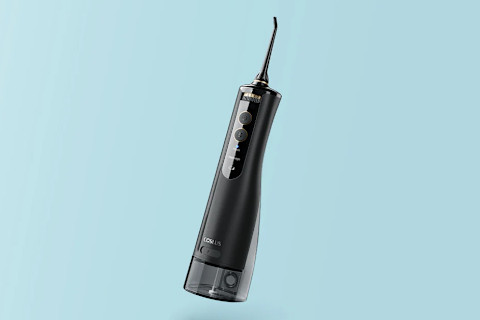
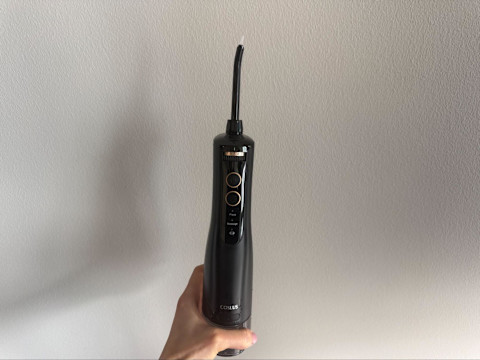
The Coslus E40 is a cordless, rechargeable oral irrigator designed to provide high-pressure water streams to debride the interdental spaces and the subgingival regions. Unlike standard water flossers that offer limited, fixed pressure settings, the E40 integrates a "stepless roll dial." This engineering feature allows for a continuous spectrum of pressure adjustments across 10 distinct speeds within its primary cleaning modes.
Key Engineering Specifications:
- Pressure Customization: The stepless dial functions similarly to a rheostat, allowing users to fine-tune the intensity of the water stream to match the sensitivity of their gingival tissue.
- Reservoir Capacity: A 300ml detachable water tank provides sufficient volume for a standard 60-to-90-second cleaning cycle without requiring a refill.
- Portability and Power: The device is powered by a rechargeable lithium-ion battery, utilizing USB charging to cater to modern travel requirements and reducing the need for proprietary power adapters.
- Nozzle Versatility: The unit typically includes multiple specialized tips, including standard nozzles for general cleaning and specialized tips for orthodontic or periodontal applications.
The inclusion of a "Soft Clean" mode specifically targets individuals with gingival sensitivity or those in the early stages of gingivitis, where tissue may be prone to bleeding upon contact with mechanical friction. By utilizing a pulsed water stream, the device achieves mechanical debridement through hydrostatic pressure and shear stress, which is significantly less abrasive than the manual sawing motion of nylon string.

A Chronological Perspective on Interdental Cleaning Innovation
To understand the significance of devices like the Coslus E40, one must examine the timeline of dental hygiene evolution. For centuries, interdental cleaning was limited to rudimentary toothpicks and silk threads.
- 1815: American dentist Levi Spear Parmly introduces the concept of silken thread flossing to remove "putrid matter" from between teeth.
- 1882: The Codman & Shurtleff company begins mass-producing unwaxed silk floss.
- 1940s: During World War II, nylon replaces silk as the primary material for floss due to its durability and lower cost.
- 1962: The first powered oral irrigator is invented by a dentist and an engineer in Fort Collins, Colorado, marking the birth of the water flosser.
- 1990s-2000s: Clinical trials begin to consistently show that oral irrigators are more effective at reducing gingivitis and bleeding than string floss.
- 2020s: The miniaturization of pumps and advancements in battery technology lead to the current generation of cordless, high-customization devices like the Coslus E40.
This chronology reflects a steady movement toward "democratized professional care," where the tools once reserved for dental offices are now accessible for daily home use.
Comparative Efficacy: Water Flossing vs. Traditional Methods
Data from the American Dental Association (ADA) and various independent clinical trials suggest that while string floss is effective at removing tactile plaque between tight teeth, water flossers excel at reducing the overall bacterial load within the mouth. A study published in the Journal of Clinical Dentistry found that a water flosser used in conjunction with manual brushing was 29% more effective at removing plaque than string floss.

The mechanical action of the Coslus E40 relies on a "pulsed" delivery system. These pulses create a compression and decompression phase that helps flush out bacteria and debris from the gingival sulcus—the space between the tooth and the gum tissue. Traditional floss can sometimes push bacteria deeper into these pockets if used incorrectly. In contrast, the irrigation provided by the E40 ensures that debris is moved outward, away from the periodontal attachment.
Economic Implications and Consumer Accessibility
One of the most striking aspects of the Coslus E40 is its market positioning. Priced at approximately $28, it represents a significant departure from the premium pricing models of early water flossing brands, which often retailed for $70 to $100. This price point is a critical factor in public health, as it lowers the barrier to entry for high-quality preventative care.
From a health-economics perspective, the investment in a $30 device can yield thousands of dollars in savings over a lifetime. The average cost of a single dental filling in the United States ranges from $150 to $300, while periodontal scaling and root planing (deep cleaning) can cost between $500 and $4,000 depending on the severity of the disease. By providing an affordable tool for biofilm management, devices like the E40 contribute to the reduction of overall dental expenditures for the average household.
Expert Analysis: Addressing the Learning Curve and User Experience
While the benefits of water flossing are clear, dental professionals often note a "technique gap" among new users. The most common complaint regarding water flossers is the potential for mess and water splatter. Experts recommend that users lean over the sink and keep their lips slightly parted to allow the water to flow out naturally while guiding the nozzle along the gumline.
The Coslus E40 addresses user experience through its ergonomic design. The detachable tank allows for easy cleaning, preventing the buildup of mold or mineral deposits—a common issue in older, non-detachable models. Furthermore, the stepless dial provides a "on-ramp" for beginners. Instead of being startled by a high-pressure jet, a new user can start at the lowest possible setting and gradually increase the pressure as their gums become desensitized and healthier over a period of 14 to 21 days.
Official Responses and Professional Consensus
While Coslus as a brand focuses on the consumer electronics space, the broader dental community has largely embraced the technology. The consensus among periodontists is that any tool that increases patient compliance is a victory for oral health. Many patients find string flossing tedious and difficult, leading to poor adherence. The "novelty" and ease of use associated with a cordless water flosser often lead to more consistent daily habits.
Market analysts observe that the success of the E40 is indicative of a larger trend: the "smartification" of personal care. Consumers are no longer satisfied with "one-size-fits-all" products. They demand devices that can be calibrated to their specific physiological needs. The ability to adjust pressure to the exact pound-per-square-inch (PSI) required for a user’s comfort is a hallmark of this new era of personalized medicine.
The Future of Oral Hygiene and Systemic Prevention
As we look toward the future, the integration of oral hygiene into the broader framework of preventative medicine will only intensify. We are moving toward a period where dental check-ups may include salivary diagnostics to screen for systemic biomarkers. In such a world, the role of home-care devices will be paramount.
The Coslus E40 Water Flosser serves as a bridge between traditional hygiene and advanced medical prevention. By combining affordability with high-level technical specifications, it enables a wider demographic to take control of their periodontal health. The takeaway for the modern consumer is clear: oral health is not an isolated concern. The maintenance of the gingival barrier through effective interdental cleaning is a fundamental requirement for the preservation of heart, brain, and metabolic health. As technology continues to evolve, the distinction between "dental care" and "healthcare" will continue to blur, leading to a more holistic approach to human longevity.