Michael Sholeh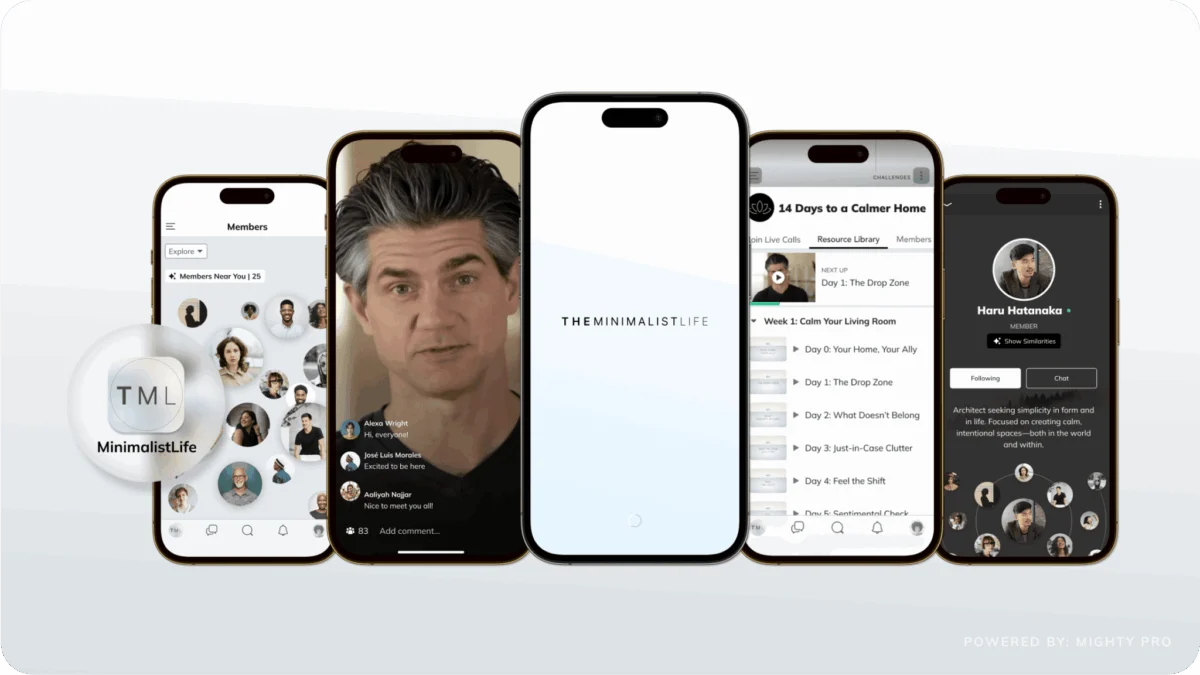
Joshua Becker, the founder of the influential "Becoming Minimalist" platform, has officially announced the launch of a new subscription-based community titled The Minimalist Life, marking a significant strategic pivot in his 17-year tenure as a leading figure in the intentional living movement. This initiative, unveiled this week, represents a transition from purely educational content—distributed via books, articles, and videos—toward a structured, interactive ecosystem designed to foster long-term habit formation and lifestyle sustainability. Becker, who has authored over 1,700 articles and produced 400 videos on the subject of minimalism, stated that the new community is a direct response to a recurring challenge faced by his audience: the difficulty of maintaining minimalist practices after the initial excitement of decluttering fades.
The launch follows nearly two decades of growth for the Becoming Minimalist brand, which began as a personal blog in 2008 and has since evolved into a global resource. To date, Becker’s "Uncluttered" course has served over 90,000 participants, while his various books have reached hundreds of thousands of readers. However, the new platform, The Minimalist Life, seeks to address the "sustainability gap" in the minimalist lifestyle by offering monthly themes, human-to-human interaction, and ongoing support. The service is currently being offered at a "founding member" rate of $18 per month or $180 per year, with the introductory pricing scheduled to expire on June 30.
A Chronology of the Becoming Minimalist Movement
The evolution of Joshua Becker’s work mirrors the broader societal shift toward intentional consumption that gained momentum in the wake of the 2008 global financial crisis.
- 2008: The Genesis. Joshua Becker and his family began their minimalist journey after a frustrating weekend spent cleaning their garage. This led to the creation of the Becoming Minimalist blog, which focused on the benefits of owning fewer possessions to focus on "greater things."
- 2010–2015: Scaling the Message. During this period, the movement gained mainstream traction. Becker published several books, including The More of Less, which argued that minimalism was not about deprivation but about redirection.
- 2016–2020: Digital and Practical Expansion. The launch of the "Uncluttered" course provided a structured methodology for home decluttering. During this time, the YouTube channel grew to include 400 videos, catering to the rising demand for visual and actionable lifestyle advice.
- 2021–2024: The Shift to Holistic Minimalism. The focus of Becker’s work began to expand beyond physical clutter to include digital distractions, financial health, and time management.
- 2025: The Launch of The Minimalist Life. Recognizing that "content consumption" does not always equate to "lifestyle implementation," Becker introduces a private community focused on monthly application and peer support.
Addressing the Sustainability Gap in Lifestyle Change
The primary impetus for the creation of The Minimalist Life is the observation that many individuals experience a "rebound effect" after a major decluttering project. Psychological studies on habit formation suggest that while initial motivation can drive significant short-term changes—such as cleaning out a basement or a closet—long-term behavioral shifts require environmental support and social accountability.
Becker noted that a common refrain from his readers involved the struggle to keep the momentum going over time. "You don’t want a one-time decluttering project—you want a lifetime of intentional choices," the announcement stated. By shifting the focus from education to community-led implementation, the new platform aims to help users transition minimalism from a conceptual idea into a daily rhythm. This is particularly relevant in an era where the "attention economy" and targeted digital advertising constantly nudge consumers toward more spending and accumulation.
Data and Market Context: The Growth of Intentional Living
The launch of The Minimalist Life occurs within a broader economic context where the self-improvement and "wellness" markets are seeing unprecedented growth. According to market research, the global self-improvement market was valued at approximately $41.2 billion in 2021 and is projected to continue expanding. Within this sector, there is a growing niche for "minimalism" and "essentialism" as consumers seek to combat the stress associated with modern living.
Supporting data highlights the need for such interventions:

- Clutter and Stress: A study conducted by the UCLA Center on Everyday Lives of Families (CELF) found a direct correlation between high cortisol (stress hormone) levels in homeowners and a high density of household objects.
- Financial Impact: The average American household carries significant credit card debt, often linked to non-essential consumer spending. Minimalism as a financial strategy focuses on reducing "lifestyle creep" and increasing savings.
- Digital Overload: With the average adult spending upwards of seven hours a day on digital screens, the demand for "digital minimalism"—a core pillar of Becker’s new community—has surged as individuals seek to reclaim their focus and mental clarity.
The Pillars of The Minimalist Life Community
The new community is structured to move beyond the physical home, applying minimalist principles to various facets of human experience. According to the program details, the community will work through monthly modules that address:
- Financial Stewardship: Reducing impulsive spending and aligning financial resources with personal values.
- Schedule and Time Management: Identifying and removing non-essential commitments to create space for rest and meaningful work.
- Digital Health: Managing the influx of notifications, emails, and social media to reduce cognitive load.
- Relational Intentionality: Focusing on deep, meaningful connections rather than a high volume of superficial interactions.
- Habit Formation: Utilizing the support of like-minded individuals to ensure that minimalist choices become permanent behaviors.
A distinctive feature of the community is its emphasis on human interaction over automated or AI-generated content. In an era where the internet is increasingly saturated with synthetic media, Becker’s model prioritizes direct engagement between the founder and the community members, as well as peer-to-peer support.
Analysis of Implications for the Minimalist Movement
The transition of Becoming Minimalist into a subscription-based community model has several implications for the future of the movement. First, it signals a professionalization of the "lifestyle influencer" role, moving away from ad-supported or affiliate-based revenue models toward a direct-to-consumer value proposition. This model theoretically aligns the interests of the creator and the audience, as the creator is incentivized to provide ongoing, tangible results rather than just "clicks."
Second, the move reflects a maturing audience. Those who discovered minimalism a decade ago are no longer in the "how-to-declutter" phase; they are now looking for ways to integrate those principles into parenting, aging, and career management. By offering a "month-by-month" growth model, Becker is positioning his brand to grow alongside his long-term followers.
Finally, the focus on "community" addresses the loneliness epidemic that many health experts have identified as a major public health crisis. By creating a private space for like-minded individuals, the platform provides a social infrastructure that supports unconventional lifestyle choices—such as opting for a smaller home or a simpler wardrobe—which may otherwise be met with social pressure in a consumer-driven culture.
Official Responses and Industry Outlook
While specific testimonials for the brand-new community are still emerging, early reactions from the Becoming Minimalist reader base suggest a strong appetite for more structured support. Long-time followers of Becker’s work have frequently cited his "practical and non-judgmental" approach as a key factor in their success.
Industry analysts suggest that the success of The Minimalist Life will likely depend on its ability to provide high-quality, exclusive content that cannot be found for free on social media platforms. By pricing the community at a mid-tier subscription level ($18/month), Becker is targeting a demographic that is serious about personal development and willing to invest in a curated experience.
As the doors open for "founding members," the minimalist movement appears to be entering a new phase—one characterized less by the act of "throwing things away" and more by the disciplined, communal effort to live an intentional, focused life in an increasingly complex world. The success of this initiative could serve as a blueprint for other lifestyle leaders looking to convert a large, passive audience into an active, engaged community.