 Ali Ikhwan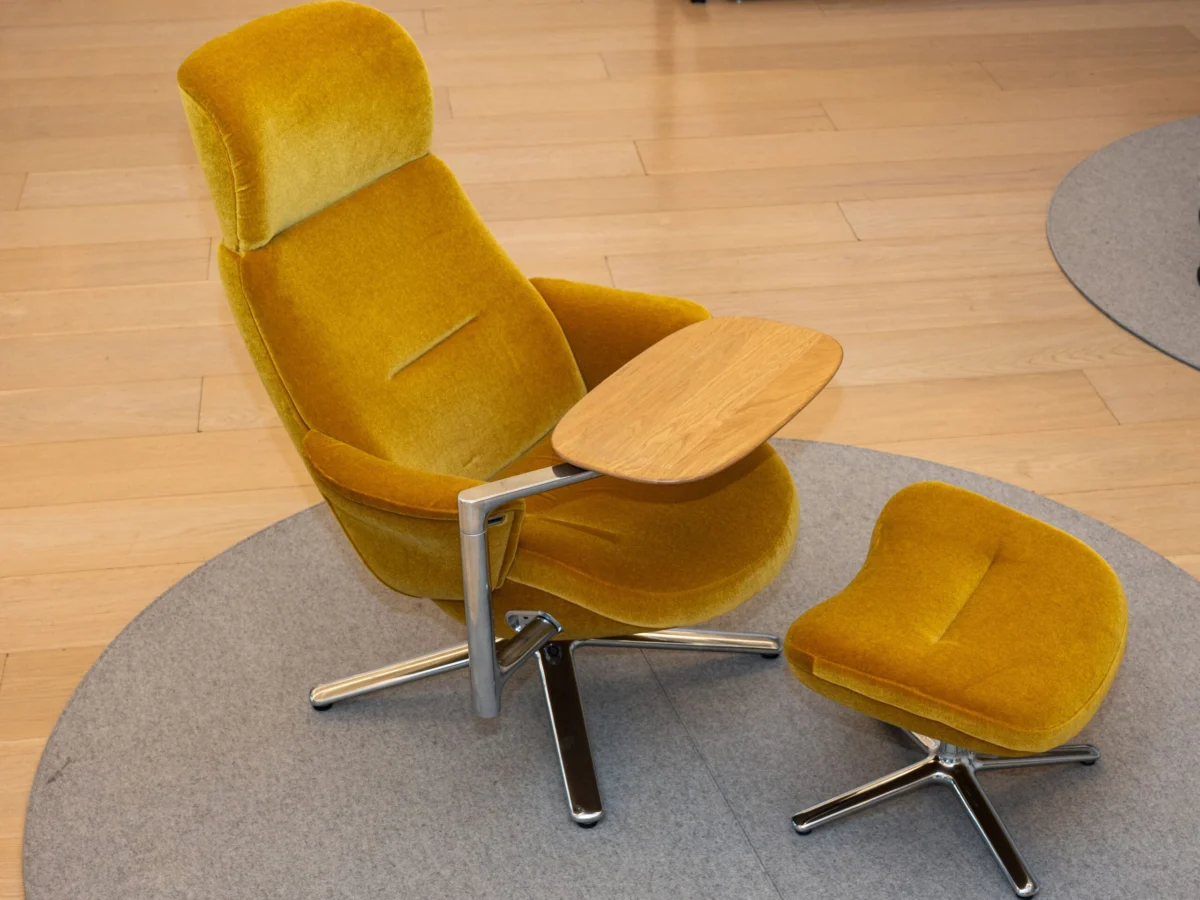
The intersection of high-end residential furniture and advanced ergonomic engineering has reached a new milestone with the official release of the Humanscale Diffrient Lounge. This high-performance seating solution represents the final design of the late industrial design icon Niels Diffrient, who passed away in 2013. Designed to bridge the gap between a traditional relaxation chair and a functional workstation, the Diffrient Lounge is being positioned as a spiritual and technological successor to the mid-century modern classics that have dominated the luxury market for decades. With a price point scaling up to $14,995, the chair arrives at a pivotal moment for the furniture industry, as the permanent shift toward hybrid and remote work continues to drive demand for residential products that do not compromise on professional-grade physical support.
The Legacy of Niels Diffrient and the Jefferson Inspiration
To understand the engineering philosophy behind the Diffrient Lounge, one must look back to 1984, when Niels Diffrient introduced the Jefferson chair for the now-defunct furniture manufacturer Sunar-Hauserman. Diffrient, a pioneer in the field of ergonomics who spent years working with Henry Dreyfuss Associates, was obsessed with the relationship between the human form and the tools of productivity. The Jefferson chair was named after Thomas Jefferson, the third U.S. President, who famously preferred to conduct his correspondence and intellectual work while seated in a lounge-like posture with his feet elevated.
Diffrient’s core thesis was that physical discomfort acts as a drain on cognitive energy. By placing the body in a reclined, supported position, the heart does not have to work as hard to pump blood against gravity, and the spine is relieved of the compressive forces inherent in upright sitting. However, the Jefferson chair was perhaps too far ahead of its time; the bulky computing hardware of the 1980s made an integrated lounge workstation cumbersome for the average home. When Sunar-Hauserman folded shortly after the chair’s debut, the design became a rare collector’s item rather than a standard of the office environment.
The new Diffrient Lounge serves as the realization of that original vision, updated for an era of miniaturized electronics and wireless connectivity. It retains the "work-from-recline" philosophy but incorporates modern materials and motorized adjustments that were unavailable in the mid-20th century.
.jpg)
Engineering a Motorized Ergonomic Experience
Unlike the traditional task chairs that Humanscale is known for—such as the Freedom chair, which relies on the sitter’s body weight to adjust tension—the Diffrient Lounge introduces motorized assistance to the high-end residential market. The chair features a sophisticated mechanical system controlled by discrete levers located on the edges of the armrests. These levers allow the user to adjust the recline angle and the position of the headrest with fluid, motorized precision.
One of the most innovative features of the chair is its "intelligent" headrest. In a fully reclined position, the headrest automatically tilts forward to support the user’s gaze, making it possible to view a screen or read a book without straining the neck. As the user returns to an upright position, the headrest mechanically resets to a neutral alignment. This automation is intended to eliminate the "fidget factor"—the tendency for users to constantly adjust knobs and dials on traditional ergonomic chairs.
To support modern hardware, the chair includes an integrated, pivoting side table designed for laptops and tablets. This table is a significant evolution from the swiveling stands of the 1980s, offering a stable, wood-grained surface that moves with the user. Furthermore, the base of the chair is equipped with two high-output USB-C ports, capable of delivering up to 140 watts of power. This ensures that the chair can serve as a primary workstation for power-hungry laptops without the need for external power strips cluttering the living space.
Chronology of Development and Market Transition
The development of the Diffrient Lounge followed a non-linear path, shaped significantly by global economic shifts. While the initial concepts were finalized by Diffrient before 2013, the project remained in a refinement stage for several years.
- 2013: Niels Diffrient completes the final design specifications for a residential-focused lounge chair before his passing.
- 2014–2019: Humanscale focuses on its core commercial office business, refining the "weight-sensitive" ergonomics of its task chair lineup.
- 2020: The COVID-19 pandemic triggers a global shift to remote work. Humanscale observes a massive spike in residential sales, prompting a pivot in product strategy.
- 2021–2023: Sergio Silva, Humanscale’s Vice President of Design and Innovation, leads a "facelift" of the Diffrient Lounge project. The goal is to soften the aesthetic for home environments while integrating modern power delivery systems (USB-C).
- 2024: The Diffrient Lounge is officially launched as the flagship of Humanscale’s high-end residential division.
This timeline highlights a broader trend in the furniture industry: the "consumerization" of the office. As professionals spent more time working from home, they began to reject the clinical, plastic-heavy aesthetic of traditional corporate furniture in favor of pieces that blend with home decor but retain professional ergonomic standards.
.jpg)
Comparative Market Analysis and Pricing Structure
The Diffrient Lounge enters a market currently dominated by the Herman Miller Eames Lounge Chair and Ottoman, a design that has remained virtually unchanged since 1956. While the Eames chair is a global icon of style, ergonomic experts have long noted its limitations as a modern workstation. It lacks the adjustability required for long-term computing and does not offer integrated support for peripheral devices.
The pricing of the Diffrient Lounge reflects its positioning as a premium technology product rather than just a piece of furniture:
- Base Model: $8,995 (Chair only, standard upholstery).
- Workstation Configuration: $10,995 (Includes the pivoting side table and ottoman).
- Luxe Configuration: Up to $14,995 (Features premium Alpaca wool fabrics and high-end wood finishes).
In comparison, a standard Eames Lounge Chair and Ottoman typically retails for approximately $8,500. Humanscale is betting that consumers will be willing to pay a significant premium for the added functionality of motorized recline, integrated power, and a dedicated work surface.
Sustainability and Manufacturing Excellence
As a certified B Corp, Humanscale has integrated environmental considerations into the production of the Diffrient Lounge. The company’s manufacturing facility in Piscataway, New Jersey, operates on a closed-loop rainwater harvesting system, meaning the facility uses 100% captured rainwater for its processes. This commitment to "Living Product" standards is a key part of the brand’s appeal to a demographic that increasingly prioritizes ethical consumption.
Furthermore, the chair is designed for longevity. Recognizing that technology moves faster than furniture cycles, Humanscale has made the 140-watt USB-C module upgradable. This allows owners to replace the electronic components in the future as power delivery standards evolve, ensuring the chair does not become obsolete due to changing charging ports.
.jpg)
Broader Implications for the Future of Work
The launch of the Diffrient Lounge signals a paradigm shift in how industrial designers view productivity. The traditional "upright and alert" posture of the 20th-century office is being challenged by the "relaxed and focused" model championed by Diffrient.
Industry analysts suggest that this shift could have long-term health implications. Bob King, CEO of Humanscale, has often cited Diffrient’s maxim that "the best chair is a bed," referring to the physiological benefits of reclining to reduce spinal load. As more companies adopt permanent work-from-home policies, the home office is evolving from a temporary desk in a spare room into a specialized environment designed for peak cognitive performance.
The requirement for a power source—plugging a chair into a wall—represents another frontier. While some may find the cord an aesthetic challenge, it mirrors the trend in "smart" furniture seen in the gaming industry. Just as gaming chairs now incorporate haptic feedback and cooling fans, luxury office furniture is becoming an active, powered participant in the user’s workflow.
Conclusion
The Humanscale Diffrient Lounge is more than a posthumous tribute to a legendary designer; it is a calculated bet on the future of the luxury residential market. By combining the " Jeffersonian" ideal of comfortable thinking with 21st-century power delivery and motorized precision, Humanscale is attempting to unseat long-standing design icons. Whether the market will fully embrace a $15,000 motorized workstation remains to be seen, but the chair stands as a definitive statement on the evolution of ergonomics: that true productivity is not found in the rigidity of the desk, but in the support of the body in its most natural, relaxed state.