
The modern creator economy demands an increasingly sophisticated approach to content creation, where publishing a weekly newsletter is merely the baseline requirement rather than the finish line. For Kevin Indig, a prominent growth advisor and author of the widely read Growth Memo, navigating this landscape requires treating a single long-form publication not as a standalone artifact, but as a multi-channel content ecosystem. Reaching more than 29,000 founders, in-house leads, and marketing executives each week, Indig has engineered a distribution machine that leverages advanced scheduling tools and artificial intelligence to maximize his reach without demanding an impossible commitment of his time.
With a decade of operational leadership experience at major technology companies including Shopify, G2, and Atlassian—alongside high-profile advisory roles working with Meta, Airbnb, and Reddit—Indig’s professional philosophy is deeply rooted in empirical data. His newsletter operates on a foundation of original research examining how search engine optimization and artificial intelligence continue to transform digital visibility. Yet, recognizing that even the most rigorous analysis risks disappearing into the digital ether shortly after publication, Indig adopted a strategy focused on systematic repurposing and automated distribution.
The Evolution of Content Distribution and the Repurposing Imperative

In traditional publishing models, the effort expended on a piece of content drops sharply the moment the ‘publish’ button is pressed. Creators routinely spend days or even weeks conducting research, drafting arguments, and formatting data, only to watch their work enjoy a single day of high visibility before being buried by newer content. Indig identified this bottleneck early in his publishing journey and implemented a systemic fix: transforming every single edition of Growth Memo into a full week’s worth of modular distribution assets.
Rather than relying on manual posting or a scattershot social media presence, Indig breaks down long-form Memos into individual data points, charts, key findings, and thought-provoking questions. This modular strategy ensures that complex insights regarding AI and search algorithms are continually reintroduced to his audience through diverse formats, capturing different segments of readers at varying times throughout the week.
Testing Ideas Before Full-Scale Commitment on Substack Notes
A critical element of Indig’s workflow involves mitigating the high opportunity cost of long-form writing through rapid prototyping. Crafting a fully researched, data-dense edition of Growth Memo requires an entire week of dedicated effort. To minimize the risk of investing significant time into topics that may fail to resonate, Indig utilizes Substack Notes as a real-time testing ground.
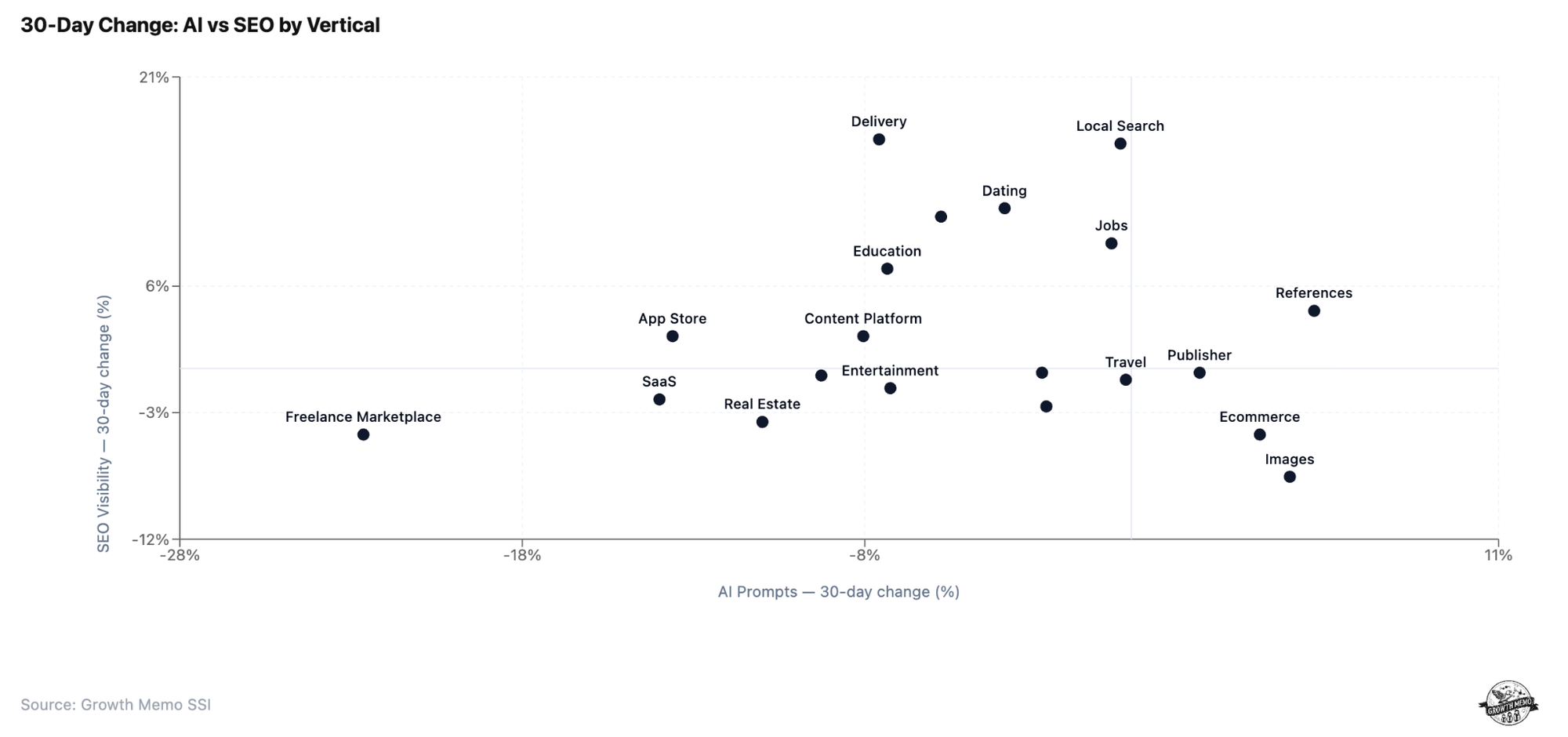
On Substack Notes, Indig shares short-form observations, charts, video snippets, and early teasers for upcoming Memos that have not yet been finalized. By observing how his audience interacts with these micro-content experiments, he can gauge organic interest and validate assumptions before committing to a full-length article. The Notes that generate the highest level of engagement and debate frequently serve as the foundational blueprints for future weekly newsletters. Conversely, ideas that fall flat can be revised or abandoned without the sunk cost of a multi-day writing process.
Automating Workflows with Buffer and Model Context Protocol Integration
Because Indig splits his professional life between demanding advisory engagements with global enterprises and frequent business travel, manual social media management is entirely unfeasible. To maintain a consistent online presence, he relies heavily on Buffer to schedule and batch-prepare his cross-channel distribution. With Substack Notes integrated directly into Buffer’s platform, Indig and his team can line up a week’s worth of multi-platform messaging—spanning X, LinkedIn, Threads, and Bluesky—in a single streamlined session.
This automation yields tangible operational efficiencies. Indig estimates that utilizing Buffer saves him between two and three hours every single week, protecting his schedule from administrative friction while ensuring that his audience engagement remains uninterrupted regardless of his physical location or client workload.
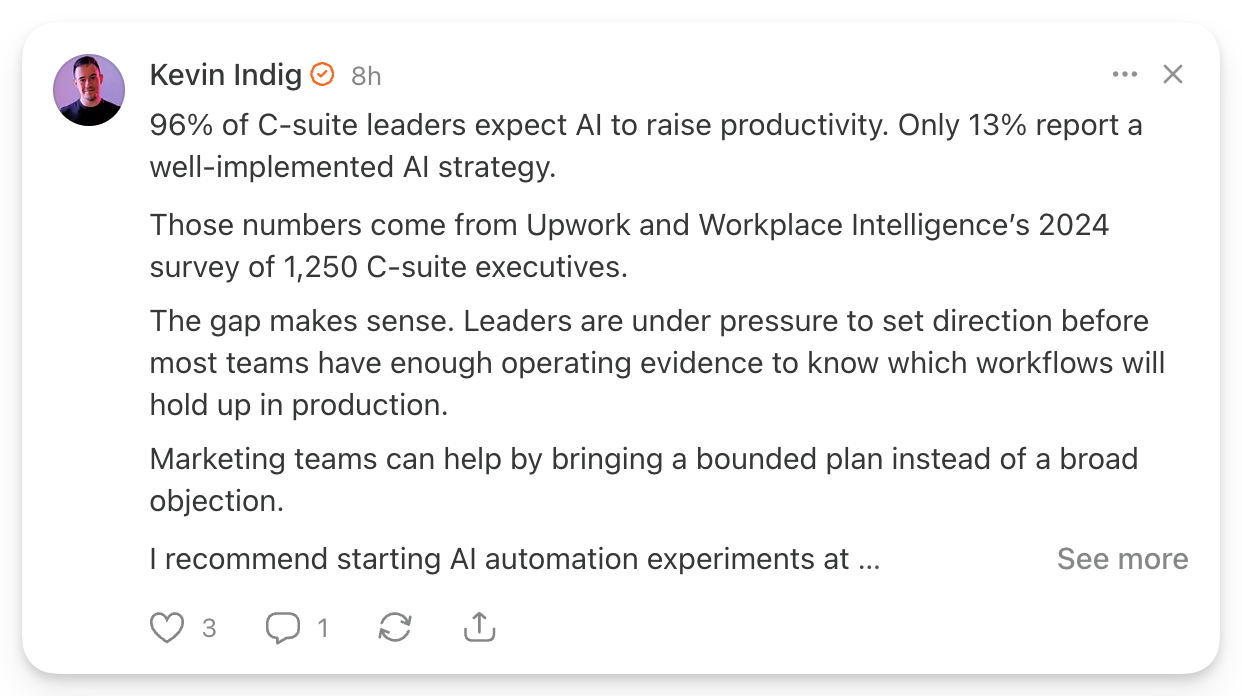
Beyond basic scheduling, Indig has integrated cutting-edge technological capabilities into his content pipeline through Buffer’s Model Context Protocol (MCP) integration. This functionality allows external artificial intelligence tools to connect directly to a user’s Buffer account history. Indig directs Codex, OpenAI’s advanced coding assistant, to analyze his historical posting data, evaluate which topics and formats have driven the strongest engagement, and generate data-driven suggestions for future content topics. By merging historical analytics with AI-assisted ideation, Indig removes the guesswork from editorial planning, ensuring that every new piece of content aligns with proven audience preferences.
Broader Implications for the Creator Economy
Indig’s workflow offers a blueprint for the modern independent publisher. As the digital publishing space becomes increasingly saturated, relying solely on organic subscriber growth within a single platform is often insufficient for long-term commercial sustainability. Successful creators are increasingly adopting B2B-style marketing operations, where rigorous data analysis, audience segmentation, automated distribution pipelines, and rapid prototyping form the core of the publishing business.
For writers and creators navigating platforms like Substack, Indig’s overarching advice remains consistent regardless of audience size: establish a sustainable routine, anchor your content where your readers already spend their time, and continuously audit performance data to iterate effectively. Whether an author is publishing their very first issue or managing an established subscriber base of 30,000 readers, the underlying principle holds true. The true work of a modern creator extends far beyond the moment of publication, requiring a systematic dedication to distribution, testing, and technological leverage to turn raw insights into sustained digital authority.