
 Ali Ikhwan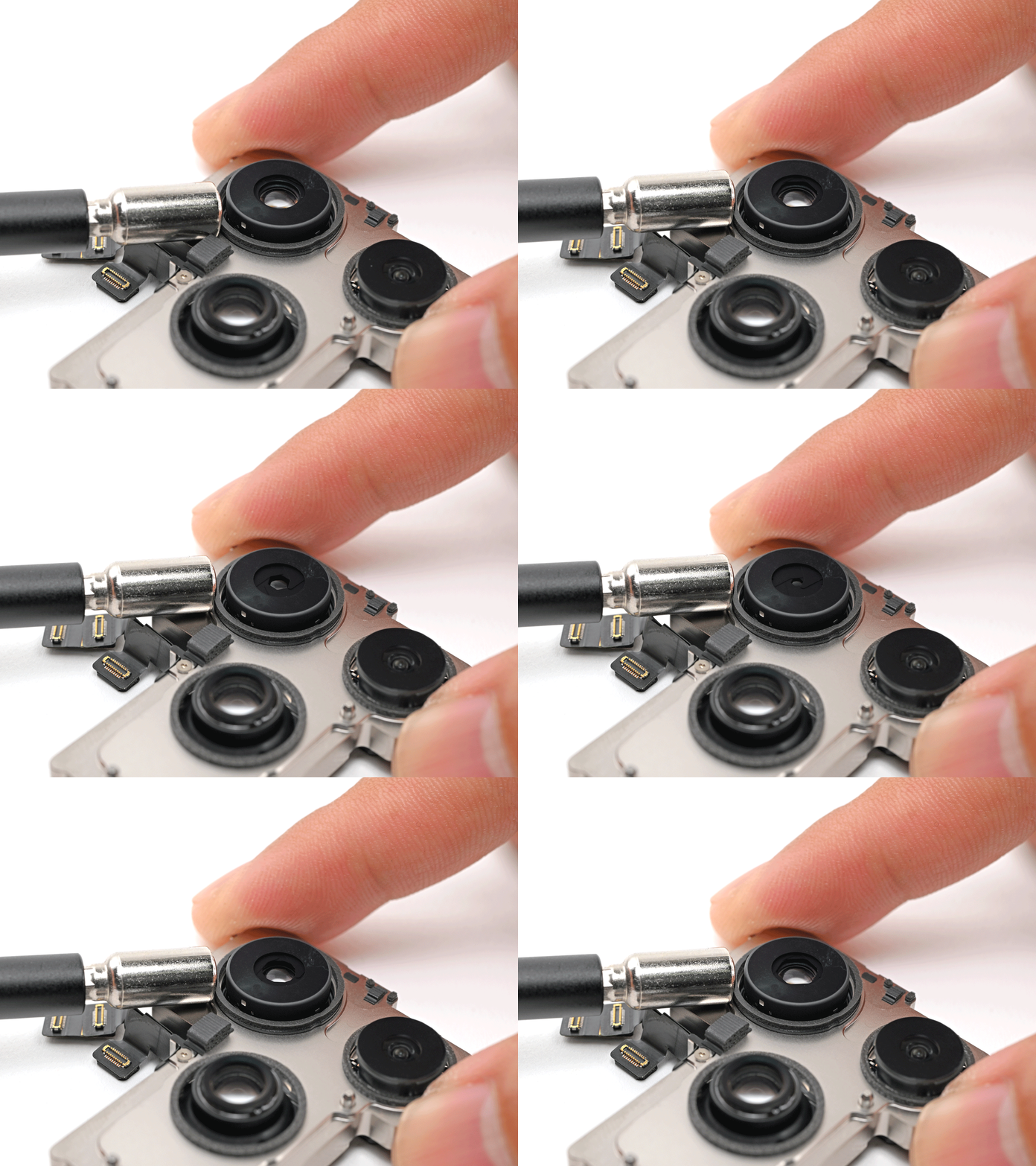
The release of the iPhone 18 Pro has once again prompted a comprehensive physical dissection by the technical experts at iFixit, providing an unprecedented look into the intricate hardware landscape of Apple’s latest flagship device. As the consumer electronics industry faces mounting pressure from global regulators to prioritize longevity and modular design, this teardown serves as a critical benchmark for the company’s ongoing evolution in engineering. The analysis reveals a device that balances high-end innovation with a structural design that is increasingly accessible to technicians, yet still defined by the inherent complexities of modern smartphone architecture.
The Anatomy of the iPhone 18 Pro
The centerpiece of the teardown is the iPhone 18 Pro’s newly implemented variable aperture lens within its primary 48-megapixel camera array. This feature, while seen in other mobile devices historically, represents a significant shift for Apple. The mechanism utilizes six rotating blades, each roughly the width of a human hair, designed to modulate light intake for enhanced photographic and cinematic capabilities.
From an engineering perspective, this addition introduces a sophisticated mechanical element into an environment previously dominated by static optics. iFixit’s assessment highlights the extreme difficulty of servicing the aperture blades themselves; the components are so precise and fragile that any mechanical failure within the iris would likely necessitate a full replacement of the camera module rather than a targeted component repair. While this creates a costlier repair scenario for the end user in the event of failure, the teardown team noted that the camera module as a whole remains relatively straightforward to detach, preventing a localized mechanical issue from compromising the rest of the handset.
Chronology of Apple’s Repairability Journey
The trajectory of Apple’s stance on hardware repair has been marked by a decade of friction, shifting regulatory environments, and gradual policy pivots.
- 2016–2019: The "Right to Repair" movement gained significant momentum as independent repair shops and consumer advocacy groups, such as PIRG, began lobbying for legislative action against restrictive proprietary hardware locks. During this period, Apple was frequently criticized for the use of Pentalobe screws and aggressive adhesive applications that discouraged third-party repairs.
- 2021: Facing mounting pressure from U.S. state lawmakers and the European Union, Apple launched its "Self Service Repair" program. While initially heralded as a major victory for consumers, it was met with criticism regarding the high cost of rental tools and the "parts pairing" software locks that prevented the use of third-party components.
- 2023–2024: Legislative mandates in the European Union regarding replaceable batteries forced a shift in Apple’s internal design language. The company began integrating more accessible adhesive pull-tabs and standardized screw layouts to align with these requirements.
- 2025: With the launch of the iPhone 17 Pro, iFixit awarded the device a 7/10 repairability score, signaling a significant improvement in internal modularity.
- 2026: The current iPhone 18 Pro maintains this 7/10 rating, solidifying a trend of stability in repair-friendly design choices, even as the devices themselves become more feature-rich.
Data-Driven Repairability Metrics
The repair score of 7/10 is not an arbitrary figure but a reflection of specific mechanical milestones achieved by Apple’s design team. The battery, long the most difficult component to service in older iPhone models, has seen the most dramatic improvement. In previous iterations, the battery was firmly bonded to the chassis with high-strength adhesives. In the iPhone 18 Pro, while the screen must still be removed—a task that requires careful handling of delicate ribbon cables—the battery itself is secured primarily by screws, allowing for significantly faster and safer extraction.
However, the internal complexity remains high. The density of the logic board, the integration of 5G antenna arrays, and the necessity of maintaining IP68 water and dust resistance ratings necessitate the use of gaskets and specialized seals. These elements, while essential for device durability, continue to pose a barrier to entry for the average consumer attempting a DIY repair without specialized training or tools.
The Role of Advocacy and Legislative Influence
The shift in Apple’s repair strategy cannot be viewed in isolation from the broader regulatory landscape. Advocacy groups such as the Public Interest Research Group (PIRG) have consistently monitored Apple’s progress, often providing critical, data-heavy reports that influence public perception and legislative agendas.
.gif)
When PIRG issued a "D-rating" for the iPhone 17’s repairability earlier this year, it highlighted the persistent issue of "parts pairing"—a process where Apple’s software requires serialized components to be authenticated by Apple’s servers. Even if a user successfully replaces a screen or a battery with a genuine part, the software may disable features like True Tone or battery health monitoring unless the repair is officially verified. This software-based hurdle remains the primary point of contention between Apple and the repair community, as it effectively limits the freedom of independent repair shops to service devices without official OEM cooperation.
In response to this, Apple has introduced its "Repair Assistant" software, a tool intended to guide users through the calibration process of replaced parts. While this is an admission of the necessity of user-servicing, critics argue that it still keeps the user within an Apple-controlled ecosystem, rather than fostering a truly open market for repairs.
Implications for the Smartphone Industry
The implications of the iPhone 18 Pro’s design extend far beyond the immediate utility of the device. As Apple maintains its position as the market leader in premium smartphones, its design choices set the standard for the entire industry. When Apple moves toward more modular battery placements or easier-to-access camera arrays, competitors are often forced to follow suit to remain competitive on durability and sustainability metrics.
Furthermore, the environmental impact of these design changes is significant. By making devices easier to repair, Apple is theoretically extending the lifecycle of its products, which in turn reduces the volume of electronic waste (e-waste). This aligns with the "Circular Economy" goals prioritized by the European Commission, which has been the primary architect of recent legislation requiring manufacturers to ensure that batteries are "easily removable and replaceable" by 2027.
Professional Analysis of Future Challenges
Looking forward, the integration of increasingly complex hardware—such as variable aperture systems and advanced sensor arrays—presents a fundamental challenge to the "Right to Repair." As smartphones move toward becoming highly specialized, miniaturized computers, the line between "serviceable" and "integrated" becomes blurred.
If the internal components continue to shrink to accommodate new sensors, the feasibility of repair may eventually plateau. Industry analysts suggest that we are entering a phase where the "repairability" of a device will be determined as much by software as by hardware. If a manufacturer chooses to limit software functionality following a repair, the ease of physically replacing a part becomes moot.
For now, the iPhone 18 Pro stands as a middle ground: a device that acknowledges the need for professional servicing while maintaining the high-performance standards that define the Apple brand. The 7/10 score is an indicator that while the "easy fix" remains an elusive goal for the average user, the structural barriers that defined the previous decade are slowly being dismantled. The ongoing dialogue between Apple, legislative bodies, and advocacy groups suggests that the next generation of smartphones will continue to be a battleground for the definition of ownership—specifically, whether a consumer truly owns their device if they cannot perform fundamental maintenance on it.
In conclusion, the iFixit teardown of the iPhone 18 Pro offers a clear window into the current state of consumer electronics. While the device remains a masterpiece of dense, interconnected engineering, the progress made in battery and camera accessibility signals a significant victory for the repairability movement. Whether these advancements will satisfy the stringent demands of global regulators or the expectations of consumer advocacy groups remains to be seen, but the baseline for what constitutes a "repairable" phone has undoubtedly been raised.