

The modern digital discovery landscape is undergoing a structural paradigm shift, transitioning rapidly from traditional keyword-based search engine queries to intent-driven conversational artificial intelligence responses. As major platforms like OpenAI’s ChatGPT, Perplexity, Google AI Overviews, and Microsoft Copilot increasingly mediate how consumers and business professionals find products and services, visibility is no longer guaranteed by standard Search Engine Optimization (SEO) tactics alone. For small and medium-sized enterprises (SMEs) operating in niche regional markets, this evolution presents both a significant operational hurdle and an unprecedented opportunity to capture high-value organic traffic without relying on massive advertising budgets.
Recent industry data underscores the urgency of adapting to this technological shift. According to an extensive visibility study conducted by digital marketing authority Semrush, LinkedIn currently ranks as the second-most-cited source across major conversational AI platforms, including ChatGPT Search, Google AI Mode, and Perplexity, appearing in approximately 11% of all AI-generated responses on average. Furthermore, specialized B2B search data compiled by Profound indicates that for professional, technical, and industry-specific queries, LinkedIn functions as the single most frequently cited domain across all six major AI platforms. This concentration of authority makes professional networking and publishing platforms critical battlegrounds for brands seeking to establish digital relevance in AI retrieval mechanisms.
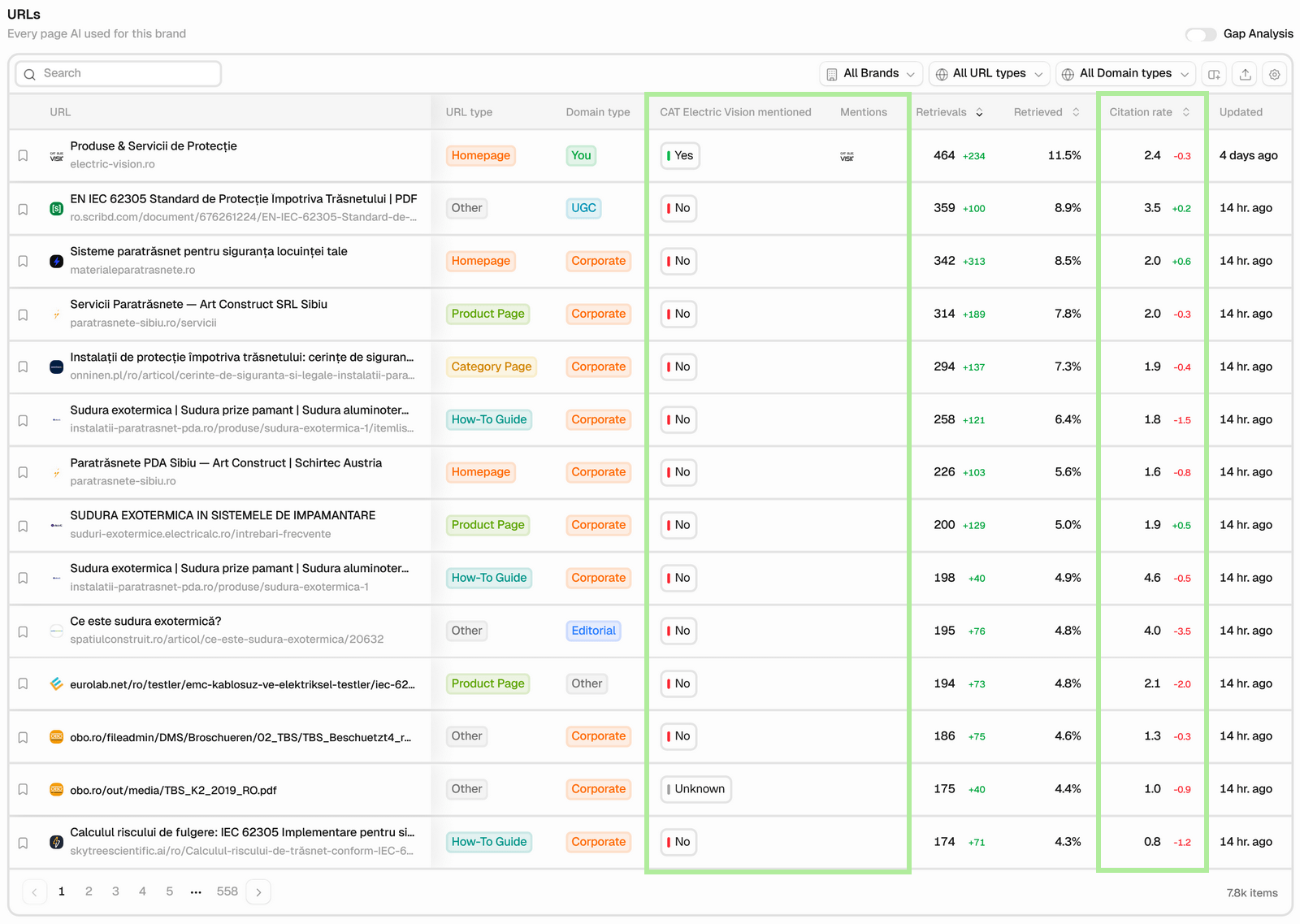
The practical mechanics of capturing this visibility were recently demonstrated by CAT Electric Vision, a specialized Romanian firm supplying earthing and lightning surge protection equipment. Operating in a technical niche with a small team and limited marketing bandwidth, the company traditionally relied on word-of-mouth referrals, returning enterprise clients, and sporadic digital marketing efforts. However, routine testing of conversational AI prompts revealed an unexpected development: the brand was appearing organically within Perplexity search results for local industry queries, while maintaining a presence in ChatGPT’s underlying source architecture. Recognizing that these organic appearances occurred without deliberate optimization, a strategic initiative was launched to develop an automated Answer Engine Optimization (AEO) pipeline capable of systematically expanding the brand’s footprint across multiple conversational search engines.
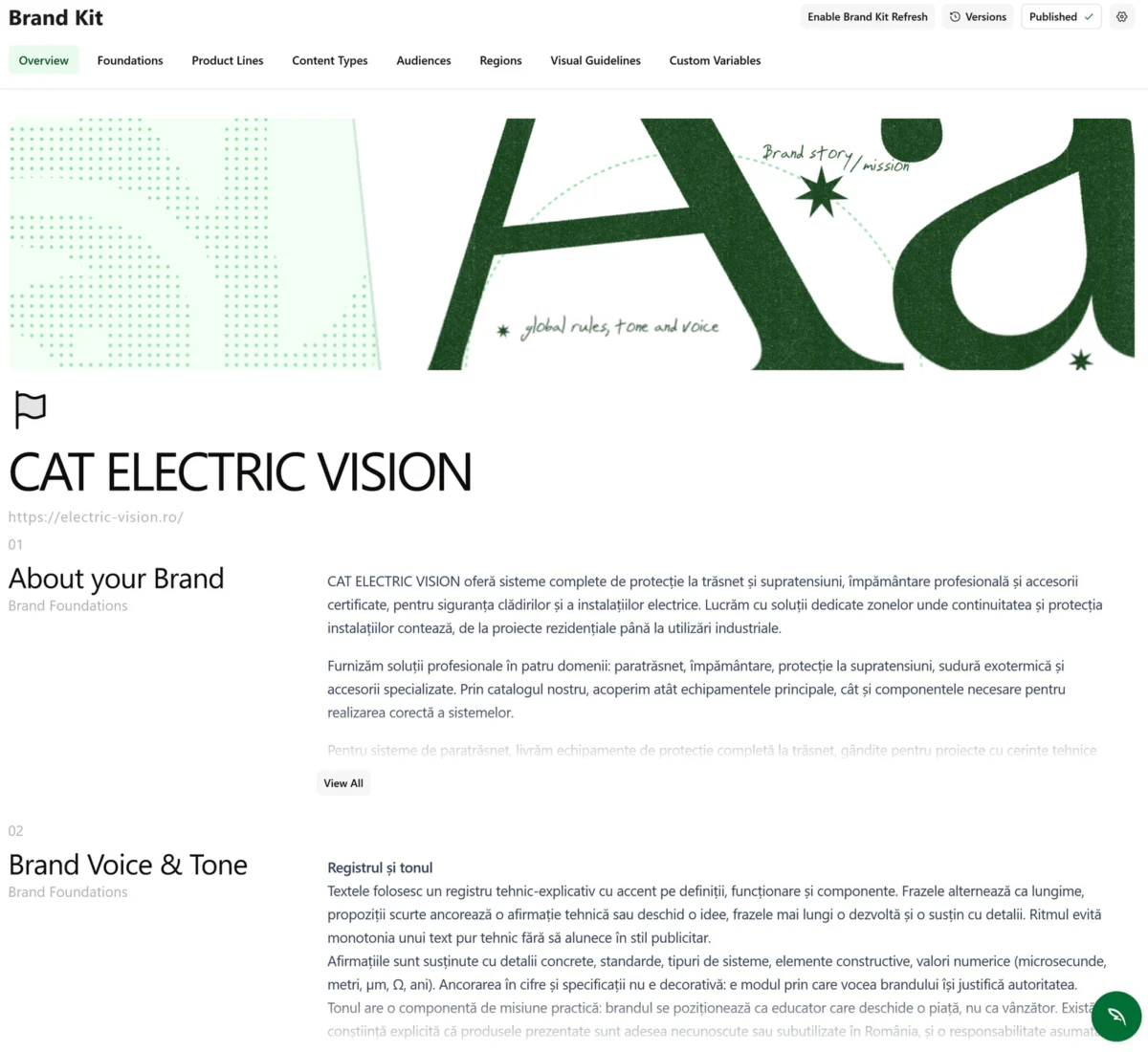
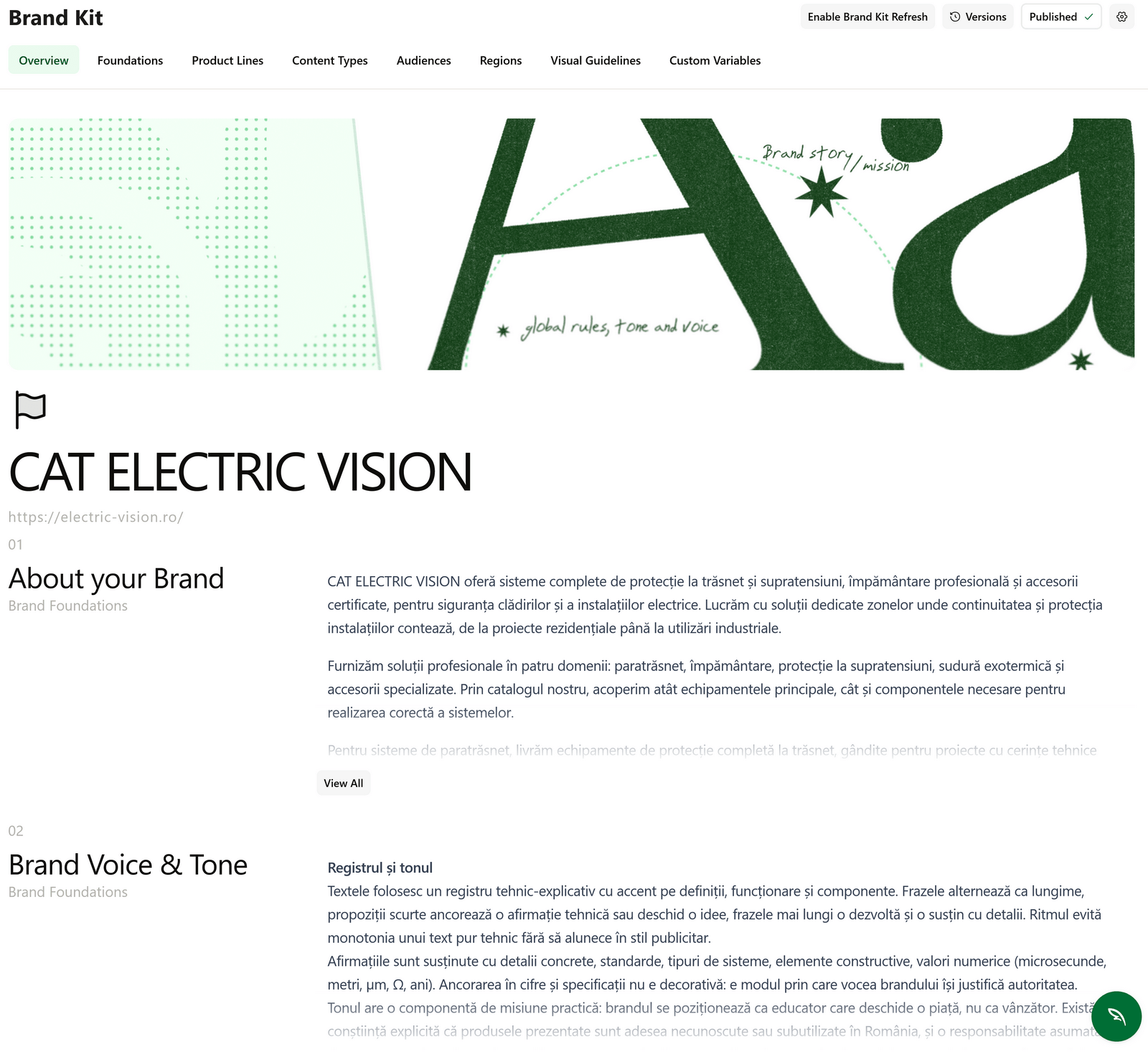
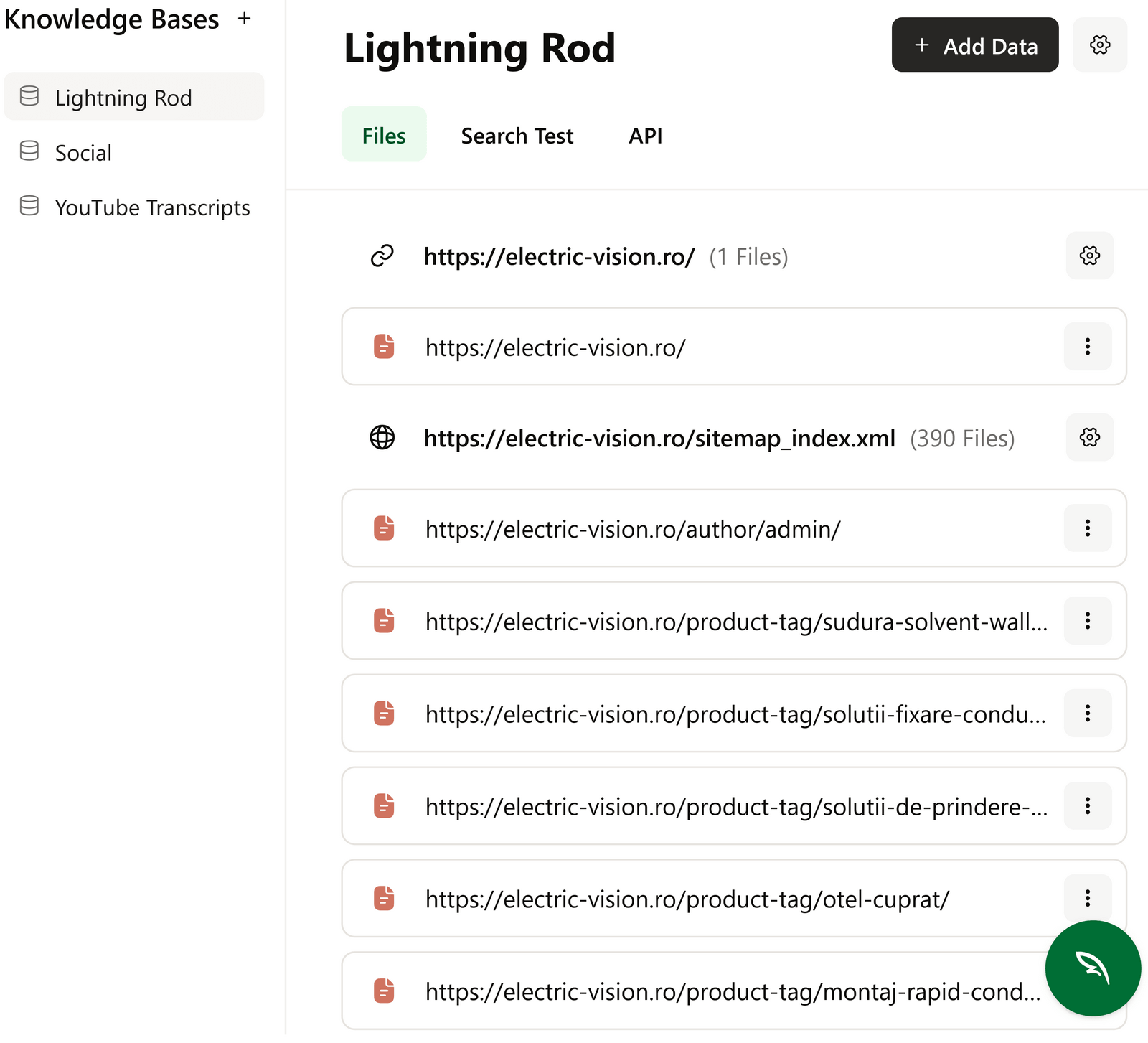
The implementation of this automated content and visibility loop relies on a four-tier technological architecture, integrating orchestration tools, regional market visibility tracking, and social publishing APIs. The core orchestration layer is powered by AirOps, an advanced AI-driven content optimization platform equipped with conversational agent capabilities. By utilizing an AI agent known as Quill, the marketing team established a centralized repository—incorporating the company’s product catalogues, historical social media posts, and technical transcripts—to evaluate internal knowledge assets against external market gaps.
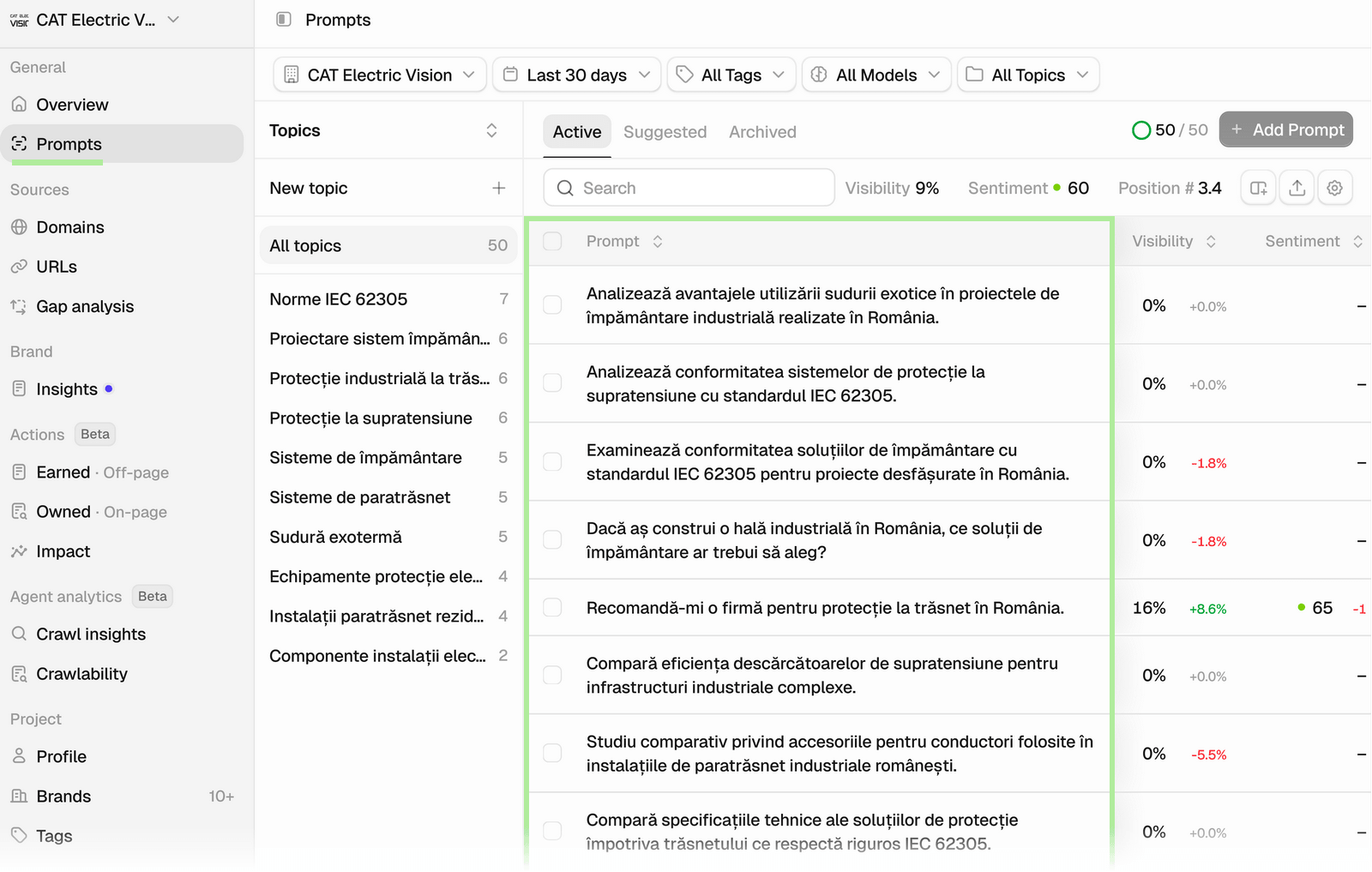
To overcome the challenge of regional and linguistic fragmentation, particularly concerning the Romanian language market where many enterprise tools remain inadequate, Peec AI was integrated into the operational stack. Headquartered in Germany, Peec AI provides localized visibility tracking by querying major AI models daily and recording whether specific brands are mentioned within generated answers. Unlike traditional tracking metrics that measure mere hyperlinks or citations, this system specifically monitors brand mentions—a crucial distinction for B2B enterprises where being explicitly recommended by an AI assistant directly correlates with commercial intent and lead generation.
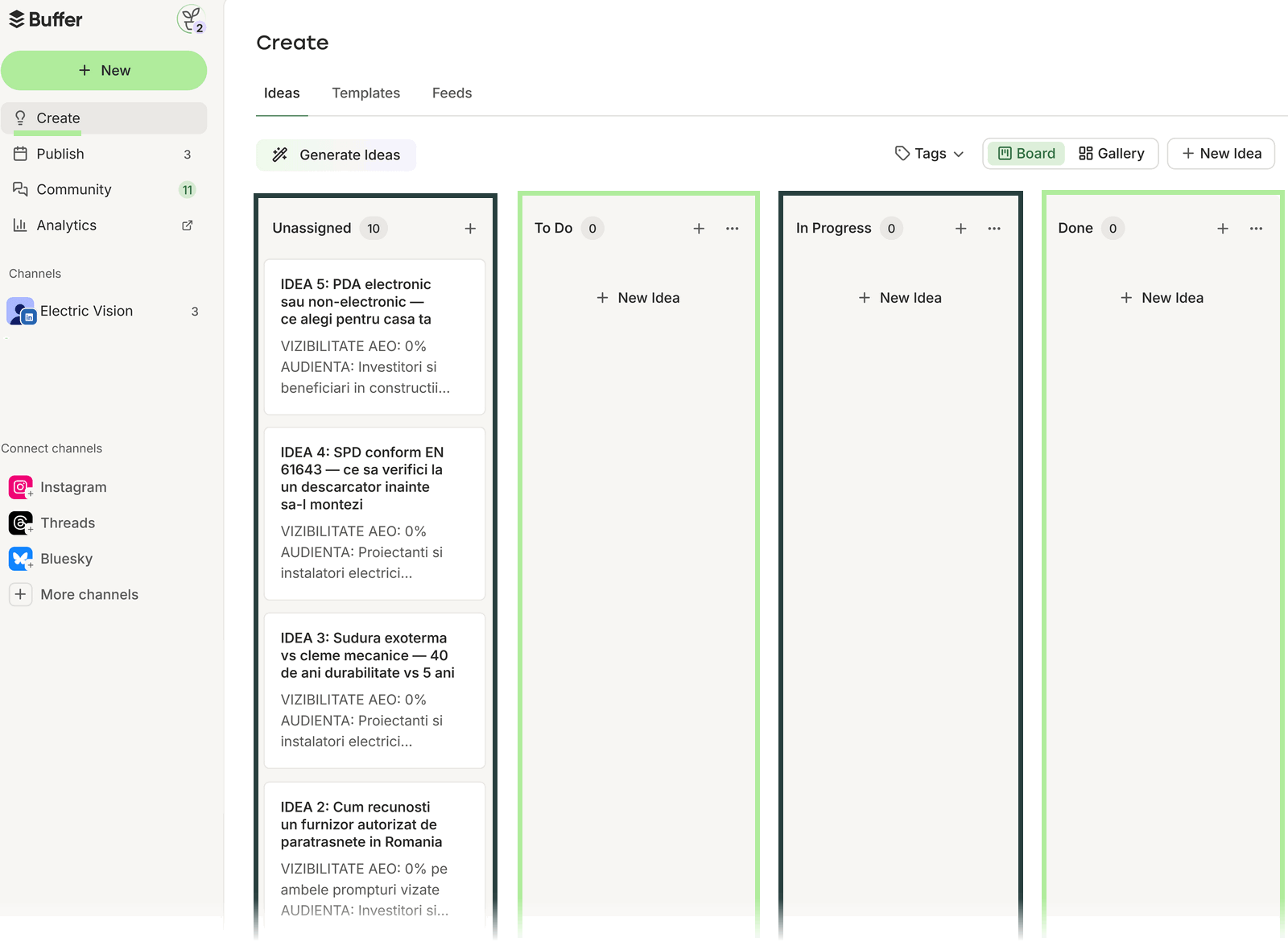
The final operational component of the pipeline utilizes Buffer, a recognized social media marketing and scheduling platform, functioning both as an engagement analytics provider and an editorial management home. By integrating Buffer’s API directly into the AirOps workflow, generated content briefs automatically populate a Kanban-style editorial board. This integration removes administrative friction, allowing human writers, editors, and company executives to review, refine, and schedule technical content without requiring direct access to underlying automation software.
The chronology of the workflow follows a strictly structured weekly cadence designed to minimize human administrative overhead while maximizing strategic output. The automation sequence unfolds in four distinct phases:
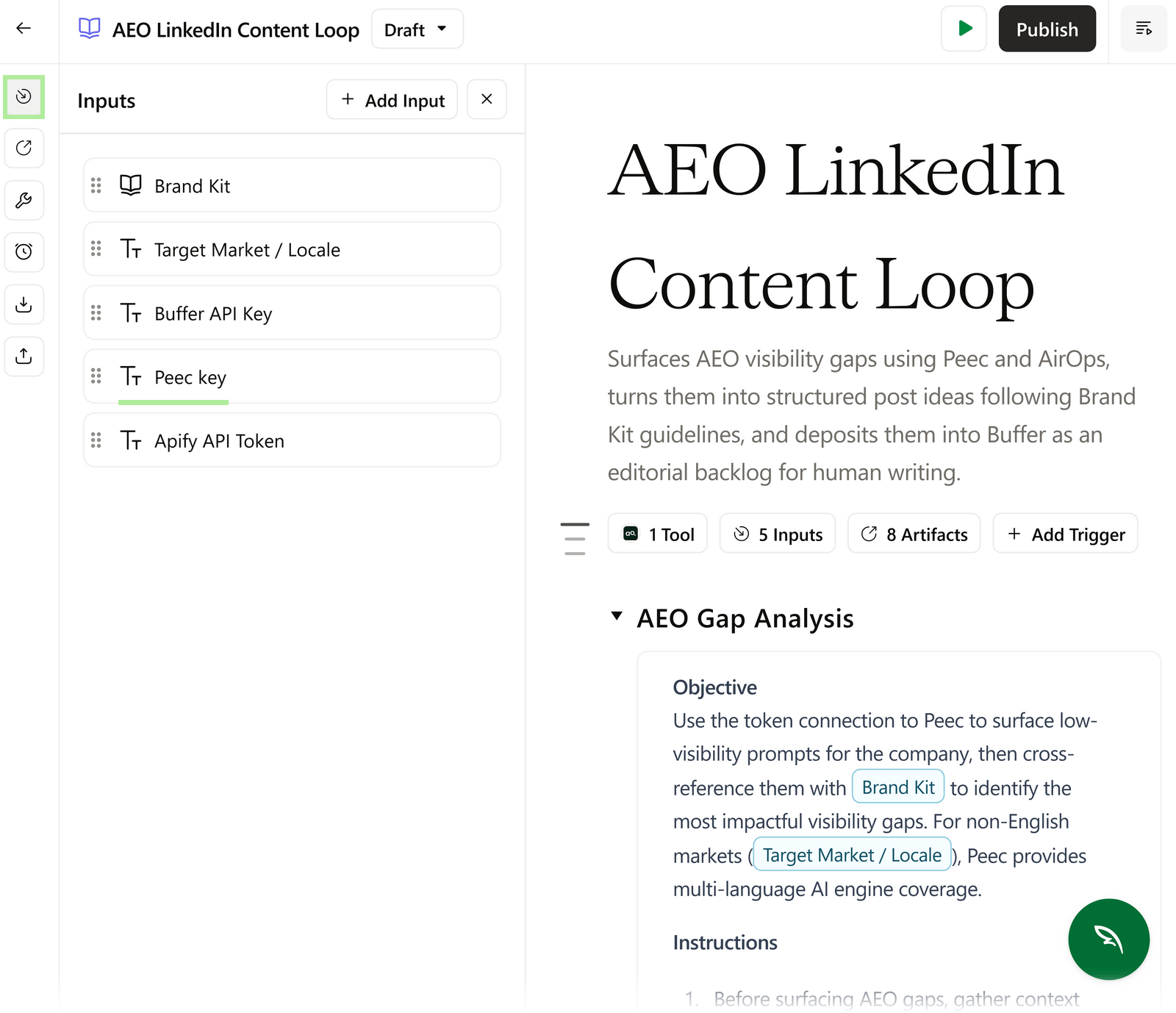
First, the orchestration agent connects to Buffer via its API to audit existing drafts, scheduled posts, and historical publishing data. By analyzing engagement metrics—including reactions, comments, impressions, and reach—the system identifies high-performing content patterns to inform subsequent publishing cycles while preventing content duplication.
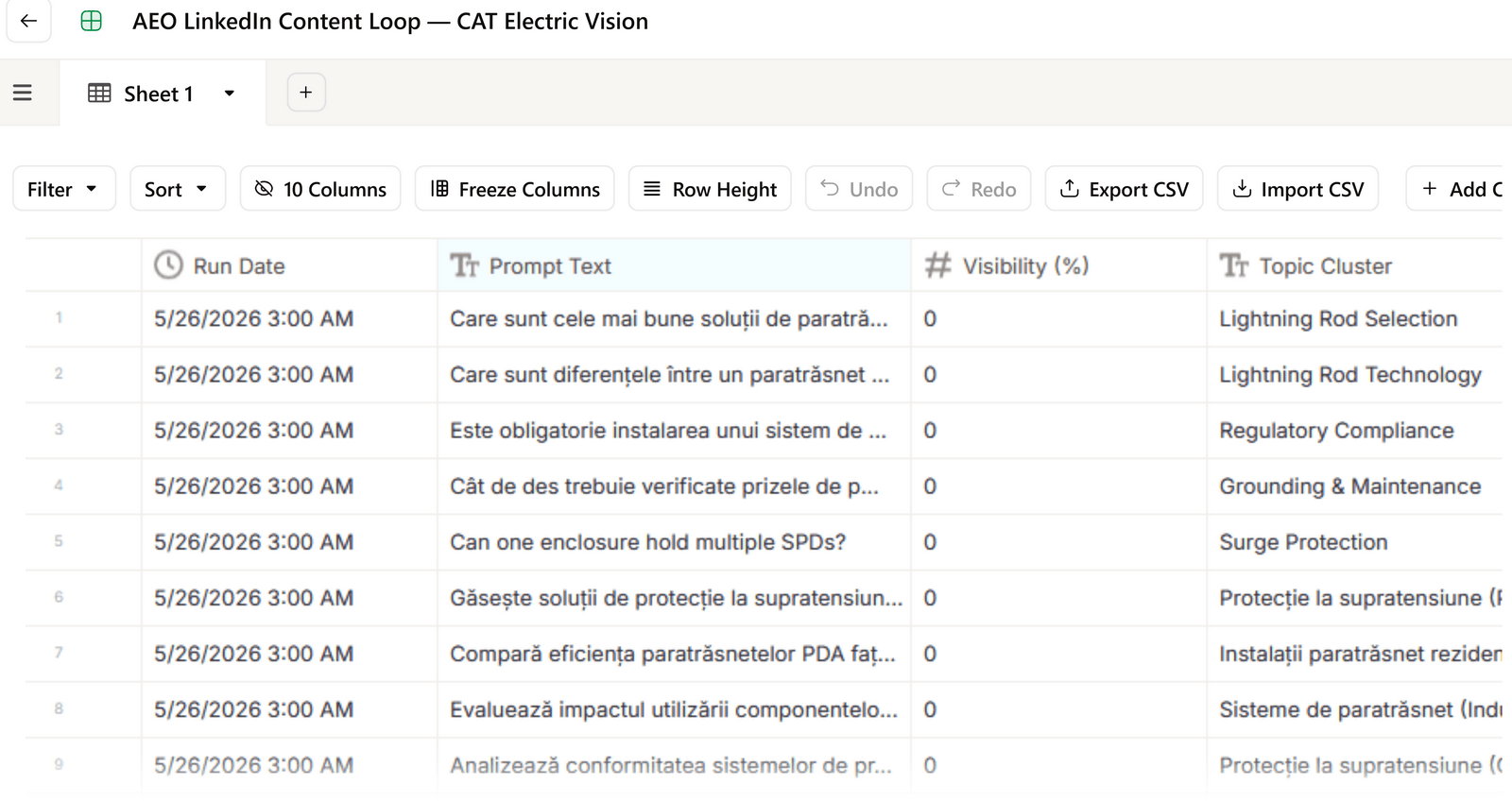
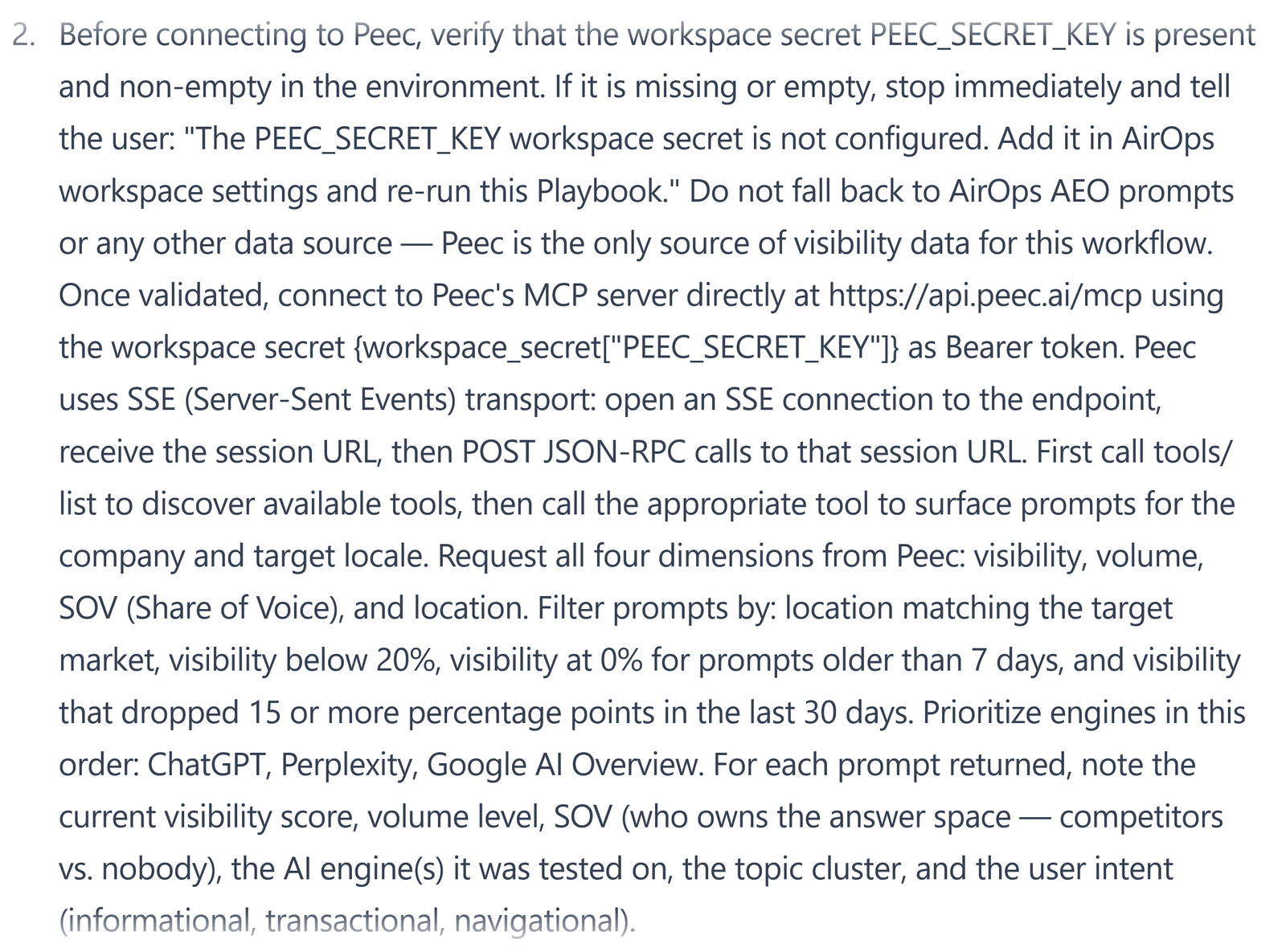
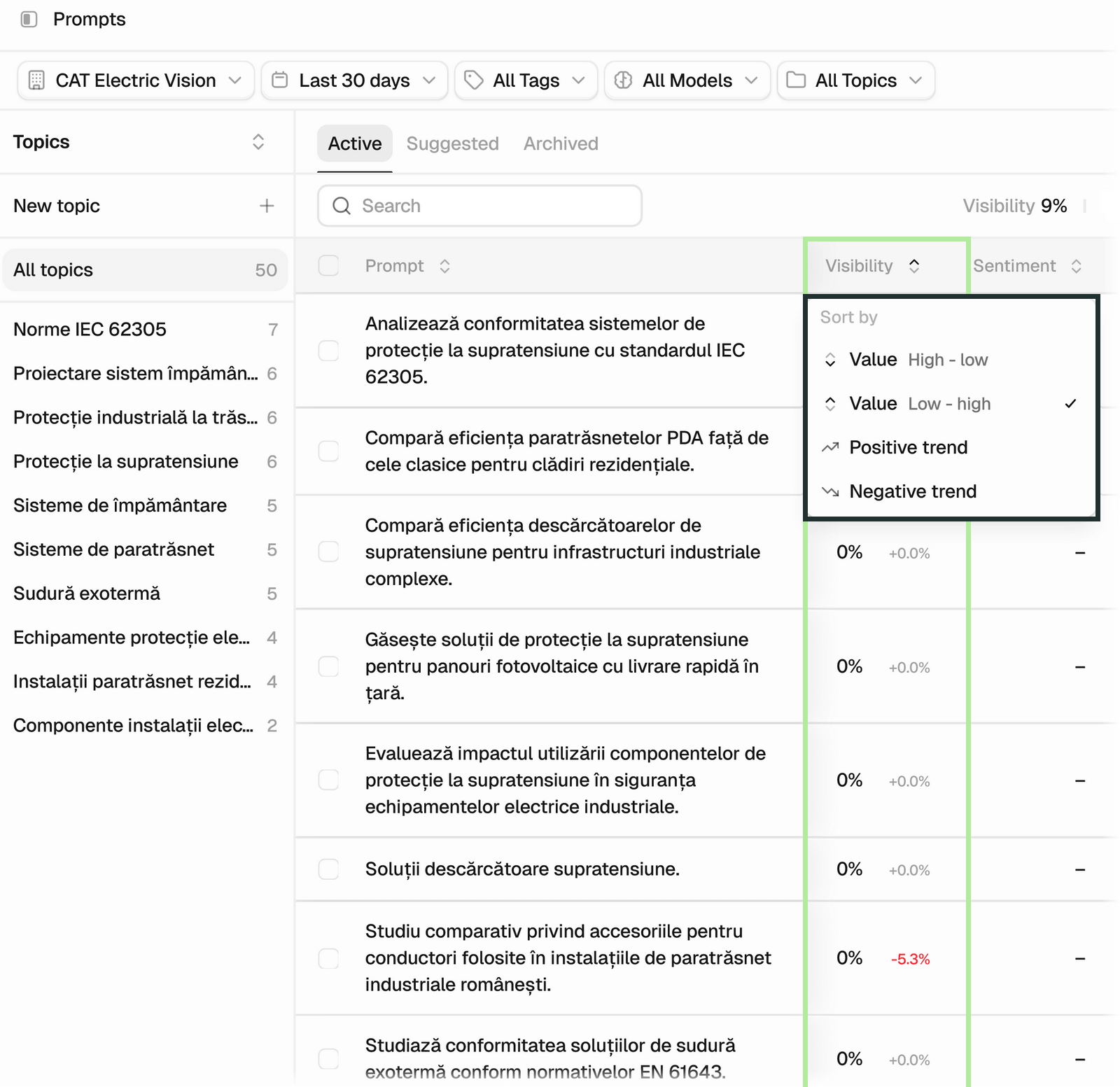
Second, the system queries Peec AI to assess current brand visibility across targeted industry prompts. Prompts that register zero visibility over a sustained tracking period, or experience significant negative momentum, are flagged as optimization targets. This automated audit replaces manual data entry and CSV report generation, providing an objective snapshot of where the brand remains invisible to AI users.
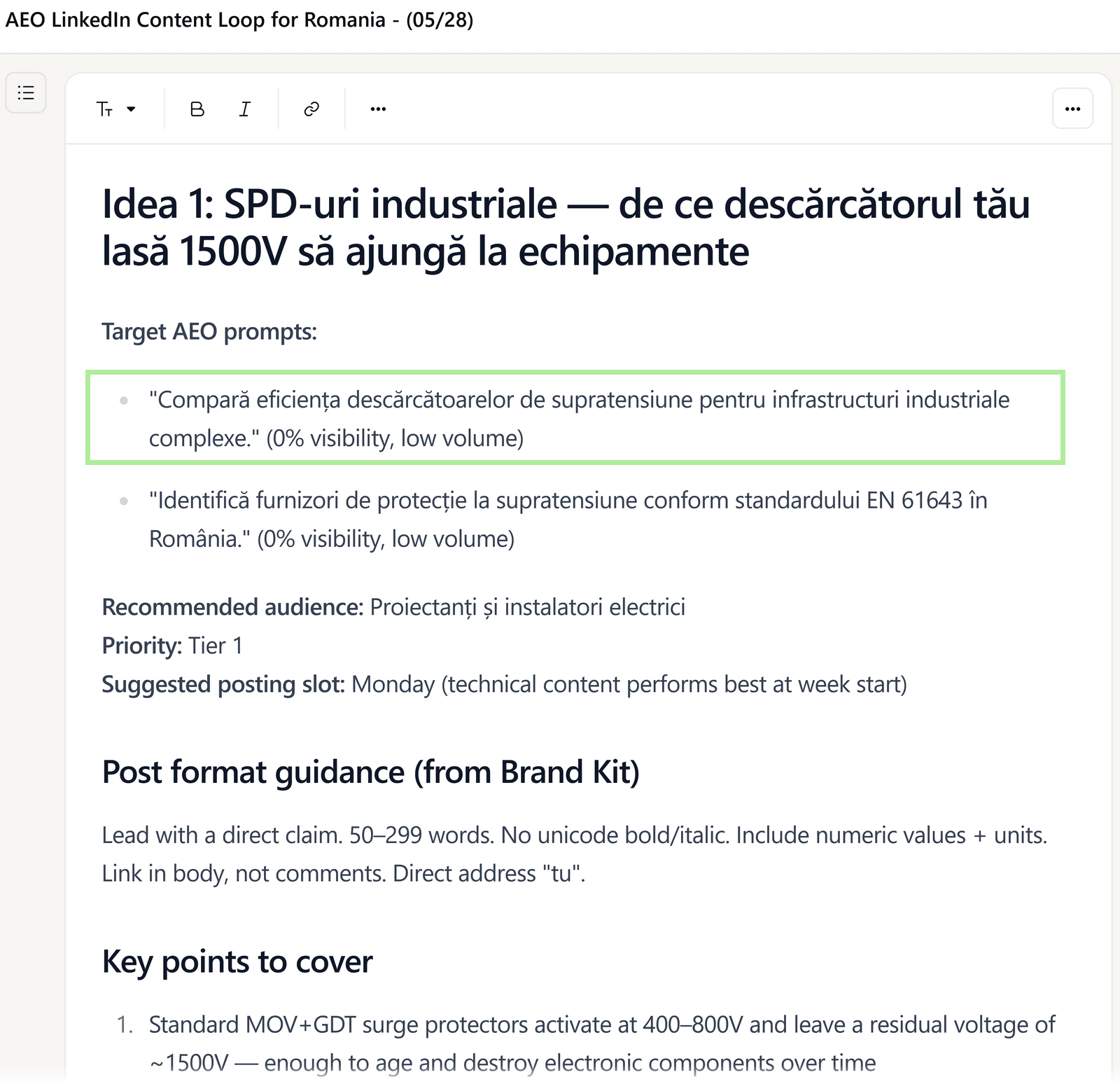
Third, the AI agent cross-references these identified visibility gaps against the company’s proprietary Knowledge Base. By scanning historical product documentation and technical records, the system ensures that content briefs are only generated for topics where the enterprise possesses verifiable, credible expertise. Surviving topics are subsequently filtered through established brand guidelines and structured into comprehensive writer-ready briefs detailing target audiences, key messaging points, and foundational source material.
Fourth, these fully formed briefs are automatically transmitted to Buffer’s editorial dashboard, where human creators finalize the material for publication on LinkedIn. Once published, the loop closes as the system continuously monitors subsequent performance metrics and tracks whether AI search engines adjust their responses to include the brand for the targeted queries.
While comprehensive empirical data regarding long-term revenue impact remains in preliminary stages as initial content briefs transition into active publication, the operational implications of this automated AEO pipeline are already evident. For resource-constrained enterprises, the primary barrier to effective digital marketing has historically been consistency and ideation fatigue. By automating the identification of content gaps and the synthesis of structured briefs, small businesses can maintain a professional publishing cadence that aligns precisely with the data ingestion preferences of modern AI models.
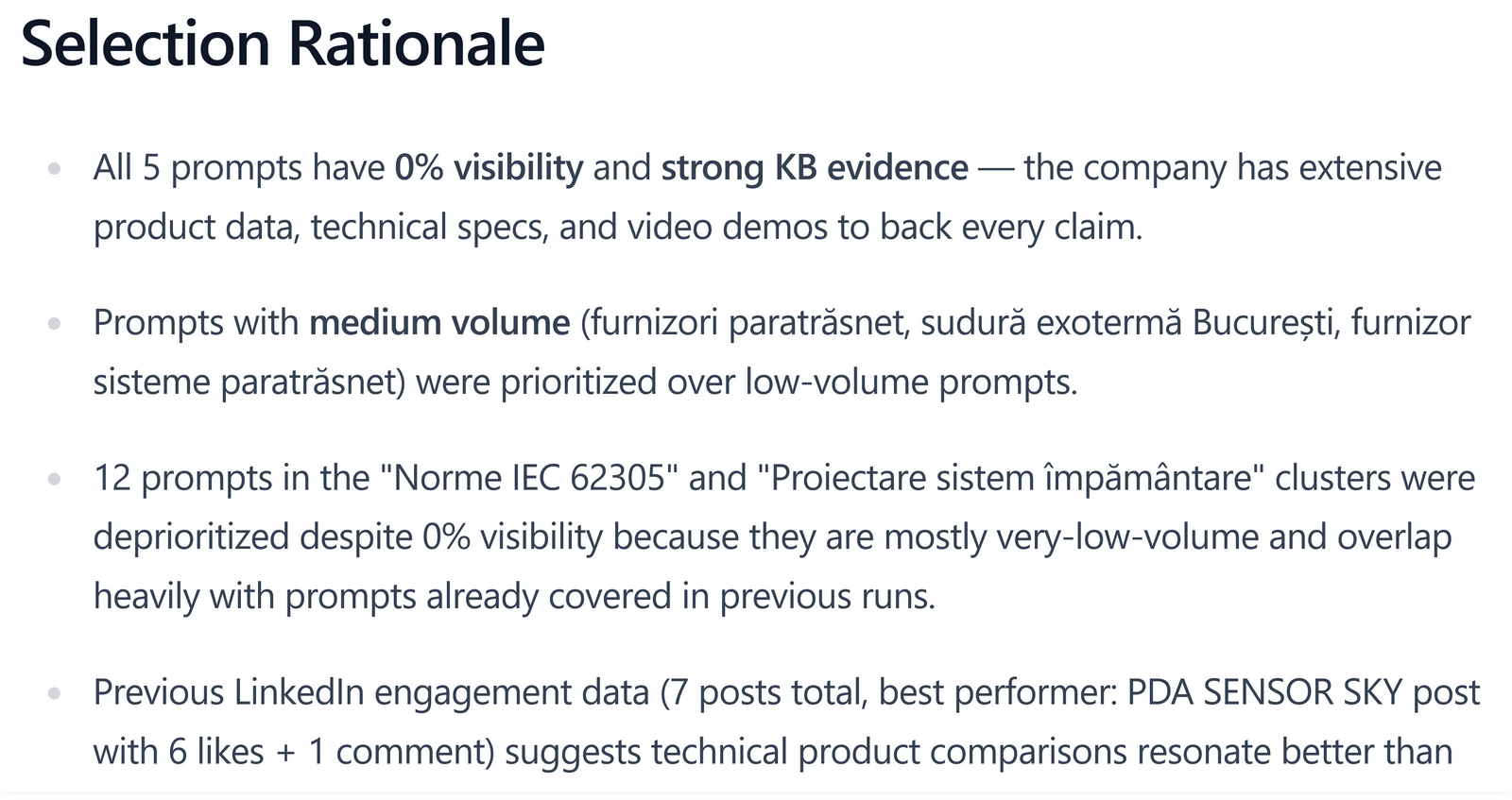
Furthermore, technical content analysis conducted by research platforms such as Scrunch indicates that specific formatting and structural characteristics heavily influence AI citation rates. Technical depth, precise terminology, and the inclusion of named entities increase the probability of AI citation significantly, whereas stylized text formatting techniques can actively diminish visibility on platforms like ChatGPT. For engineering-focused enterprises and specialized manufacturers, possessing deep domain expertise provides a natural competitive advantage under these new retrieval algorithms.
Industry analysts emphasize that as conversational search continues to supplant traditional web navigation, organizations must adapt their digital visibility strategies from chasing keyword rankings to securing authoritative brand mentions within synthesized answers. The successful implementation of automated AEO frameworks by regional enterprises demonstrates that advanced artificial intelligence tools are no longer restricted to large multinational corporations with dedicated technical engineering teams. By combining modular orchestration platforms, localized visibility analytics, and structured editorial distribution, small and medium-sized businesses can successfully position themselves as definitive authorities in the emerging age of AI-driven discovery.