New research from Buffer, analyzing over 4.8 million LinkedIn posts, indicates a significant shift in peak user engagement towards late afternoon and evening hours in 2026, diverging from previous years where professional content thrived predominantly during traditional working hours. This profound change, identified by Buffer’s resident data scientist Julian Winternheimer, suggests a fundamental alteration in how professionals interact with the platform, mirroring trends observed on consumer-focused social media channels like Instagram and TikTok.
The Evolving Landscape of Professional Engagement
For years, the prevailing wisdom for LinkedIn content strategy dictated posting during business hours, with peak engagement typically observed between 9 a.m. and 5 p.m. This made intuitive sense: professionals were at their desks, actively engaged in work-related tasks, and naturally gravitating towards a platform designed for professional networking and industry insights. However, the 2026 data presents a compelling narrative of evolving user habits, largely influenced by flexible work models, extended screen time, and a blurring of the lines between professional and personal digital consumption.
Julian Winternheimer, who has been tracking these metrics for approximately two years, highlighted the surprising nature of the 2026 findings. "In 2025, peak engagement was almost entirely confined to working hours — things fell off pretty sharply once 5 p.m. hit," Winternheimer stated in Buffer’s analysis. "This year, we’re seeing those peak windows shift later into the day, which mirrors what’s been happening on Instagram and TikTok for a while now. Late afternoon and evening hours are now pulling some of the strongest LinkedIn engagement numbers we’ve seen. People are still showing up for professional content; they’re just doing it after they’ve closed their laptops for the day." This observation underscores a broader societal shift where individuals are increasingly consuming professional content during their commute, in the evenings, or even late at night, outside the conventional 9-to-5 workday.
Methodology Behind the Insights
Buffer’s extensive analysis is based on a massive dataset of over 4.8 million LinkedIn posts published through their platform. This scale allows for robust identification of statistically significant patterns in engagement across different days and times. The primary metric for determining "best times" is engagement, which LinkedIn’s algorithm heavily prioritizes. Engagement encompasses reactions (likes, celebrates, insightful), comments, and reposts. The more interactions a post receives, the more signals the algorithm gets to consider the content valuable and worthy of wider distribution. While engagement doesn’t guarantee viral reach, it significantly influences a post’s visibility and organic spread. The data has been normalized by local time zone, meaning that recommended times like "4 p.m." are universally applicable to the target audience’s local time, eliminating the need for complex time zone conversions.
Key Findings for 2026: A Detailed Breakdown
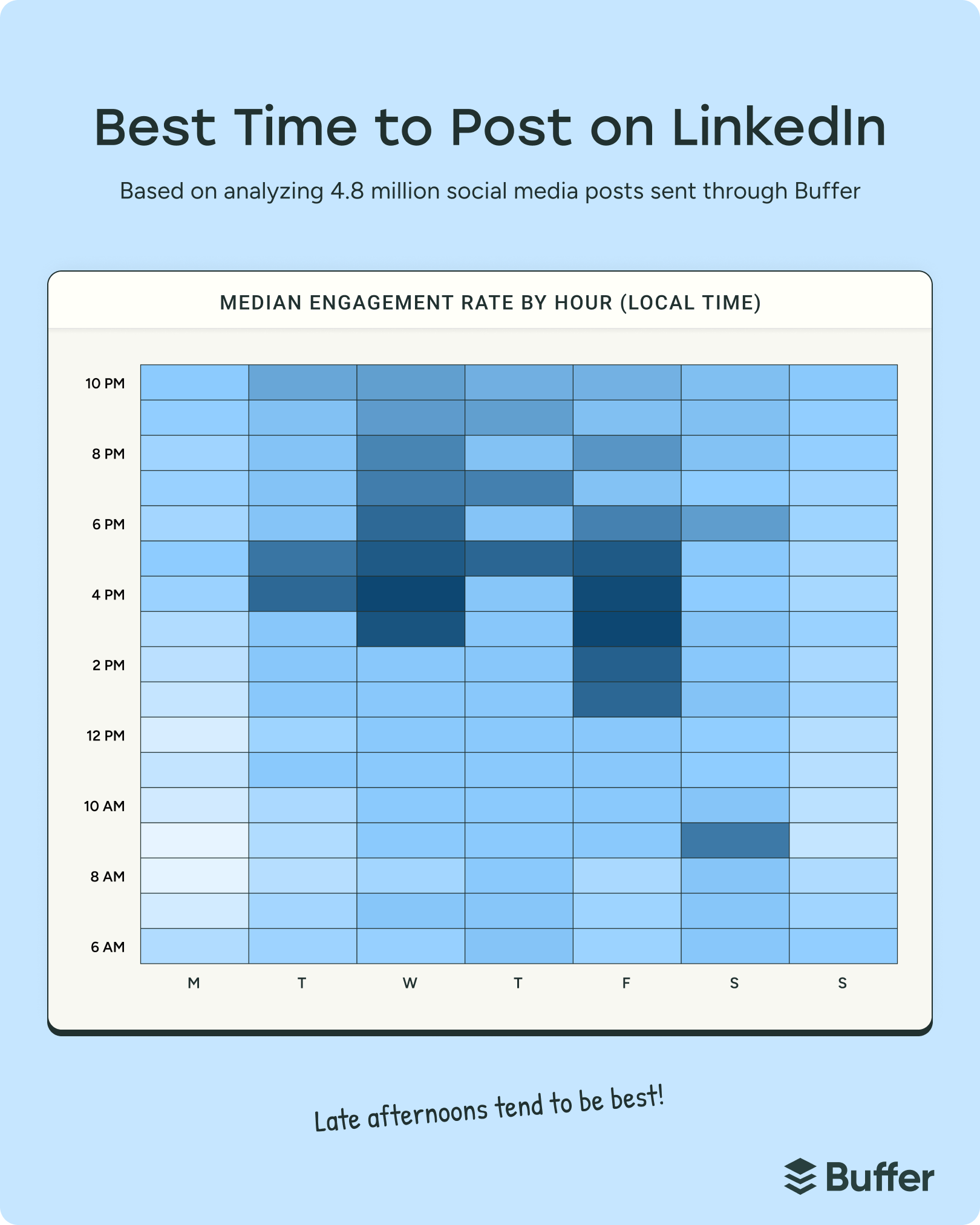
The overarching trend for 2026 reveals that the optimal window for LinkedIn engagement now spans late afternoon and evening, specifically between 3 p.m. and 8 p.m. on weekdays. The data pinpoints several standout moments:
- Wednesday at 4 p.m.: Emerges as one of the highest-engagement time slots across the entire week.
- Friday at 3 p.m. and 4 p.m.: Also demonstrate exceptionally strong engagement, suggesting professionals are winding down their week but still active on the platform.
This shift is clearly visible in Buffer’s heatmap analysis, where the darkest blocks, signifying highest engagement, are concentrated in these later hours. While midday hours still perform respectably, they no longer represent the dominant peaks seen in previous years. Traditional morning hours (6 a.m. – 11 a.m.) now consistently show lower engagement compared to their afternoon and evening counterparts.
Day-by-Day Optimal Posting Times:
- Monday: The start of the workweek typically sees lower overall engagement. However, posts at 10 p.m., 5 p.m., and 9 p.m. show comparatively higher interaction, suggesting a "catch-up" period after the workday. Content strategists might consider saving high-priority posts for later in the week.
- Tuesday: Similar to Monday, Tuesday registers slightly lower overall engagement. Optimal times include 4 p.m., 5 p.m., and 10 p.m. It’s advisable to test these slots with specific audiences before cementing a regular Tuesday schedule.
- Wednesday: This day stands out as the best day for LinkedIn engagement overall. The prime slots are 4 p.m., 3 p.m., and 5 p.m. This robust afternoon-to-early-evening window makes Wednesday an ideal day for sharing critical content.
- Thursday: Continues the strong engagement trend into the latter half of the week. 5 p.m. is identified as the best time, with 7 p.m. and 9 p.m. also showing significant activity, catering to users engaging later in the evening.
- Friday: A surprisingly strong day, with engagement peaking as professionals conclude their workweek. The best times are 3 p.m., 4 p.m., and 5 p.m. Friday remains a valuable day for maintaining visibility.
- Saturday: Generally a quiet day for professional networking. However, 9 a.m. shows the highest engagement, followed by 6 p.m. and 10 p.m. If weekend posting is necessary, these slots offer the best chance for visibility, though weekday engagement is considerably higher.
- Sunday: Similar to Saturday, Sunday typically sees minimal professional activity. 10 p.m. is the best time, with 9 p.m. and 6 a.m. also registering some activity. For maximum impact, content is best reserved for weekdays.
The Best Day of the Week: Wednesday Leads the Pack
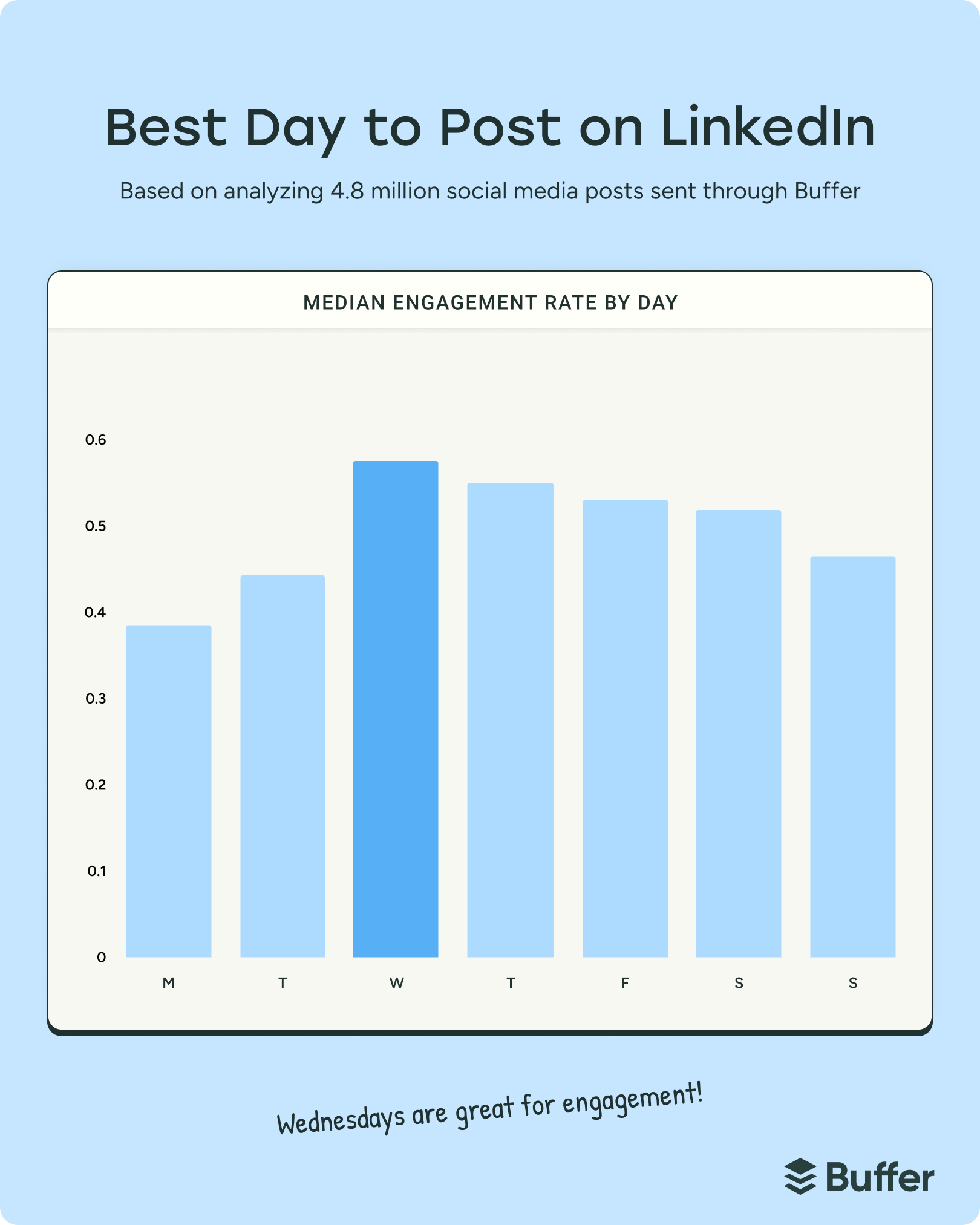
Consolidating the daily findings, Wednesday emerges as the unequivocal best day to post on LinkedIn for maximum engagement. It is closely followed by Thursday and then Friday. This mid-to-late week pattern aligns with anecdotal observations that by Wednesday, professionals are fully immersed in their work tasks and actively seeking valuable content, yet have not fully transitioned into weekend mode. Conversely, Monday and Tuesday consistently show the lowest engagement, reinforcing the "heads-down" work theory for the beginning of the week. While some older research, including insights from LinkedIn’s own marketing blog, has occasionally highlighted Tuesday as an active day, the current Buffer data strongly indicates a shift, emphasizing the need for ongoing data analysis tailored to evolving user behavior.
Implications for Content Strategists and Professionals
This shift in engagement patterns carries significant implications for anyone leveraging LinkedIn, from individual professionals building personal brands to large corporations managing LinkedIn Pages.
- Rethinking Content Calendars: Marketers and content creators must re-evaluate their current posting schedules. Prioritizing late afternoon and evening slots on Wednesdays, Thursdays, and Fridays could yield substantially higher engagement.
- Tailoring Content for Post-Work Consumption: The type of content that resonates during working hours might differ from what engages users after hours. Post-work content could lean more towards thought leadership, industry analysis, career development tips, or even more reflective pieces that encourage deeper engagement rather than quick informational updates.
- Optimizing for Mobile Engagement: As evening scrolling often occurs on mobile devices, content must be mobile-friendly, easily digestible, and visually appealing. Carousel posts, identified by Buffer as generating up to 596% more engagement than text-only posts, are particularly well-suited for this environment.
- Recruitment Strategies: Recruiters might find better success posting job opportunities or employer branding content in the evenings, when professionals are more likely to be passively browsing career options without the immediate pressures of their workday.
- Personal Branding: Individuals looking to grow their personal brand can strategically schedule their thought-provoking articles, industry insights, or networking updates during these peak evening windows to maximize visibility and interaction.
The "Golden Hour" and Algorithm Nuances
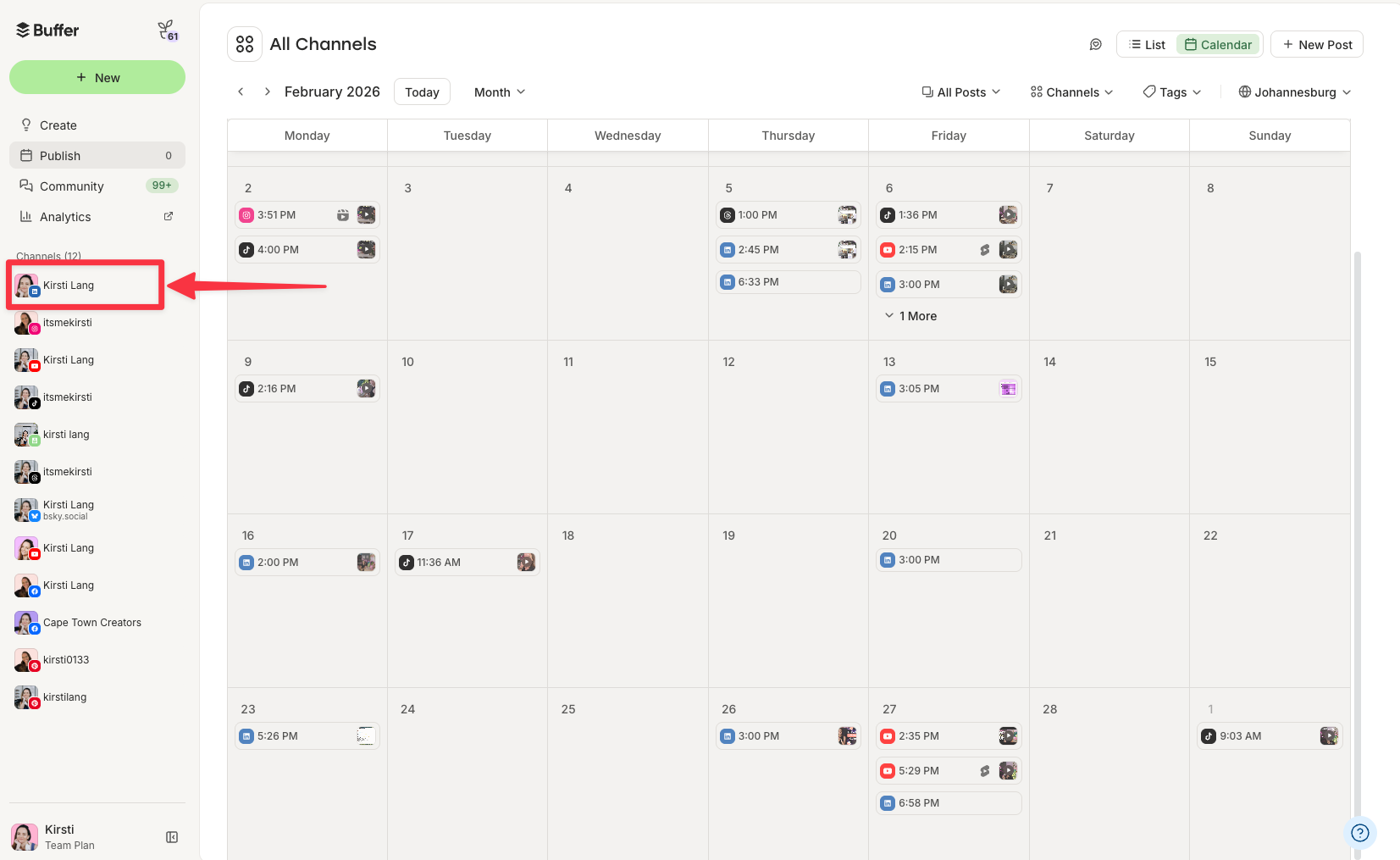
The concept of a "golden hour" – a short period after publishing where early engagement can significantly boost a post’s reach – remains relevant, even if not an officially defined metric by LinkedIn. The platform’s algorithm does leverage early interaction signals to determine a post’s initial distribution. Therefore, publishing when an audience is most active increases the likelihood of receiving those crucial early engagements, setting the stage for broader visibility. The data confirms that timing, while not a standalone solution for poor content, serves as a powerful enhancer for well-crafted posts.
Frequency and Content Formats: Additional Optimizers
Beyond timing, Buffer’s broader research also sheds light on optimal posting frequency and content formats. An analysis of over 2 million LinkedIn posts suggests that posting 2 to 5 times per week is a sweet spot for most creators and brands. This cadence can deliver around 1,182 more impressions per post and a 0.23 percentage point lift in engagement rate compared to posting just once a week. Higher frequencies, such as 6 to 10 times per week, push these gains further, with 11+ posts per week leading to dramatic increases in impressions and engagements, irrespective of audience size.
Regarding content formats, carousel (document) posts are currently the standout performer, generating significantly higher engagement rates. This suggests a preference for visually rich, multi-slide content that can convey information in an engaging, digestible format. Video content and polls also typically perform well, but the current data positions carousels at the forefront.
Leveraging Tools for Strategic Posting
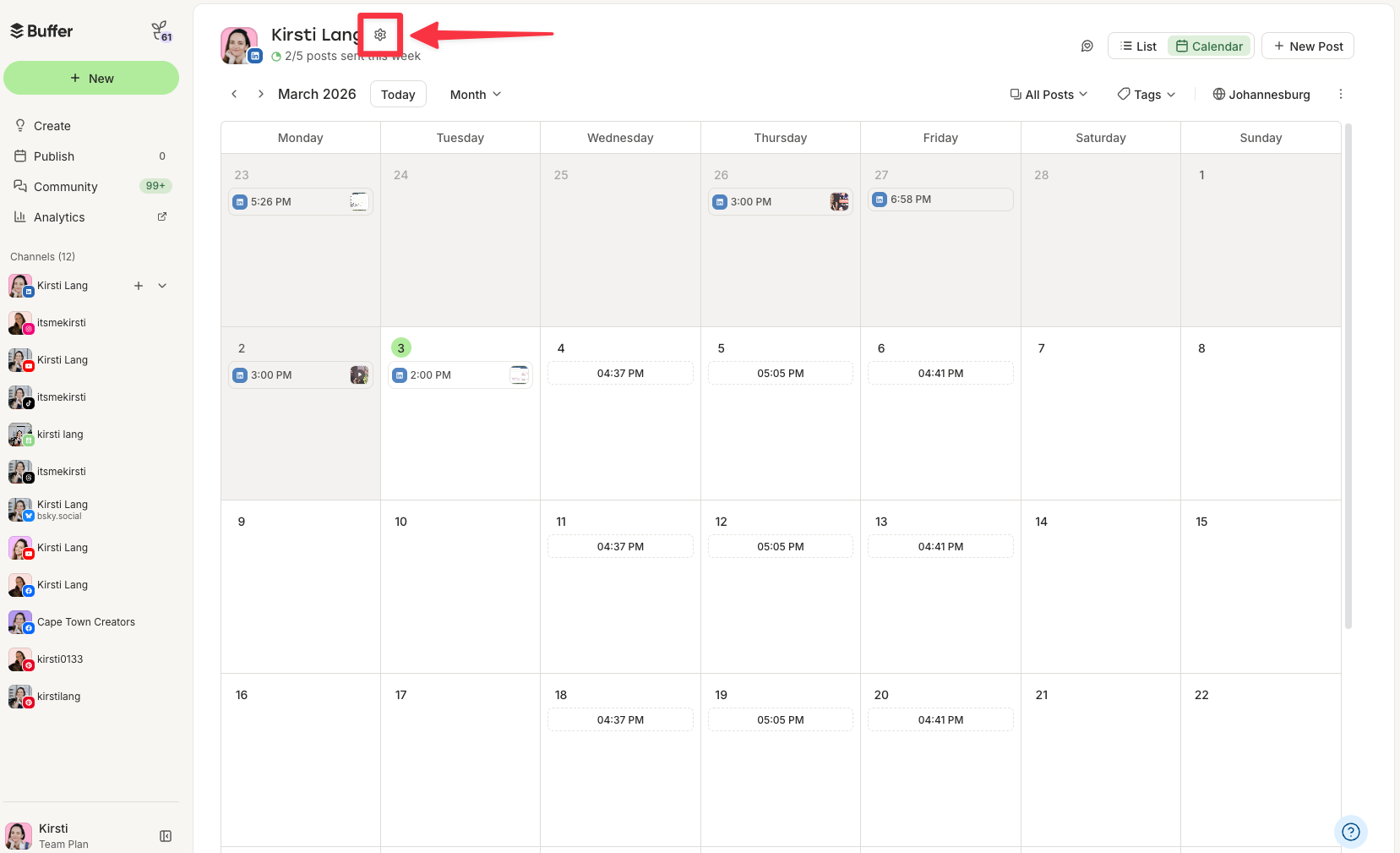
While understanding these trends is crucial, manual adherence to optimal posting times can be challenging. Social media management tools like Buffer integrate these data-driven insights directly into their scheduling functionalities. Users can automatically set their posting schedules to align with these identified high-engagement windows, streamlining their content strategy and ensuring their posts reach audiences at the most opportune moments. This automation frees up valuable time for content creation and strategy refinement, moving beyond the logistics of manual publishing.
Conclusion: Adapting to the New LinkedIn Landscape
The 2026 LinkedIn engagement data signals a definitive shift in user behavior, moving away from traditional workday-centric interactions towards a more distributed, evening-focused consumption pattern. This mirrors broader trends in digital engagement and highlights the platform’s evolution beyond a mere professional bulletin board to a more integrated part of users’ daily digital lives. For businesses, marketers, recruiters, and individual professionals, understanding and adapting to these new peak times is no longer an optional optimization but a critical component of a successful LinkedIn strategy. By embracing data-driven scheduling and tailoring content to these evolving preferences, users can significantly enhance their visibility, foster deeper engagement, and ultimately achieve their professional objectives on the platform. The era of the 9-to-5 LinkedIn strategy is clearly yielding to a more dynamic, extended engagement window.