Indra Kusuma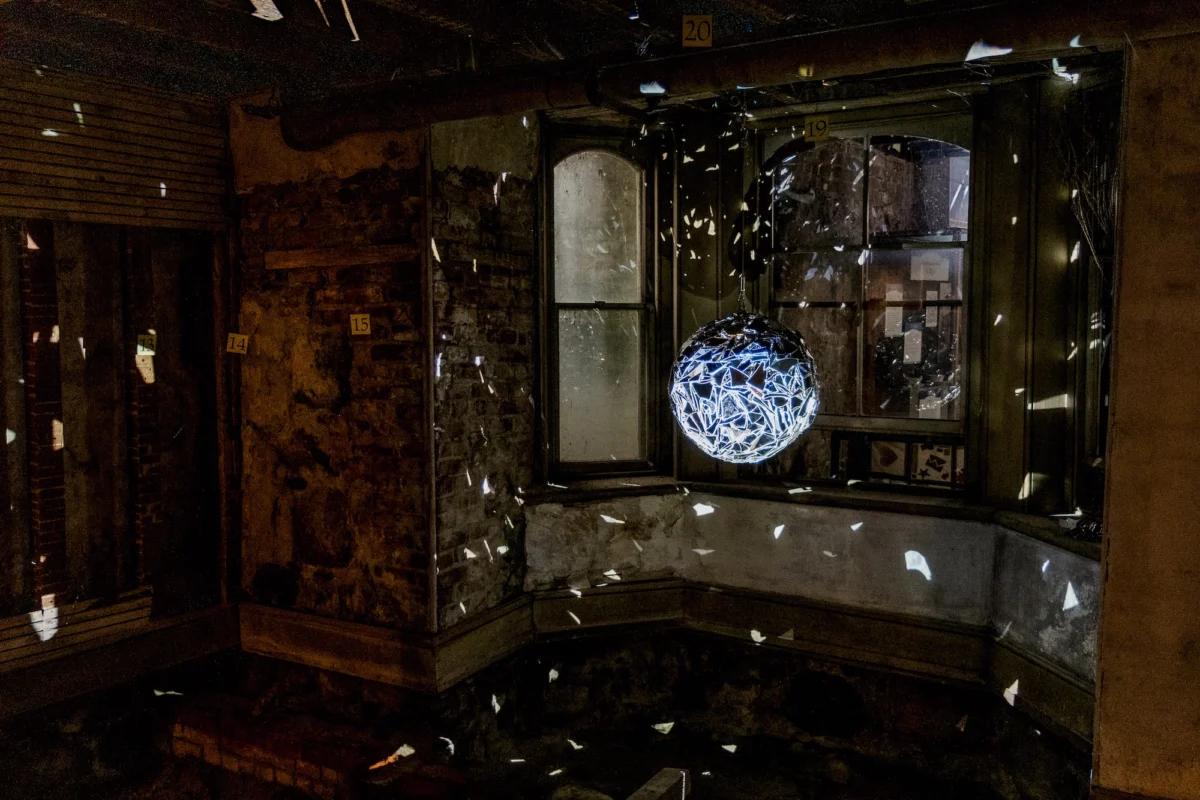
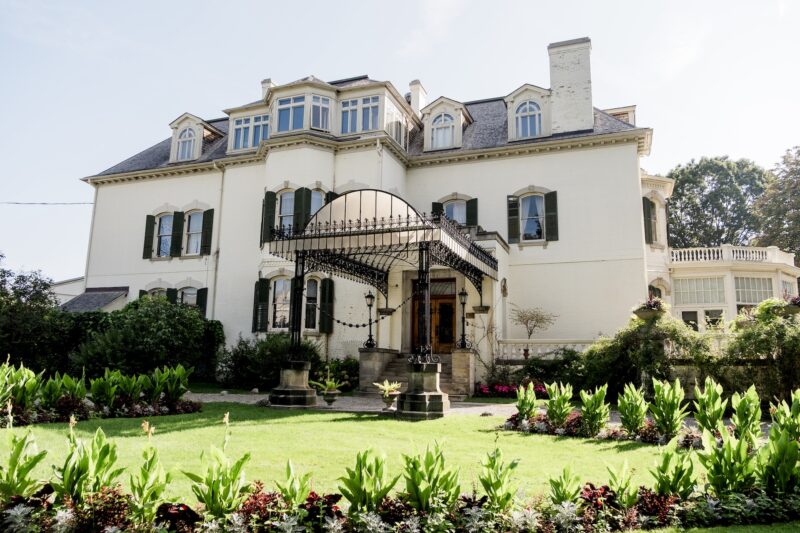
The Spadina Museum, an 1866 mansion that serves as a cornerstone of Toronto’s architectural and social history, currently plays host to a transformative interdisciplinary exhibition titled In Broken Light. Running from August 26 through October 18, the exhibition features five site-specific sculptural interventions by artist Ry Van Der Hout. By utilizing shattered mirror, stained glass, and photography, the artist interrogates the physical and metaphorical fragility of domestic archives, effectively turning the historic estate into a conduit for exploring queer identity, memory, and the hidden narratives of the past.
Historical Context of the Spadina Museum
To understand the significance of Van Der Hout’s intervention, one must first consider the venue. The Spadina Museum, originally constructed in the mid-19th century, underwent significant renovations in 1913, which included the addition of a third-floor sunroom intended to assist in the treatment of tuberculosis—a common practice during the era before the advent of modern antibiotics. Over the subsequent century, the house transitioned from a private family residence to a public museum, serving as a repository for the material culture of the Austin family and their domestic staff.
The mansion’s evolution from a private home to a public heritage site provides a complex backdrop for Van Der Hout’s work. The exhibition does not merely occupy these rooms; it engages with the tension between the preserved opulence of the elite and the often-erased contributions of the laborers who maintained the estate.
Artistic Methodology and Technical Process
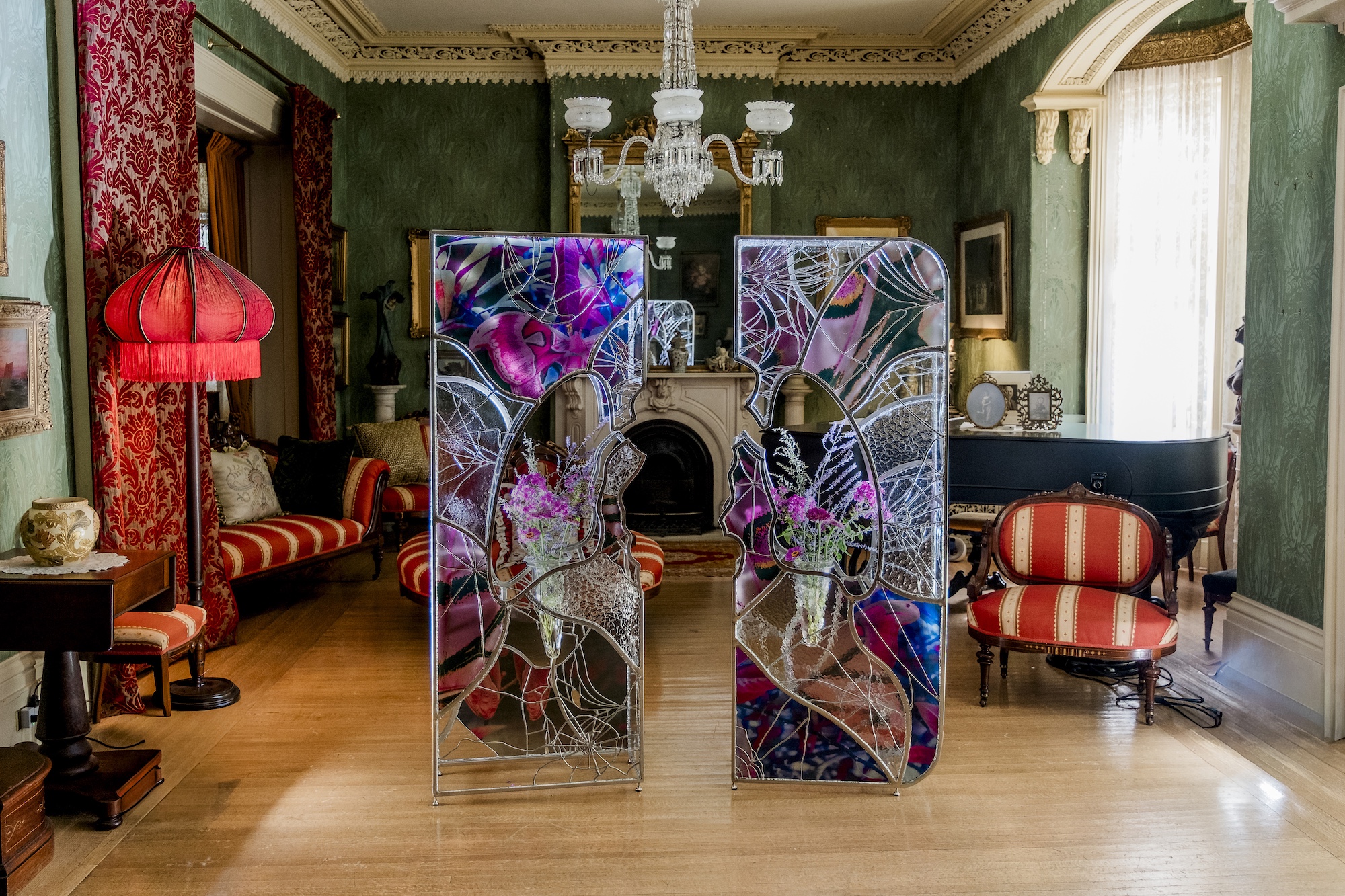
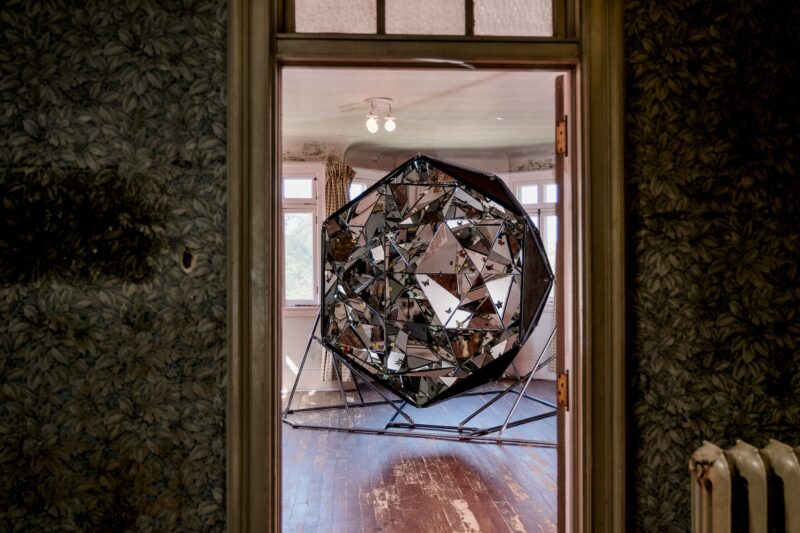
Van Der Hout’s practice is rooted in the deliberate destruction of material, specifically glass and mirror. Using traditional Tiffany stained-glass techniques—a method involving copper foil, lead solder, and careful assembly—the artist reassembles these shards into new, geometric forms. This act of "intentional breaking" serves as a primary artistic metaphor for the concept of queer becoming.
According to curator Adrien Sun Hall, the process is fundamentally transformative. "At the heart of In Broken Light is the understanding that shattering isn’t the end of a story—it’s the beginning of a new narrative," Hall notes. By mending fractured surfaces, the artist creates contemporary reliquaries. These objects function as apertures, allowing visitors to view the domestic space through a lens that acknowledges past traumas and overlooked histories. The physical act of soldering, which requires precision and patience, mirrors the psychological work of reconciling disparate or broken personal histories.
Chronology of the Exhibition and Research
The development of In Broken Light was a multi-year project involving extensive archival research and community consultation. The planning timeline, which culminated in the August 26 opening, included:
- Preliminary Research (2023–2024): The artist conducted interviews with family descendants, historical interpreters, museum conservators, and spiritual leaders to gather oral histories associated with the house.
- Site-Specific Development (Early 2025): Van Der Hout utilized the mansion’s floor plan to determine the placement of the five major interventions, ensuring that each piece responded to the specific light, history, and architectural quirks of its host room.
- Installation Phase (August 2025): The physical installation process, which required specialized handling due to the historic nature of the museum’s interiors, was completed in the weeks leading up to the public opening.
Key Installations and Spatial Engagement
The exhibition is spread across the four stories of the museum, utilizing the full verticality of the house to draw visitors into a curated narrative.
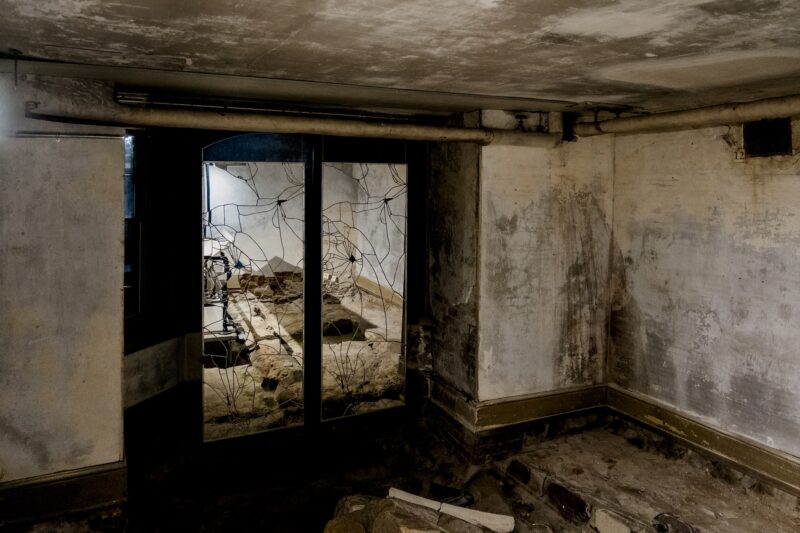
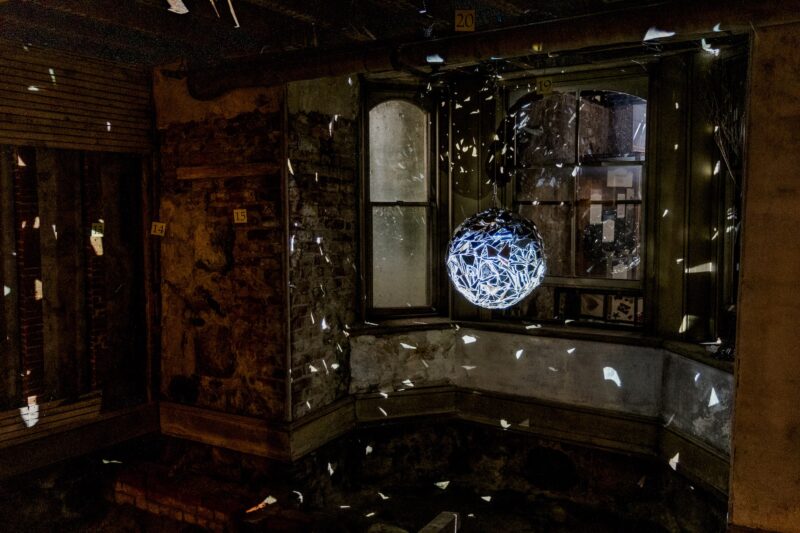
- The Archaeological Basement: In the basement, which features an active archaeological dig site, a fractured disco ball serves as the central focal point. By reflecting light from a NASA-produced audio track, the work creates a disorienting, immersive environment that juxtaposes the permanence of stone foundations with the ephemerality of light and sound.
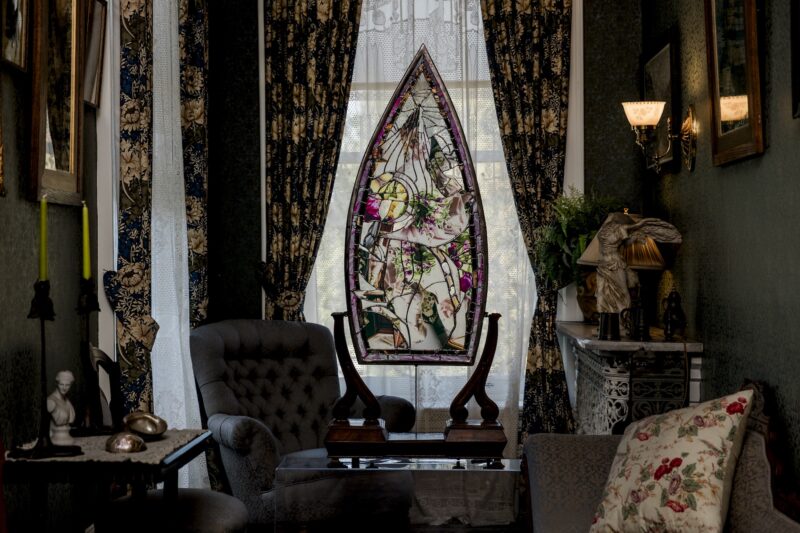
- The Tiber Sculpture: Located on an upper floor, this work features stained glass printed with photographs of Tiber, a historical interpreter at the museum. The sculpture was constructed from an antique dressing-table mirror found by the artist in a dumpster. This serendipitous discovery highlights the exhibition’s theme of reclaiming discarded objects to give them new, meaningful life.
- Open Wing Death: Serving as the exhibition’s centerpiece, this 12-foot-high geodesic dome resides in the third-floor sunroom. The piece acts as a memorial to the domestic staff who once occupied the space. The mirrored surfaces force the viewer to confront their own image, creating a moment of recognition and estrangement that invites the audience to see themselves as part of the museum’s ongoing history.
Technical Data and Impact Analysis
The exhibition represents a significant shift in how heritage sites in Toronto engage with contemporary art. While many museums utilize temporary exhibits to boost attendance, the Spadina Museum’s collaboration with Van Der Hout reflects a broader trend in museology: the integration of "memory work" into the curation of historic homes.
Statistically, site-specific installations have been shown to increase visitor engagement times by an average of 30 to 40 percent in historic house settings. By forcing visitors to navigate the space in relation to modern art, the institution encourages a more critical reading of the architecture. The use of reflective materials like mirror and stained glass also alters the way sunlight interacts with the 19th-century interiors, physically changing the visitor’s perception of the mansion’s historic proportions.
Institutional Responses and Broader Implications
The inclusion of In Broken Light within a municipal museum underscores a growing institutional commitment to diverse and queer narratives. By allowing an artist to interpret the "forbidden love" and "fatal illness" stories associated with the mansion’s former residents, the Spadina Museum acknowledges that history is not a static, settled entity but a living dialogue.
The implications for the Toronto arts scene are notable. The exhibition demonstrates that historic spaces can remain relevant by providing a platform for artists who work at the intersection of material culture and identity politics. As the city continues to navigate the preservation of its architectural heritage, projects like this offer a blueprint for how institutions can balance the conservation of the past with the necessity of representing contemporary, often marginalized, voices.
Conclusion: The Legacy of the Broken Surface
As In Broken Light moves toward its conclusion on October 18, the lasting impact of the exhibition will be measured in the way it has shifted the museum’s internal narrative. Van Der Hout has not merely decorated the mansion; they have engaged in a structural critique of how histories are built and how they are eventually broken.
The exhibition invites visitors to reconsider the definition of a "preserved" home. Through the careful, light-filled fractures of the sculptures, the Spadina Museum has been transformed into a space where the past is not merely displayed, but actively negotiated. Whether through the reflection of a visitor in a mirrored dome or the shattered image of a historical interpreter, the work ensures that the house remains a site of perpetual, unfolding discovery. For those who visit before the final date, the exhibition provides a profound opportunity to witness how art can mend the fractures of time, providing a clearer, if more complex, view of the human experience within the walls of a 19th-century home.