
 Ali Ikhwan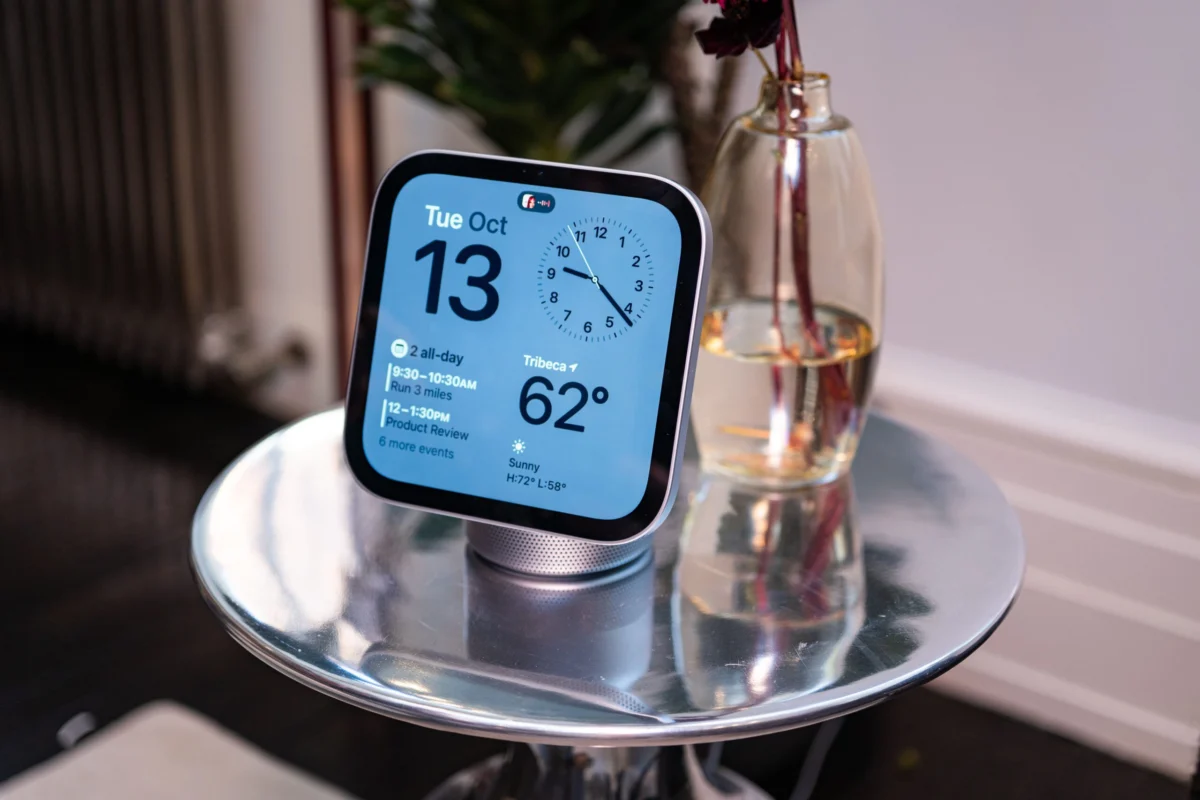
For over a decade, the smart home landscape has been defined by a duopoly. Amazon’s Alexa and Google’s Assistant, now evolving into Gemini, have set the industry standard for voice-controlled home automation. Apple, meanwhile, has remained a peripheral player, often criticized for a disjointed ecosystem and a voice assistant that struggled to keep pace with the rapid advancements in generative AI. That narrative shifted decisively this week at a dedicated media event in New York City, where Apple unveiled a comprehensive strategy to reclaim its place in the living room. By integrating its newly revamped, LLM-powered Siri AI into a refreshed lineup of hardware and establishing the "Apple Home Collection," the company is signaling that it is no longer content to exist on the fringes of the smart home market.
The cornerstone of this initiative is the Apple HomeView, a 7-inch smart display that marks Apple’s entry into a category previously dominated by the Amazon Echo Show and Google Nest Hub. Accompanied by the fourth-generation Apple TV 4K and the HomePod Mini 2, this hardware launch is supported by a strategic partnership with industry stalwarts LG and Schneider Electric. Together, these elements suggest that Apple is finally prioritizing interoperability through the Matter standard, while simultaneously leveraging its closed-loop software advantages to create a more intuitive user experience.
A Decade of Lagging: The Contextual Shift
Since the launch of the original Amazon Echo in 2014, Apple’s HomeKit strategy was often perceived as overly restrictive. While competitors embraced open ecosystems, Apple maintained a walled garden that prioritized security and privacy, sometimes at the expense of device variety and ease of use. This resulted in a fragmented experience where consumers often found themselves juggling multiple apps to control different aspects of their homes.

The landscape changed significantly with the advent of the Matter smart home connectivity standard, an industry-wide effort to ensure devices from different manufacturers work together seamlessly. Apple’s participation in Matter was a necessary, though not sufficient, condition for its current pivot. The missing piece was a "brain" capable of contextual reasoning. By overhauling Siri with the intelligence seen in the latest iOS updates—allowing the assistant to process personal context, handle complex multi-step queries, and provide personalized answers—Apple has bridged the gap between a static voice-activated tool and a proactive digital butler.
The Apple HomeView and the New Hardware Ecosystem
The HomeView is more than just a tablet mounted on a speaker base; it is an attempt to define a new product category for the company. Running on a proprietary "HomeView Software," the device intentionally lacks the full App Store, opting instead for a curated suite of applications including Messages, Safari, FaceTime, and Spotify. This focus on utility over general-purpose computing suggests Apple is targeting the specific pain points of home management: communication, media consumption, and device control.
One of the most notable technical features of the HomeView is its reliance on computer vision and localized intelligence. By utilizing face detection to display personalized information—such as individual schedules or messages—the device leans heavily on the processing power of the user’s nearby iPhone. This "iPhone-first" architecture underscores Apple’s strategy: the HomeView is not a standalone computer, but a satellite of the user’s primary device, requiring an iPhone 15 Pro or newer to unlock its full potential.
The Apple Home Collection: A Strategic Partnership
Perhaps the most significant development for the broader market is the launch of the Apple Home Collection. Recognizing that its own hardware ecosystem was too thin to compete with the sheer volume of compatible devices available to Alexa or Google users, Apple has entered into a strategic collaboration with LG and Schneider Electric.

This line includes an array of security cameras, smart thermostats, video doorbells, and deadbolt locks. By pre-certifying these devices for automatic, seamless integration with the Apple Home app, the company is eliminating the "setup friction" that has historically plagued smart home adoption. For example, the LG Video Doorbell features a dual-camera system designed to monitor both visitors and package deliveries, with integration into the Home app providing instant, actionable notifications.
The security implications are significant. By integrating with iCloud+ subscriptions, these devices can leverage advanced facial recognition and object identification to distinguish between family members, pets, and couriers. This data remains encrypted, adhering to Apple’s long-standing privacy-first stance, which differentiates its offering from the data-heavy models favored by some competitors.
Evolution of the HomePod and Apple TV 4K
While the hardware updates to the HomePod Mini 2 and Apple TV 4K may appear iterative, they represent a significant backend upgrade. The HomePod Mini 2, priced at $149, introduces the S10 chip, mirroring the processing capabilities of the latest Apple Watch. The inclusion of "Sound Glow"—which syncs lighting patterns to album artwork or ambient soundscapes—is a stylistic nod to the device’s role as both an appliance and a piece of home decor.
The Apple TV 4K, meanwhile, has received a substantial price increase to $299. While this may alienate some budget-conscious consumers, the move aligns with the device’s evolution into a high-end home theater hub. With the ability to pair four HomePod speakers into a sophisticated surround-sound configuration that self-calibrates to the room’s acoustics, Apple is positioning the Apple TV 4K as a direct competitor to high-end soundbars and receiver systems. The inclusion of Find My support in the remote—a long-requested feature—addresses a perennial consumer frustration, signaling that Apple is listening to user feedback with newfound urgency.

Market Implications and Analyst Perspectives
Industry observers view this move as a critical correction. According to Jitesh Ubrani, director of Consumer Devices Research at IDC, the timing of this launch is calculated. "Amazon and Google have both reset their platforms with Alexa+ and Gemini, but even their rollouts have been slow," Ubrani noted. "That means Apple is bringing Siri AI to the home at a point when the competition hasn’t pulled far ahead."
The implications for the smart home market are two-fold. First, Apple’s entry into the security and thermostat market forces competitors to innovate beyond basic connectivity. If consumers can get a "plug-and-play" experience with an Apple-branded security system that works flawlessly with their iPhone, they are less likely to invest in fragmented third-party solutions. Second, the reliance on the A-series and S-series chips across the entire home lineup suggests that Apple intends to keep its home products on the same upgrade cycle as its mobile products, potentially creating a lucrative, high-margin ecosystem that keeps users locked into the platform for years.
A Measured Outlook
Despite the enthusiasm, challenges remain. The reliance on high-end hardware—specifically the requirement for newer iPhone models to power the most advanced features—could limit the HomeView’s appeal to the "prosumer" segment of the market. Furthermore, the $299 price point for the Apple TV 4K puts it in direct competition with dedicated streaming devices that are significantly cheaper, forcing Apple to prove that its "total experience" is worth the premium.
As of November, these products will begin to roll out globally, with the HomeView and Apple TV 4K hitting shelves on November 13. The success of this initiative will ultimately depend on whether Siri AI can prove itself to be a reliable, helpful presence in the home. Apple has the hardware and the ecosystem; now, it must deliver on the promise of an intelligent, unified home. The race is no longer just about who has the most devices connected; it is about who can provide the most helpful, secure, and intuitive automation. With this latest announcement, Apple has officially entered the fray, shifting the competition from a battle of compatibility to a battle of intelligence.







