Michael Sholeh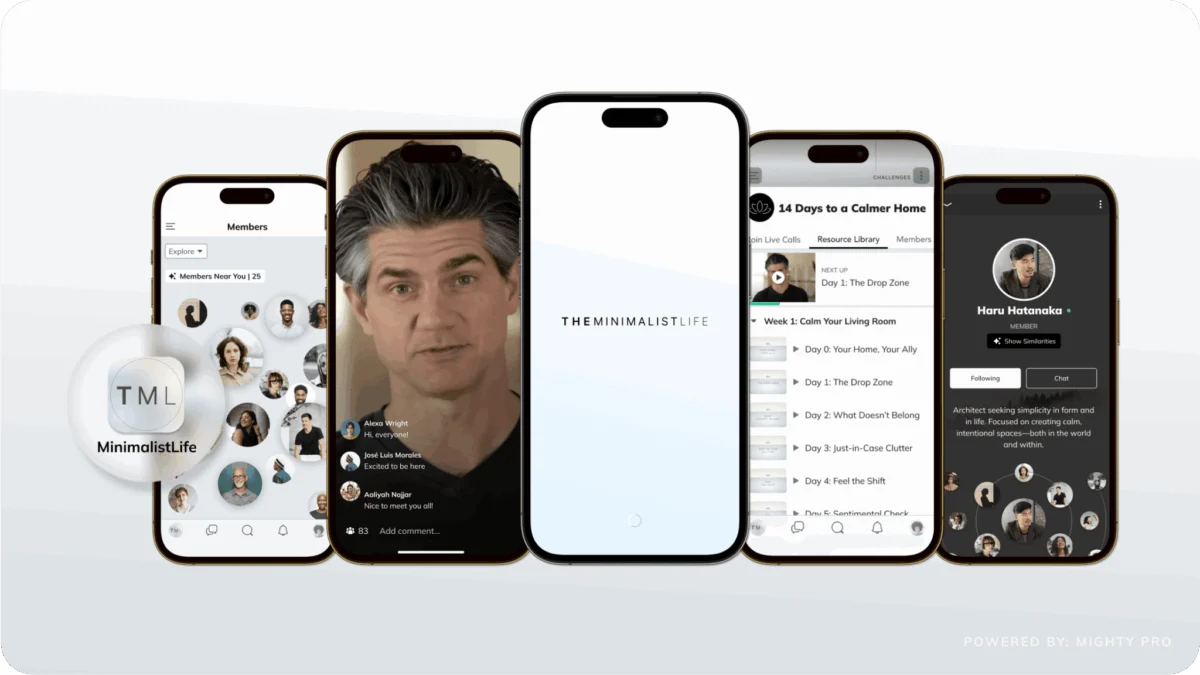
The introduction of "The Minimalist Life" is a direct response to a recurring challenge identified by Becker’s global audience: the difficulty of maintaining minimalist habits over the long term. While many individuals successfully complete initial decluttering projects, the "sustainability gap"—the space between initial enthusiasm and lifelong habit formation—remains a significant hurdle. Becker’s new community aims to bridge this gap through ongoing support, human interaction, and a holistic application of minimalist principles to areas beyond physical possessions, including finances, schedules, digital habits, and interpersonal relationships.
The Evolution of Becoming Minimalist: A 17-Year Chronology
To understand the significance of this new offering, one must examine the trajectory of the Becoming Minimalist movement. The journey began in 2008 when Joshua Becker, then a pastor in Vermont, spent a holiday weekend cleaning his garage while his young son played alone in the backyard. A conversation with a neighbor led to the realization that his possessions were consuming his most valuable resources: time and energy.
- 2008 – The Genesis: Becker launches the Becoming Minimalist blog to document his family’s transition to owning fewer possessions. The site becomes one of the first digital journals dedicated to the modern minimalist movement.
- 2010-2015 – Mainstream Expansion: As the global financial crisis of 2008-2009 spurred a cultural re-evaluation of consumerism, Becker’s message gained traction. He published early works such as Simplify and The 100 Days of Less, building a foundational audience.
- 2016 – "The More of Less": Becker releases The More of Less, which becomes a Wall Street Journal and USA Today bestseller. This period marks the professionalization of the movement, moving from a personal blog to a global educational platform.
- 2017 – The "Uncluttered" Course: Recognizing that readers needed structured guidance, Becker launched the "Uncluttered" course. To date, over 90,000 people have enrolled, providing a data-rich environment for understanding the psychological barriers to decluttering.
- 2018-2023 – Multimedia Growth: The platform expanded into YouTube, amassing over 400 videos and reaching millions of viewers. Becker’s later books, including The Minimalist Home (2018) and Things That Matter (2022), shifted the focus toward the "why" behind minimalism, emphasizing purpose and legacy.
- 2025 – The Minimalist Life: The launch of the private community represents the latest phase—moving from passive content consumption to active, community-supported implementation.
The Sustainability Gap: Why Educational Content is Not Enough
Market research and psychological studies on habit formation suggest that information alone is rarely sufficient for long-term lifestyle changes. According to a study published in the European Journal of Social Psychology, it takes an average of 66 days for a new behavior to become automatic, though this can range up to 254 days depending on the complexity of the habit.
Becker’s internal data from 17 years of reader feedback suggests that while the "decluttering" phase is often viewed as a project with a defined end date, the "minimalist life" requires constant recalibration against societal pressures to consume. The new community is structured to provide the "scaffolding" necessary for this lifelong transition.
"I start strong, but I struggle to keep minimalism going over time," is the primary sentiment Becker cited as the catalyst for this new venture. By creating a private space for interaction, the program addresses the isolation many minimalists feel in a consumer-driven culture. This move aligns with broader trends in the "Creator Economy," where influencers are moving away from ad-supported public platforms toward gated, high-value communities that offer direct access and peer-to-peer networking.
Structural Components of "The Minimalist Life"
The new community is designed as a multi-faceted support system. Unlike the "Uncluttered" course, which focuses primarily on the physical home, "The Minimalist Life" applies minimalist theory to the entire spectrum of human experience. The program includes several core pillars:
- Monthly Thematic Focus: Each month, members engage with a specific area of life, such as financial stewardship, time management, digital hygiene, or relationship health.
- Direct Interaction: In a move to counter the rise of AI-generated content, Becker emphasizes human-to-human interaction. This includes live sessions and direct feedback loops within the private forum.
- Peer Support: The community provides a network of like-minded individuals, fostering "social proof," which behavioral economists identify as a key driver in sustaining difficult lifestyle changes.
- Ongoing Personal Development: The structure is intended to be cyclical rather than linear, acknowledging that personal growth is an ongoing process rather than a destination.
The pricing model for the community is positioned as an accessible entry point for "Founding Members," with rates set at $18 per month or $180 per year. This promotional period is scheduled to conclude on June 30, 2025, after which the pricing structure may be adjusted for new members.
Supporting Data: The High Cost of Clutter and Consumerism
The necessity of programs like "The Minimalist Life" is underscored by contemporary socioeconomic data. The average American household contains approximately 300,000 items, according to professional organizers and sociological studies from UCLA’s Center on Everyday Lives of Families (CELF).

Key data points highlighting the need for intentional living include:
- Mental Health: The CELF study found a direct correlation between high "object density" in the home and elevated levels of cortisol (the stress hormone) in mothers.
- Economic Impact: A 2023 report on consumer behavior indicated that the average American spends nearly $1,500 per month on non-essential items, often leading to debt and increased work-related stress to fund these purchases.
- Digital Overload: With the average adult spending over seven hours a day looking at screens, the "Digital Minimalism" component of Becker’s new community addresses a critical modern ailment: the fragmentation of attention.
By focusing on these metrics, Becker’s program seeks to provide a measurable improvement in quality of life, moving beyond the aesthetic "minimalism" seen on social media toward a functional minimalism that optimizes resources for personal values.
Analysis of Market Implications and the AI Context
The launch of "The Minimalist Life" occurs during a transformative period for digital media. As generative AI begins to saturate the internet with automated advice and "listicles," there is an increasing market premium on "human-centric" expertise. Becker’s emphasis on "human interaction" within the community is a strategic differentiator.
Industry analysts suggest that the "Membership Model" is becoming the gold standard for experts with established legacies. For a figure like Becker, who has already saturated the traditional publishing and video markets, a community-based model allows for deeper impact and a more stable revenue stream that is less dependent on fluctuating social media algorithms.
Furthermore, this move reflects a broader shift in the wellness industry from "Self-Help" to "Shared-Help." The transition suggests that the future of personal development lies not in more information, but in better environments for implementation.
Broader Impact and Global Reach
The launch of "The Minimalist Life" is expected to have a ripple effect across the intentional living movement. By formalizing a community around these principles, Becker is effectively creating a "laboratory" for modern minimalism. The insights gained from this private group will likely inform future books and public-facing content, further refining the methodology of owning less.
For the 90,000 alumni of the "Uncluttered" course and the millions of blog readers, this new offering represents an "alumni network" of sorts—a place for those who have already cleared the physical clutter to begin the more complex work of decluttering their internal and social lives.
As global economic conditions remain volatile, the appeal of a lifestyle that prioritizes financial freedom and reduced consumption is likely to grow. Joshua Becker’s 17-year journey from a garage in Vermont to the head of a global community-driven platform mirrors a larger cultural shift: a growing recognition that the pursuit of "more" often leads to "less" of what truly matters.
The doors to "The Minimalist Life" are currently open, representing a new chapter for both Becker and the thousands of individuals seeking a more intentional, focused, and calm existence in an increasingly cluttered world. This initiative stands as a testament to the enduring relevance of minimalism as a practical solution to the complexities of 21st-century life.