
 Ali Ikhwan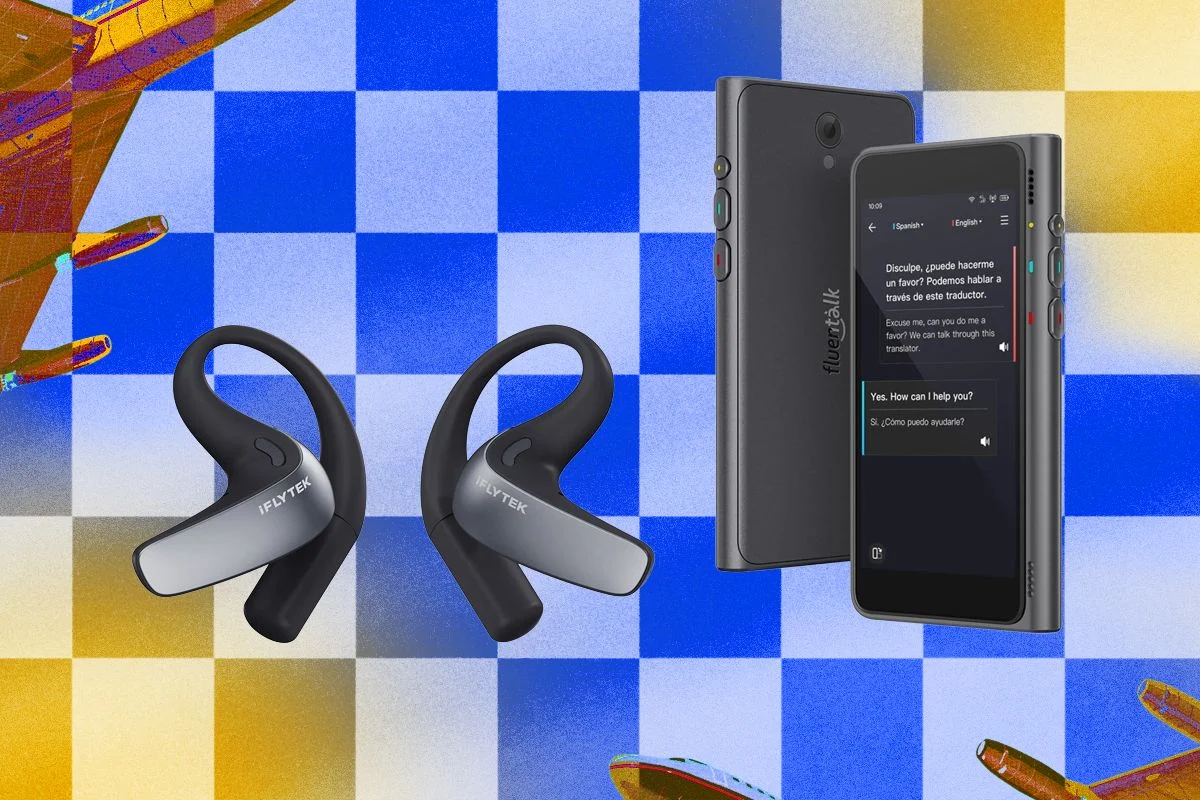
The globalization of tourism and international commerce has revitalized a long-standing challenge for the modern traveler: the language barrier. While Hans Christian Andersen’s famous adage, “To travel is to live,” suggests a romantic journey of discovery, the practical reality of navigating a foreign city often involves stressful logistical hurdles. From negotiating taxi fares in South Korea to explaining dietary restrictions in a remote Swedish village, the ability to communicate effectively is the difference between a seamless experience and a costly misunderstanding. While smartphone applications have dominated the translation landscape for the past decade, a new generation of dedicated handheld and wearable translation hardware is emerging to provide more robust, professional-grade solutions for sustained interpersonal dialogue.
The Evolution of Machine Translation: From Phrasebooks to Neural Networks
The history of machine translation (MT) has moved through several distinct eras, each marked by a leap in computational capability. The journey began in the 1950s with the Georgetown-IBM experiment, which used a mainframe computer to translate basic Russian sentences into English. For decades, the field relied on Rule-Based Machine Translation (RBMT), which required linguists to manually program thousands of grammatical rules. This was followed by Statistical Machine Translation (SMT) in the 1990s and early 2000s, a method popularized by the early iterations of Google Translate, which analyzed large bodies of bilingual text to find patterns.
The most significant breakthrough occurred in 2016 with the widespread adoption of Neural Machine Translation (NMT). By using deep learning and artificial neural networks, NMT allows devices to look at entire sentences rather than individual words, significantly improving the fluency and contextual accuracy of the output. Current handheld translators utilize these NMT models, often drawing from multiple engines—such as Google, DeepL, and Microsoft—simultaneously to ensure the highest possible accuracy for specific language pairs.
Market Dynamics and the Demand for Dedicated Hardware
Despite the ubiquity of free smartphone apps, the market for dedicated translation hardware is expanding. According to industry reports, the global machine translation market was valued at approximately $800 million in 2022 and is projected to grow at a compound annual growth rate (CAGR) of over 15% through 2030. This growth is driven by a shift in consumer behavior: travelers are increasingly seeking tools that facilitate "connection" rather than just "survival."
While a smartphone app is sufficient for translating a menu or a street sign, it often fails in the context of a 20-minute conversation. Dedicated devices offer several technical and social advantages. Primarily, they preserve smartphone battery life—a critical resource for travelers. Furthermore, they feature specialized microphone arrays designed for far-field voice recognition and noise cancellation, which are essential in crowded airports or busy city streets. From a social perspective, handing a $200 dedicated device to a stranger to read a translation is perceived as less risky and more polite than handing over a $1,000 smartphone containing personal data and banking apps.

Categorizing the Modern Translation Toolkit
The current market for translation technology is divided into three primary categories: stand-alone handhelds, wearable earbuds, and AI-integrated companion devices. Each category serves a specific demographic, ranging from casual tourists to professional first responders.
Stand-alone Handhelds: The Timekettle T1
The Timekettle T1 represents the pinnacle of the stand-alone category. Designed for high-frequency use, the device features a dual-interface screen that allows two users to see translations in real-time without passing the unit back and forth. The T1 is notable for its integration of a global eSIM, providing two years of free data in over 100 countries. This autonomy is vital for travelers in regions where local SIM cards are difficult to obtain or where roaming charges are prohibitive.
Technical specifications for the T1 include a 4-inch touchscreen and an 8-megapixel camera for Optical Character Recognition (OCR) translation. While the device supports 40 languages and 93 accents, its real-world utility is found in its offline mode. The T1 supports 13 language pairs offline, a feature that relies on compressed neural models stored locally on the device’s internal memory.
Wearable Translators: iFLYTEK AI Earbuds
The shift toward "invisible" technology has led to the rise of translation earbuds. The iFLYTEK AI Translation Earbuds utilize a split-system architecture where two people each wear one earbud. This setup facilitates a natural, "eyes-on" conversation, mimicking the experience of having a human interpreter whispering in one’s ear.
Unlike handhelds, which require users to press buttons to indicate when they are speaking, the iFLYTEK earbuds use advanced voice activity detection (VAD). This allows for hands-free operation, as the software identifies the start and end of a sentence automatically. However, these devices are heavily dependent on a smartphone’s internet connection, highlighting a trade-off between the elegance of the hardware and the robustness of the connectivity.
AI Companion Devices: InnAIO T10
The InnAIO T10 represents the newest frontier: the hybrid AI translator and productivity tool. As Large Language Models (LLMs) like GPT-4 become more integrated into hardware, devices like the T10 are moving beyond literal translation. They are now capable of recording a conversation, translating it, and then providing a summarized transcript of the key points. This functionality is particularly useful for business travelers attending international workshops or for journalists conducting interviews in foreign languages.

Technical Challenges and Infrastructure Dependencies
Despite the rapid advancement of NMT, dedicated translators face several persistent challenges. The most prominent is the "latency gap." For a conversation to feel natural, translation must occur in less than one second. This requires high-speed data processing, which can be hampered by poor local cellular networks.
Furthermore, the "subscription model" has become a point of contention among consumers. Many devices, including the InnAIO T10, require ongoing monthly or yearly fees to access the most advanced AI features. This shift from a one-time hardware purchase to a "Software as a Service" (SaaS) model is a trend across the tech industry, but it can be an unexpected expense for the occasional traveler.
Language pair limitations also remain. While most devices offer excellent results for "major" languages like English, Mandarin, Spanish, and French, the accuracy drops significantly for "low-resource" languages—those with less digital text available for training AI models. Languages such as Abkhaz or certain regional African dialects may be listed as supported, but the translations often lack the nuanced grammar required for complex discussions.
Professional and Emergency Applications
The utility of handheld translators extends beyond the leisure traveler. First responders, medical professionals, and law enforcement officers are increasingly adopting these tools. In emergency situations where a certified human interpreter is not immediately available, a handheld translator can be used to perform initial triage or to gather critical information about a patient’s medical history.
In these high-stakes environments, the reliability of offline translation is the most critical factor. Devices that can operate without a cloud connection ensure that communication can continue during natural disasters or in remote areas where telecommunications infrastructure has been compromised.
The Future of Cross-Cultural Communication
The broader implications of this technology suggest a future where language is no longer a barrier to global mobility. As AI continues to evolve, we can expect "Zero-Latency" translation to become the standard. This would involve predictive algorithms that begin translating a sentence before the speaker has even finished their thought.

Moreover, the integration of augmented reality (AR) is on the horizon. Future iterations of translation tech may involve AR glasses that overlay translated text directly onto a user’s field of vision, or "deepfake" audio technology that translates a person’s voice while maintaining their original tone, pitch, and emotional inflection.
Conclusion and Practical Recommendations
For the modern traveler, the choice of a translation tool depends on the nature of the journey. For occasional trips to major European cities, free smartphone applications like Google Translate or DeepL remain the most cost-effective and logical choice. These apps have reached a level of maturity where they can handle basic interactions with high reliability.
However, for those engaging in frequent international business, long-term cultural immersion, or travel to regions with unreliable internet, the investment in a dedicated device is justified. The Timekettle T1 is recommended for its robust stand-alone capabilities and global data inclusion. For those seeking the most natural conversational experience, the iFLYTEK earbuds offer a glimpse into the future of seamless communication. Finally, for the productivity-focused traveler, the InnAIO T10 provides a powerful combination of translation and AI-driven summarization.
As the world continues to shrink through technology, these devices serve as more than just gadgets; they are essential bridges in an increasingly interconnected global society. By reducing the friction of communication, they allow travelers to move past the role of a mere observer and become active participants in the local culture, fulfilling the true spirit of Andersen’s "to live."







