
 Indra Kusuma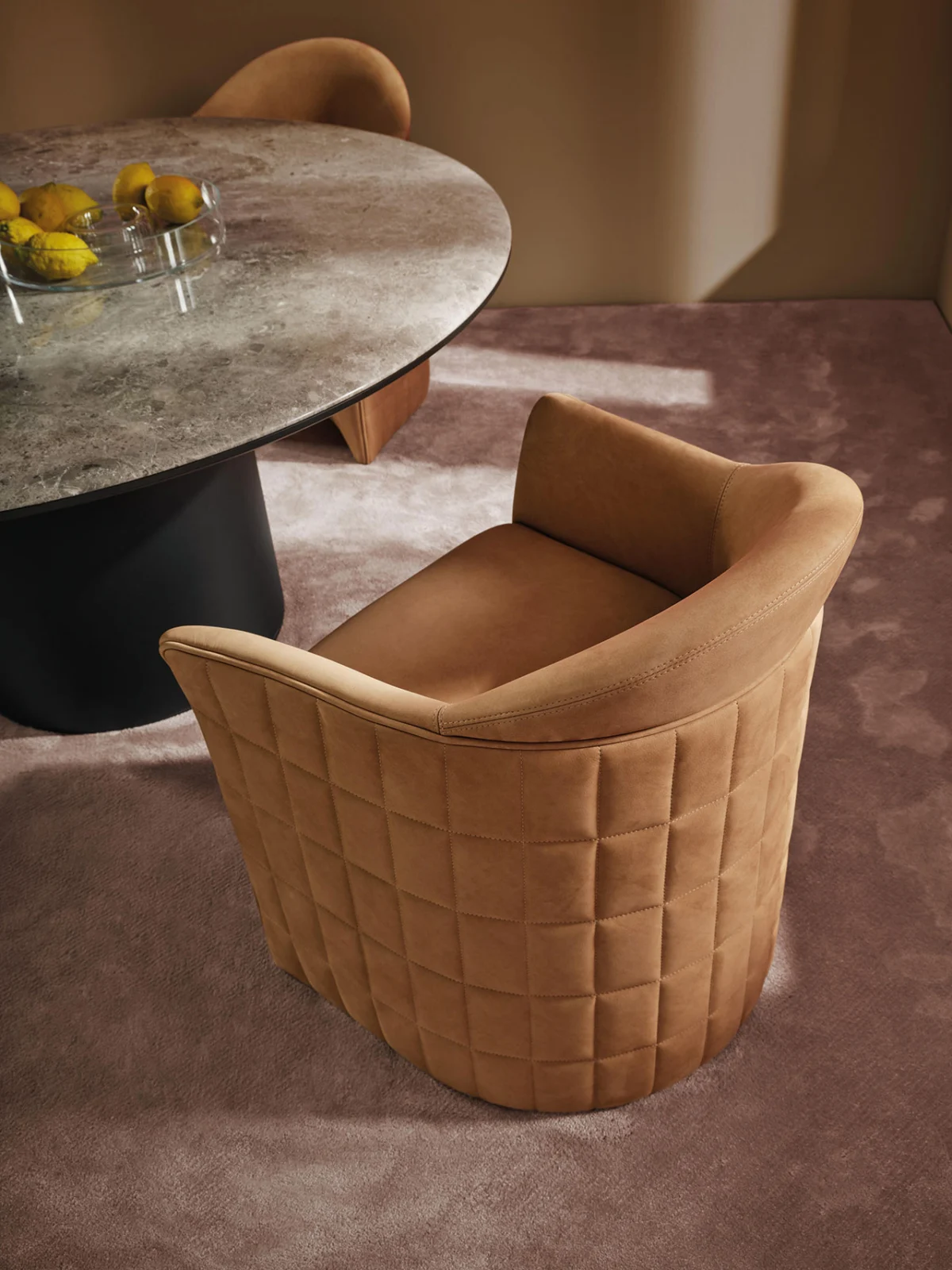
Designing in the shadow of a master requires a particular kind of restraint and discipline—not deference so literal that it becomes mimicry, nor ambition so forceful that it erases lineage altogether. It demands something quieter, more exacting. With JOSEPH, his first Wittmann collaboration, French designer Philippe Nigro finds that balance, creating an armchair that reads as a contemporary work shaped by the discipline, geometry, and craft tenets that defined Josef Hoffmann’s original pieces. This new creation is not merely a piece of furniture; it represents a profound dialogue between past and present, a testament to enduring principles of design, and a meticulous exercise in manufacturing excellence that Wittmann has upheld for generations.
The launch of the JOSEPH armchair by Philippe Nigro for the esteemed Austrian furniture manufacturer Wittmann marks a significant event in the world of high-end design. Unveiled to critical acclaim, the armchair embodies a sophisticated reinterpretation of modernist principles, particularly those championed by the iconic Austrian architect and designer Josef Hoffmann. Nigro’s challenge was to distill the essence of Hoffmann’s radical aesthetic—characterized by geometric rigor, a commitment to craft, and a rejection of excessive ornamentation—and translate it into a contemporary form that resonates with today’s design sensibilities while respecting a formidable legacy. The result is a chair that is both immediately recognizable as a Wittmann product and distinctly Nigro, seamlessly blending historical reverence with forward-thinking design.
A Deep Dive into Design Philosophy: Channeling Hoffmann’s Logic
Philippe Nigro’s approach to referencing Josef Hoffmann is deliberately indirect and intellectually rigorous. Rather than merely quoting the ornamental tendencies or superficial stylistic elements often associated with Viennese Art Nouveau, JOSEPH channels Hoffmann’s underlying logic. This logic is rooted in precision, proportion, and an unwavering commitment to legibility in form. Hoffmann, a co-founder of the Wiener Werkstätte in 1903, was instrumental in advocating for a functionalist aesthetic that prized clear lines and well-defined structures over decorative excess. His influence marked a pivotal shift from the organic curvilinear forms of Art Nouveau towards a more geometric and rational approach that laid much of the groundwork for modernism.
To understand JOSEPH’s genesis, one must look at Hoffmann’s seminal works. His barrel armchairs, with their enveloping curvature, and the rigorously gridded Kubus chair, a masterpiece of geometric simplicity from 1910, both quietly echo within Nigro’s design. The continuous, wrapping silhouette of JOSEPH subtly nods to the embracing form of Hoffmann’s barrel armchairs, suggesting comfort and containment without direct imitation. More strikingly, the quilted outer shell of JOSEPH draws inspiration from the Kubus chair’s gridded structure. Here, geometry transcends mere surface decoration; it becomes an integral part of the chair’s structural expression, defining its presence and tactile quality. This is a crucial distinction: Nigro utilizes the grid not as a pattern, but as a method of articulating form and volume, echoing Hoffmann’s belief that every element should contribute to the overall architectural integrity of a piece.

Wittmann’s Legacy of Craftsmanship: Composing Furniture
At Wittmann’s Lower Austrian manufactory, the concept of design lineage is not theoretical; it is a living, practiced tradition. For generations, the company has meticulously built its identity around the profound idea that furniture is "composed" rather than merely "assembled." This philosophy signifies a holistic approach, where each component is carefully considered, crafted, and brought together in a harmonious whole, rather than simply bolted together from disparate parts. Every piece passing through the manufactory’s doors is touched by the hands of specialists who possess an intimate understanding of material—viewing it simultaneously as both a constraint to be respected and an opportunity to be explored.
The creation of JOSEPH emerges from this environment as a symphony orchestrated by many skilled artisans. Woodworkers meticulously shape the foundational elements, metal fabricators forge the structural supports, seamstresses expertly cut and stitch the upholstery, and upholsterers precisely apply the various layers. These specialists work in concert, a collaborative ballet of precision and patience, refining the form until construction, comfort, and clarity align in a singular, exquisite object. This integrated process ensures that the chair is not just aesthetically pleasing but also structurally sound and exceptionally comfortable, a true testament to Wittmann’s commitment to excellence.

The Tactile Expression: Duality of Structure and Softness
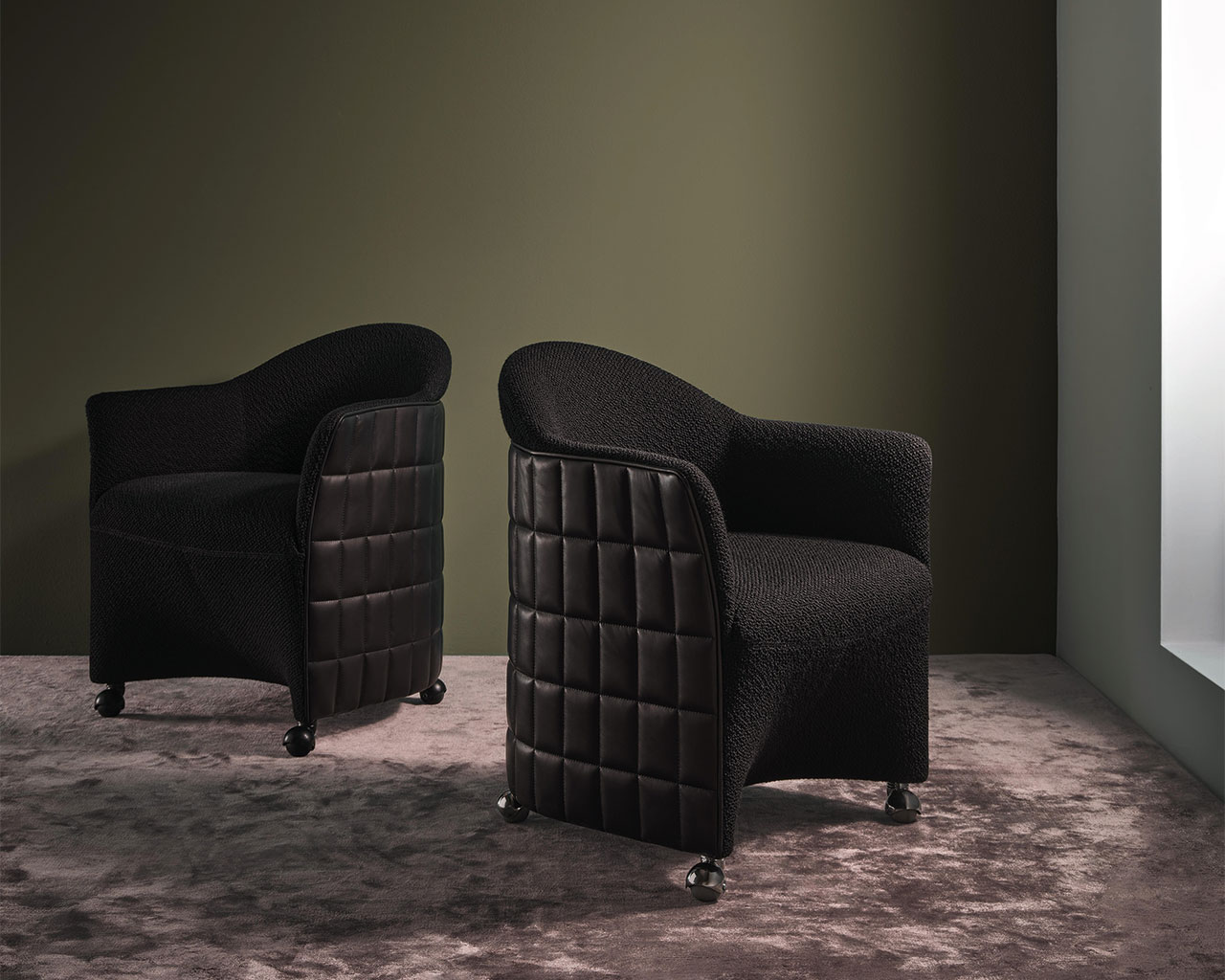
The JOSEPH armchair presents a compelling duality of structure and softness, a hallmark of thoughtful design. The exterior is perhaps the chair’s most immediate expression of Wittmann’s unparalleled craft. A meticulous grid of upholstered squares wraps the back and arms, each seam placed with millimetric accuracy. This is an unforgiving detail, where any deviation becomes instantly visible, demanding not just extensive experience but also a kind of anticipatory thinking from the upholsterer. The artisan must foresee how the material will behave, how tension will distribute, and how the final form will resolve, ensuring perfection in every stitch. This exterior serves as a visual and tactile declaration of precision and structural integrity.
By contrast, the interior of the JOSEPH armchair softens considerably. Smooth upholstery lines the seat and backrest, creating a subtle yet impactful inversion. Here, precision, outwardly expressed in the quilted grid, gives way to an inwardly reserved comfort. This deliberate contrast enhances the user experience, offering a welcoming embrace within a rigorously defined exterior. This duality extends beneath the surface, where a complex assembly of pocket springs and multi-layered foam is meticulously calibrated. This internal engineering supports a posture that sits somewhere between upright and relaxed, allowing for both engaged conversation and leisurely repose.

JOSEPH is intentionally hybridized: it is neither strictly a dining chair nor exclusively a lounge piece. Its carefully balanced proportions and slightly inclined backrest allow it to effortlessly shift contexts, maintaining its composure whether placed in residential interiors, executive offices, or upscale hospitality spaces. This versatility underscores Nigro’s intelligent design, anticipating diverse contemporary needs without compromising on elegance or comfort.
Material Negotiation and the Imprint of Human Handwork
The JOSEPH armchair operates as a site of negotiation, particularly concerning materials. Wittmann’s profound expertise with upholstery allows for sophisticated combinations of leather and fabric across interior and exterior surfaces. Each pairing requires meticulous calibration in cutting, tensioning, and assessing visual weight. No two materials behave alike; elasticity, thickness, and grain all profoundly influence how a seam holds, how a curve resolves, and how the chair ultimately feels and looks. The result of this material negotiation is beyond mere aesthetics; it demonstrates JOSEPH’s remarkable ability to harmonize disparate elements into a single, coherent, and visually captivating object. This expertise, honed over decades, is what elevates Wittmann furniture from mere products to enduring works of art.

Despite its clean, almost minimalist execution, the construction of JOSEPH still carries the undeniable imprint of human handwork. The curved metal detail at the backrest, for instance, is not mass-produced through automated processes. Instead, it is welded in-house at the Wittmann manufactory, "amid flying sparks," a vivid image that speaks to the direct engagement of skilled artisans. This bespoke approach allows each chair to be subtly adjusted as needed, ensuring a perfect fit and finish that standardized production simply cannot achieve. Similarly, the wooden base, shaped through tensioned straps, introduces both structural resilience and ergonomic nuance, contributing to the chair’s overall comfort and durability. In summation, each JOSEPH chair is a discrete resolution of similar sets of challenges, a unique artifact of human skill applied to a precise design brief.
Broader Context: The Enduring Influence of Josef Hoffmann and the Wiener Werkstätte
To fully appreciate the JOSEPH armchair, it is essential to contextualize the towering figure of Josef Hoffmann. Born in 1870, Hoffmann was a pivotal figure in the development of modern design. He was a co-founder of the Vienna Secession in 1897 and, most notably, the Wiener Werkstätte (Vienna Workshops) in 1903, alongside Koloman Moser and Fritz Waerndorfer. The Werkstätte aimed to revitalize Austrian applied arts by merging art and craft, advocating for a "total work of art" (Gesamtkunstwerk) where every element of a living space, from architecture to furniture to textiles, was harmoniously designed.

Hoffmann’s aesthetic evolved from the curvilinear forms of Art Nouveau, or Jugendstil as it was known in Austria, towards a more rectilinear and structured approach. His work, often characterized by the use of grids, squares, and cubes, was a radical departure for its time, foreshadowing the functionalism and geometric abstraction that would define much of 20th-century modernism. He believed in the beauty of simplicity, the honesty of materials, and the integrity of craftsmanship. His designs were often elegant and understated, yet profoundly impactful, influencing generations of designers. By indirectly referencing Hoffmann, Nigro taps into this rich legacy, not to copy, but to continue a conversation about precision, proportion, and the enduring power of well-crafted design. This historical foundation gives JOSEPH a depth and intellectual weight that elevates it beyond mere contemporary fashion.
Philippe Nigro: A Designer of Subtle Elegance and Thoughtful Innovation
Philippe Nigro, a French designer born in 1970, has established a reputation for his subtle yet innovative approach to furniture, lighting, and product design. His work often navigates the delicate balance between industrial production and artisanal craftsmanship, frequently incorporating elements of modularity, flexibility, and a deep understanding of human interaction with objects. Nigro’s design ethos is characterized by elegant lines, sophisticated material choices, and a meticulous attention to detail that reveals itself upon closer inspection. His collaborations with prestigious brands like Ligne Roset, Foscarini, and Hermès underscore his versatility and ability to imbue his creations with a timeless quality. The JOSEPH armchair for Wittmann perfectly aligns with Nigro’s broader portfolio, showcasing his ability to reinterpret historical influences through a contemporary lens, creating pieces that are both functionally astute and aesthetically compelling. His sensitivity to Wittmann’s heritage while imbuing JOSEPH with his own distinct voice highlights his mastery of design dialogue.

Sustainability Through Longevity: The Wittmann Ethos
In a final, powerful gesture that brings authorship back into the workshop, each finished JOSEPH armchair bears a small plaque signed by the upholsterer responsible for its making. This practice is far more than a marketing gimmick; it is a profound philosophical statement. In an era dominated by mass production and the anonymity of contemporary manufacturing, where objects are often optimized solely for replication and rapid consumption, this signed plaque resists the tide. It imbues each chair with a unique identity and connects it directly to the human hands and expertise that brought it to life.
Wittmann frames this approach as a core tenet of sustainability, not merely through material innovation—though that is also a consideration—but primarily through longevity. Their furniture is designed to endure, to be used not just for a season, but for decades, to be repaired when necessary, and ultimately to be passed on through generations. This philosophy stands in stark contrast to the disposable culture prevalent in much of modern consumerism. By investing in craftsmanship, durability, and a timeless aesthetic, Wittmann offers a truly sustainable product—one that minimizes waste by maximizing lifespan and fostering a deeper connection between object and owner. The JOSEPH armchair, with its meticulous construction and enduring design, is a prime example of this commitment to lasting value and responsible production.

Market Positioning and Broader Implications
The JOSEPH armchair is positioned firmly within the high-end segment of the furniture market, appealing to discerning clients, interior designers, and collectors who value exceptional craftsmanship, intelligent design, and a tangible connection to design history. Its versatility, accommodating both active and relaxed sitting postures, makes it suitable for a wide range of luxurious residential and commercial interiors, from private studies and living rooms to boutique hotel lounges and executive offices.
The introduction of JOSEPH also speaks to a broader trend in contemporary design: the thoughtful reinterpretation of historical precedents. In an increasingly fast-paced and trend-driven industry, there is a growing appreciation for pieces that draw from a rich heritage, offering a sense of stability and timelessness. Wittmann, with its deep roots in Austrian modernism and its unwavering commitment to artisanal excellence, is uniquely positioned to lead this charge. The collaboration with Philippe Nigro further solidifies Wittmann’s reputation as a brand that champions innovative design while upholding the highest standards of traditional craft. This model suggests that true luxury lies not in fleeting trends, but in enduring quality, intellectual depth, and the human story embedded within each object.

In conclusion, the JOSEPH armchair by Philippe Nigro for Wittmann is more than just a new product; it is a meticulously crafted statement. It successfully navigates the delicate balance of honoring Josef Hoffmann’s profound legacy while asserting its own contemporary identity. Through its nuanced design, exquisite craftsmanship, and dedication to longevity, JOSEPH stands as a testament to the enduring power of thoughtful design and Wittmann’s unwavering commitment to creating furniture that is not merely assembled, but truly composed, destined to become a future classic and a cherished heirloom.







